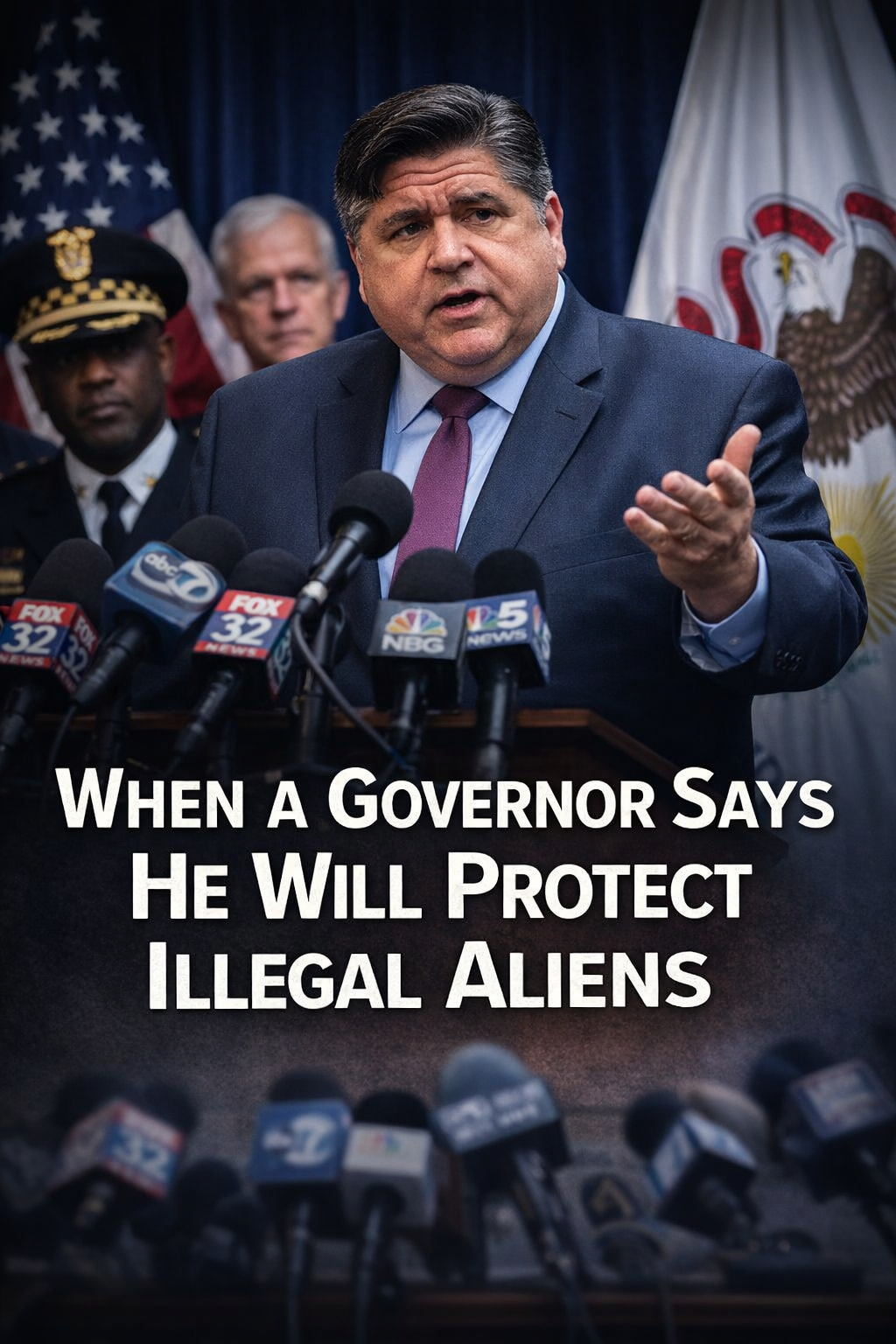
Let me put this plainly. You can separate legal responsibility from moral and political responsibility all day long, but at some point words matter. And when a governor openly says he is going to protect illegal aliens, he invites a very obvious charge: that he is putting ideology over citizens. That is not an irrational reaction. It is not xenophobic. It is not some wild overreach from the right. It is a normal response from people who still believe government is supposed to put its own citizens first.
Illinois Governor J.B. Pritzker has publicly defended laws designed to protect illegal aliens and has said he would do "everything that I can" to protect them. That is not media spin. That is the position. The question is not whether he is allowed to say it. The question is what that says about his priorities.
Lawful Does Not Mean Wise
This is where people get tangled up. The legal argument and the common-sense argument are not the same thing.
Illinois has laws on the books, including the TRUST Act and later amendments, that limit how much state and local law enforcement can cooperate with federal civil immigration enforcement. The state's own attorney general says those laws generally prohibit local law enforcement from participating in immigration enforcement except in certain circumstances. The Illinois statute itself says state and local officials are not authorized to enforce federal civil immigration law.
Fine. That is the legal framework. But lawful does not automatically mean wise. It does not mean patriotic. It does not mean morally serious. And it certainly does not mean a governor should go on television and make it sound like protecting illegal aliens is one of his defining priorities. That is where the criticism lands, and frankly, it lands hard.
A governor can be within the law and still be dead wrong in spirit. Lawful and wise are not the same thing. Neither are legal and loyal.
The Real Problem Is Priority
The average person does not talk like a lawyer. He hears a governor say he is going to protect illegal aliens and he thinks: what about your own people?
What about the citizens paying taxes, dealing with crime, dealing with strained schools, strained hospitals, strained shelters, strained budgets and a political class that always seems more animated about protecting everyone else than the people who actually belong to the country?
That is the issue. The problem is not merely technical cooperation with federal agencies. The problem is the message. The posture. The instinct. A governor's job is to protect the people of his state. Period. That does not mean he gets to ignore the Constitution. It does not mean he gets to violate actual law. But it does mean he should understand the difference between basic human decency and political signaling. And too often, what voters hear from leaders like Pritzker is not balance. It is not seriousness. It is ideological theater dressed up as compassion.
The Illinois TRUST Act (5 ILCS 805) and subsequent amendments restrict state and local law enforcement from honoring federal civil immigration detainer requests in most circumstances. The Illinois Attorney General has issued guidance confirming that local officials are generally not authorized to enforce federal civil immigration law. Pritzker has publicly defended these statutes and pledged to shield illegal aliens from federal enforcement action. The legal argument exists. The political and moral argument is a separate question entirely.
Citizens Notice the Double Standard
This is what drives people crazy. If you are a lawful resident trying to make ends meet, obey the law, pay taxes and keep your family safe, while watching your government struggle to do even the basics, it is infuriating to hear politicians speak with moral urgency about people who broke federal immigration law to get here.
And yes, I know the standard response. They say immigration is federal. They say states do not have to do ICE's job. They say these protections are really about community trust and public safety. Fine. Legally, that is the argument. Politically, it is still a loser for a reason.
Because none of that changes the moral impression created when a governor sounds more eager to shield illegal aliens from enforcement than to reassure his own citizens that their interests come first. That is why people recoil from it. Not because they do not understand every legal nuance, but because they understand priorities just fine.
People are not recoiling because they misunderstand the law. They are recoiling because they understand priorities perfectly well.
This Is Why the Backlash Is Deserved
I am not saying Pritzker is personally guilty for every crime committed by someone in the country illegally. That would be lazy and unfair. But I am saying he is fair game for moral and political criticism when he openly champions protections for illegal aliens in a way that suggests ideology has overtaken common sense.
That criticism is deserved. A governor can be within the law and still be dead wrong in spirit. A governor can defend a state statute and still send a message that weakens public confidence. A governor can technically comply with his oath while acting in a way many Americans see as contrary to the national interest.
And that is exactly the point too many people miss. This is not just about whether he broke some rule. It is about whether he is governing with the right hierarchy of concern. When leaders blur that line long enough, they should not be shocked when voters conclude that the people in charge care more about illegal aliens than about the citizens they were elected to serve.
Government is supposed to serve its own citizens first. Once a politician starts sounding confused about that, the public has every right to call him on it.
Why This Matters
This is bigger than one governor and bigger than Illinois. It goes to the heart of what citizens believe government is for. The social contract between a government and its people rests on a basic premise: the people in charge are working for the people who put them there. Not for an abstract global community. Not for people who circumvented the legal process to be here. For citizens.
When leaders cannot speak clearly about that hierarchy, trust erodes. And when trust erodes, everything else gets harder. Law enforcement loses legitimacy. Social cohesion frays. Honest debate becomes impossible because people no longer believe the people at the podium are arguing in good faith about whose interests they actually represent.
A country cannot stay healthy when its leaders treat enforcing basic distinctions between citizen and non-citizen as morally suspect. That is not cruelty. That is the foundation of a functioning state. Citizens notice when that foundation is being quietly dismantled while politicians congratulate themselves for their compassion.
The backlash is not irrational. It is the sound of people who still believe in the original deal demanding that their government honor it.
References
- Fox News. (2024, November 14). Democratic governor vows to "do everything I can to protect our undocumented immigrants." foxnews.com.
- Illinois Attorney General. (n.d.). Law enforcement and immigration. illinoisattorneygeneral.gov.
- Illinois General Assembly. (n.d.). Illinois TRUST Act, 5 ILCS 805. ilga.gov.
- Illinois Attorney General. (2025, June 10). Guidance summary: Key provisions of the Illinois TRUST Act. illinoisattorneygeneral.gov.
- WTTW News. (2025, June 12). Gov. JB Pritzker defends protections for illegal aliens to Congress, urges GOP to fix "broken immigration system." news.wttw.com.
Disclaimer: The views expressed in this post are the personal opinions of the author and are offered for educational, commentary and public discourse purposes only. They do not represent the positions of any institution, employer, organization or affiliated entity. Nothing in this post constitutes legal, financial or professional advice of any kind. References to public figures and institutions are based on publicly available sources cited in the article. Political commentary reflects the author's independent analysis and constitutes protected expression of opinion. Readers are encouraged to consult primary sources and form their own conclusions. No resemblance to individuals or entities beyond those explicitly referenced is intended.