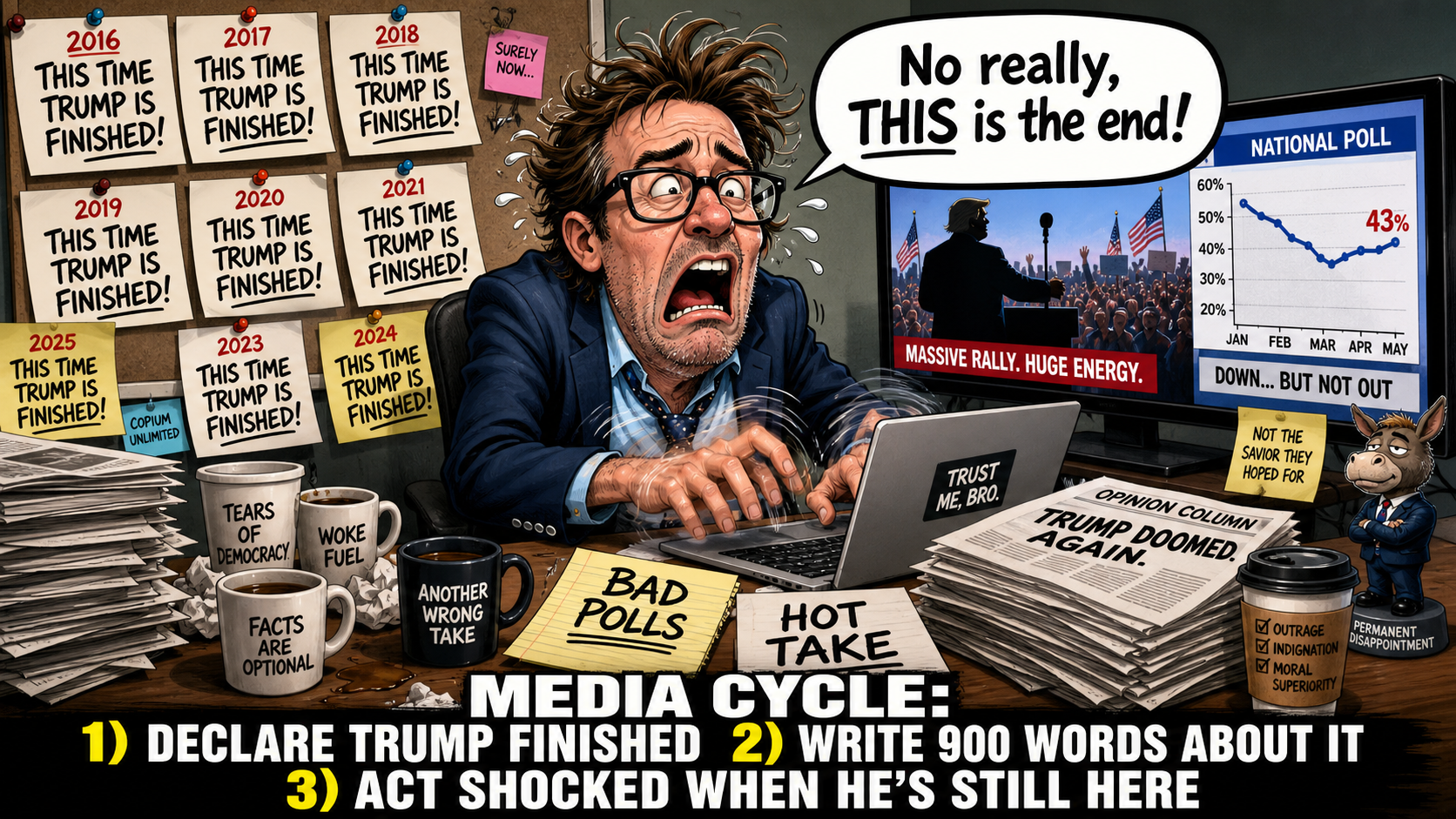
Rex Huppke's USA Today column argues that Donald Trump's greatest political skill has always been lying and that his lies are now failing because reality has finally caught up with him. That is the kind of sentence that makes anti-Trump readers nod along before they ever examine the argument. The problem is that it is not analysis. It is theater. It is opinion journalism dressed up as insight, using phrases like Caesar complex, conned and tornadic chaos in place of actual evidence. Huppke is entitled to dislike Trump - plenty of people do and some of their criticisms are correct. But if the argument is that Trump's supposed lies have collapsed under the weight of reality, the writer has to do more than deploy literary flourishes and moral conclusions. He has to engage with the actual data. Some of that data does support concern about the administration's political position. None of it supports the framing that voters have experienced a moral awakening from a con. People are not frustrated because they were finally undeceived. They are frustrated because life costs more. Those are different stories and the media's consistent inability to tell them apart is a significant part of why it keeps losing credibility with the people it is supposedly informing.
The Polling Problem Is Real. The Spin Is Lazy.
Start with the fair part because there is one. Trump's approval numbers are genuinely weak. RealClearPolling had Trump's approval at roughly 40.4% and disapproval at 56.6% in its early May 2026 average. Nate Silver's Silver Bulletin showed a net approval around -18.4 as of May 5. These numbers reflect real political vulnerability and a real gap between where a second-term president would want to be and where this one is. That is legitimate news and legitimate analysis. The problem is what Huppke does with those numbers. He does not say voters are unhappy with gas prices, inflation, foreign policy or the general direction of the country. That would be reasonable. Instead he argues that Trump's lies are finally failing him - converting a snapshot of public frustration into a psychological diagnosis of the electorate. Bad polling does not prove a politician's supporters were conned. It proves voters are frustrated. Sometimes with policy. Sometimes with prices. Sometimes with war. Sometimes with personality. Sometimes with the general mess of the moment. A poll is not a moral confession. It is a mood reading. Treating it as the former while calling it the latter is exactly the kind of analytical failure that makes political journalism feel like partisan cheerleading even when the underlying facts are solid.
Gas Prices Are a Real Problem. The Explanation Is Not "Lies Stopped Working."
Gas prices are high and that part is documented. The Energy Information Administration shows the U.S. regular gasoline average moving from $2.809 in January 2026 to $2.908 in February, $3.638 in March and $4.103 in April. AAA reported on April 30 that the national average had jumped 27 cents in a single week and was $1.12 higher than the same point the previous year. That hits voters directly and the political consequences are real. But what Huppke does with that data is fold it into the larger narrative that Trump's lies are no longer working. That is not a serious energy analysis. Gas prices are shaped by oil prices, refining capacity, global conflict, transportation costs, seasonal blend requirements, state and federal taxes and supply chain disruptions. If the argument is that Trump bears specific responsibility for current conditions through specific policy choices, make that argument with specifics. Do not treat rising gas prices as proof that the country has escaped a cult of lies. People are not angry because they were finally undeceived. They are angry because filling a tank costs more than it did and that anger is entirely rational on its own terms without requiring any theory of deception to explain it.
People are not angry because they were finally undeceived. They are angry because life costs more. Those are different stories. A press that cannot tell them apart will keep misreading the country it claims to be informing.
Food Prices: What the Data Actually Shows
Huppke cites high food prices as part of the broader chaos narrative. Families feel that pressure and it is real - nobody needs a spreadsheet to know groceries cost more than they used to. But the current data is more nuanced than the column suggests. The Bureau of Labor Statistics reported that overall food prices were up 2.7% in the year ending March 2026. Food at home was up 1.9% and food away from home was up 3.8%. Some categories ran higher - fruits and vegetables at 4.0%, nonalcoholic beverages at 4.7% - while meats, poultry, fish and eggs were down 0.9% and dairy was down 1.6%. The accurate version of the food price story is that prices remain painfully elevated compared with several years ago and families are right to feel squeezed. The inflated version is that current food inflation is spiraling out of control. Those are different claims and the difference matters because one of them leads to honest policy analysis while the other leads to moral storytelling about who deceived whom. Columns that inflame rather than clarify are not serving readers - they are performing for readers who already agree with the conclusion.
This is the core credibility problem. A lie requires intent. A false claim may be wrong. An exaggeration may be dishonest. A spin may be misleading. A prediction may fail. A campaign promise may collapse. A politician may cherry-pick facts. These are not all the same thing and treating them as identical collapses the analytical category the word is supposed to maintain. When opinion writers use "lie" as a catch-all for everything Trump says that they dislike, they are not sharpening the public's understanding of dishonesty. They are diluting a word that needs precision to retain meaning. The press spent years calling Trump every conceivable name - fascist, dictator, con man, threat, Russian asset, criminal mastermind, clown, tyrant. When everything is the worst thing, nothing is the worst thing. Trump did not create public distrust of the media. He exploited distrust the media had already earned through exactly this kind of asymmetric labeling - standards that apply to politicians they oppose and evaporate for politicians they prefer. The public noticed. That is part of why he survived politically when the media class was certain he would not.
Midterms Are Not Decided Six Months Out
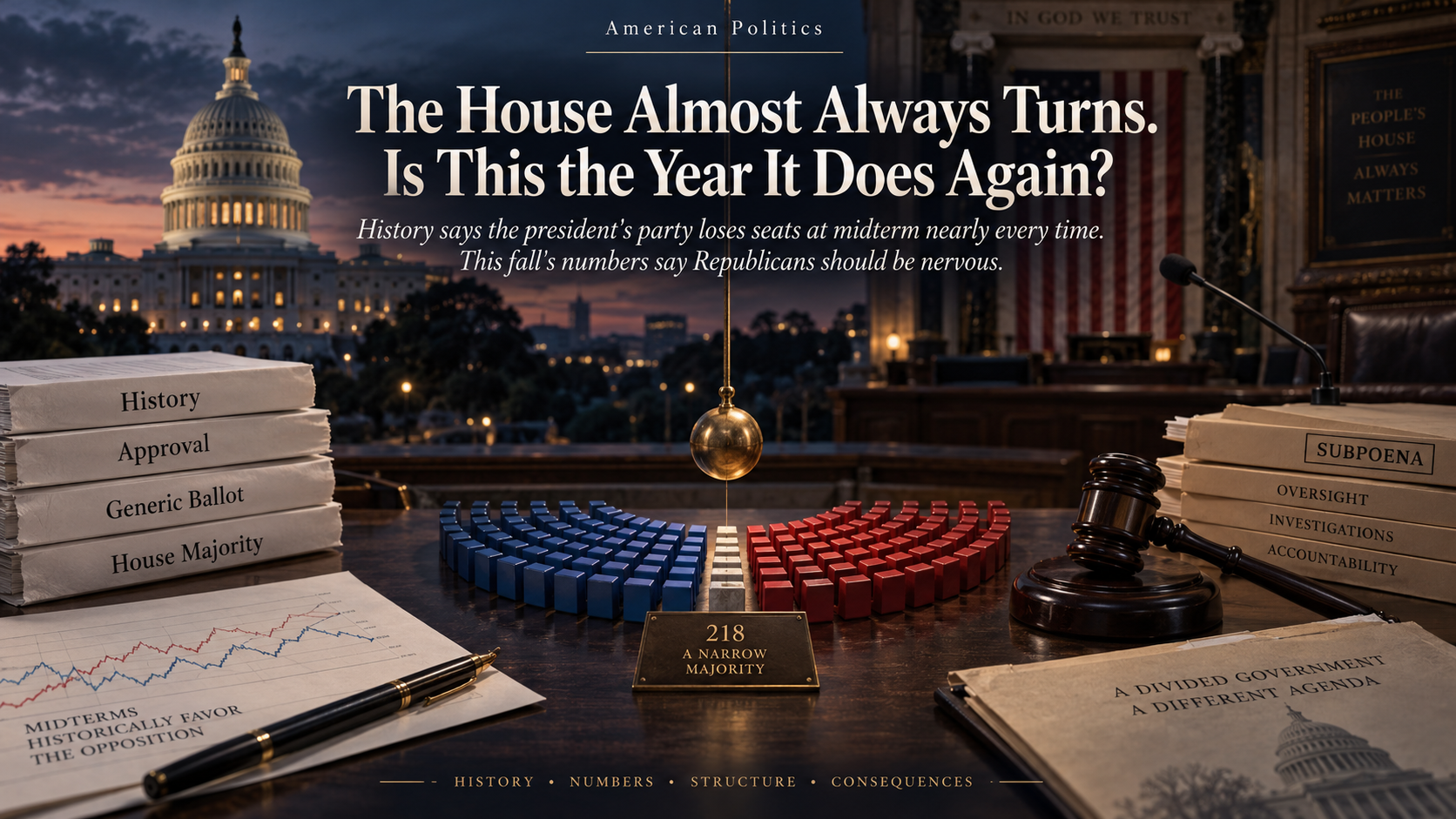
Huppke suggests Republicans are heading toward disaster in the midterms. Maybe they are. The data worth engaging is real: generic ballot polling around late April showed Democrats leading Republicans nationally by roughly five to six points in aggregated averages. That is a meaningful signal and Republicans have genuine reason to be concerned. But it is not destiny. Midterm elections are determined by turnout, candidate quality, district boundaries, local issues, campaign money, late-breaking events, scandals, retirements, enthusiasm gaps and whether the public mood hardens or shifts between now and November. A national generic ballot is a useful data point. It is not a crystal ball. The same media class that missed, minimized or misunderstood Trump's political durability repeatedly over the past decade should exercise some epistemic humility before declaring the future with confidence. Political reporters have a deep institutional affection for walls-are-closing-in stories. Sometimes the walls close. Sometimes they are just wallpaper on a building that keeps standing.
The Better Column That Could Have Been Written
There is a legitimate version of this argument available and it would not require any of the moral theater. It would say: Trump's approval numbers are weak. Gas prices have surged significantly this spring. The cost of living remains a major problem for American families. Voters are uneasy about foreign conflicts. Republicans have concrete reason to worry about the midterms. Trump's communication style may not be sufficient to overcome sustained economic pain. That is a complete and defensible argument grounded in the data Huppke actually cites. But that is not enough for modern opinion journalism. The frustration has to become a moral awakening. The polling has to mean voters finally saw through the liar. The coming midterms have to be a punishment for having believed falsehoods. That escalation from data to moral verdict is the part that deserves rejection - not because the underlying concerns are wrong but because the framing is contemptuous of the people it claims to be writing for. The public does not need another lecture about how half the country was duped. It needs sharper analysis of what is actually happening and why.
My Bottom Line
Huppke's column is not entirely wrong on the facts. Trump's polls are bad. Gas prices are high. Voters are frustrated. Republicans have a difficult cycle ahead. All of that is true and all of it is worth writing about. But the conclusion is anti-Trump wishcasting layered on top of legitimate data. The idea that Trump's lies have suddenly stopped working is a story written for people who already believe his voters are dupes and the media's job is to explain their stupidity back to them. That is the same contemptuous formula that helped build the conditions for the Trump era in the first place. The country has real problems. Those problems deserve honest analysis - with proportion, with data, with enough discipline to separate voter frustration from moral failure and policy disagreement from evidence of mass deception. The media can criticize this administration rigorously and specifically. It does that job badly when it replaces rigor with contempt and calls the result truth-telling.
Trump did not create the public's distrust of media. He exploited distrust the media earned. If that lesson has still not landed after a decade of being proven right over and over by election results, the next lesson will be just as expensive and just as ignored.
References
- American Automobile Association. (2026). Oil prices spike, national average up nearly 30 cents in one week. aaa.com.
- Bureau of Labor Statistics. (2026). Consumer Price Index Summary - March 2026. U.S. Department of Labor. bls.gov.
- Energy Information Administration. (2026). U.S. regular all formulations retail gasoline prices. U.S. Department of Energy. eia.gov.
- Huppke, R. (2026). Trump's polls are in the toilet. His lies have failed him. USA Today Opinion. usatoday.com.
- RealClearPolling. (2026). President Trump job approval. realclearpolling.com.
- Silver, N. (2026). Trump approval rating: Latest polls. Silver Bulletin. silverbulle.tin.
Disclaimer: The views expressed in this post are the personal opinions of the author and are offered for educational, commentary and public discourse purposes only. They do not represent the positions of any institution, employer, organization or affiliated entity. Nothing in this post constitutes legal, financial, medical or professional advice of any kind. References to polling data, government statistics and published commentary are based on publicly available sources cited above. Commentary on media criticism and political analysis reflects the author's independent analysis and is protected expression of opinion. Readers are encouraged to consult primary sources and form their own conclusions.