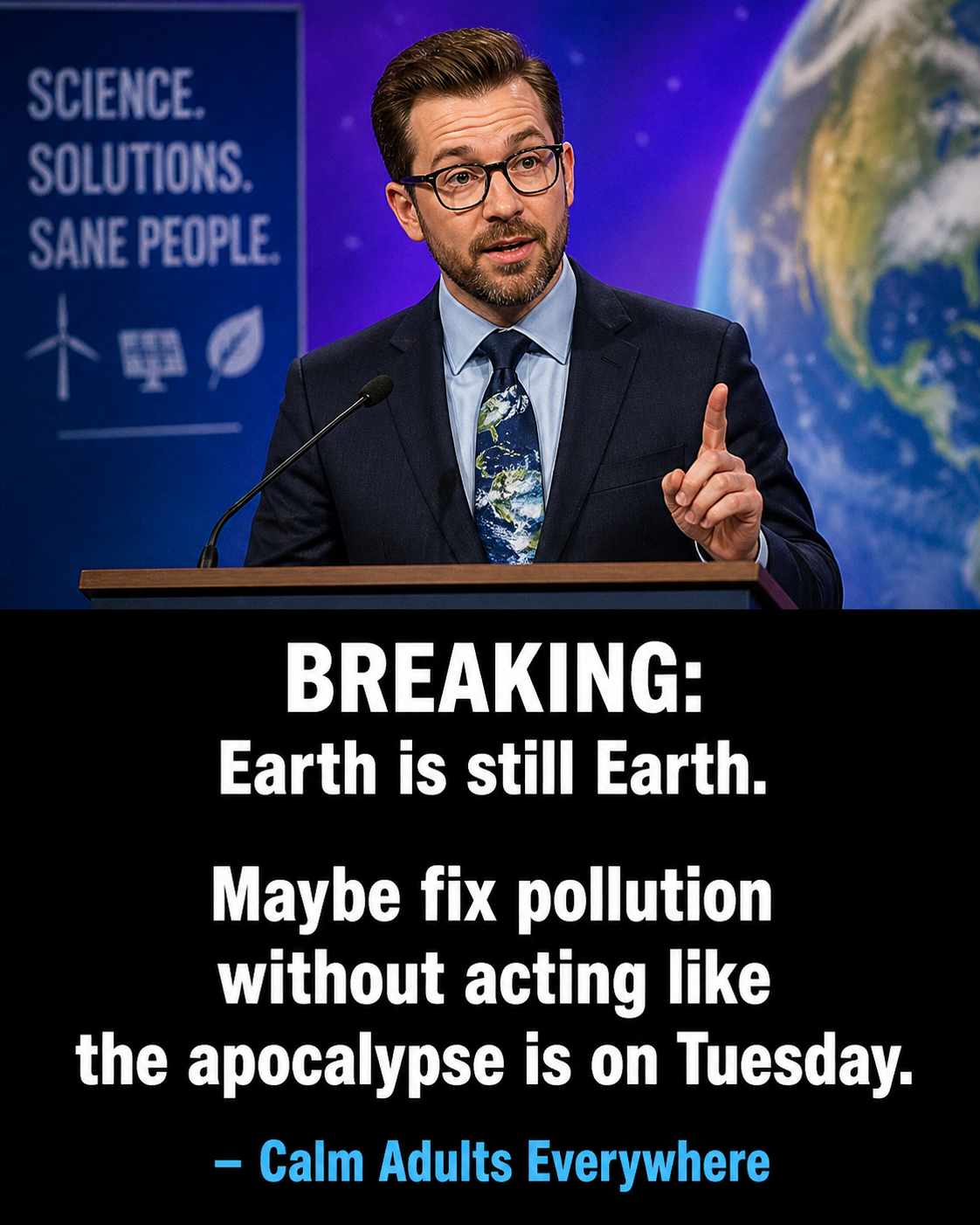
The meme says: if we have the power to turn another planet into Earth, then we have the power to turn Earth back into Earth. It sounds clever. It has that polished, science-guy feel to it - the kind of thing that makes the reader feel the argument is settled before the argument has even started. But it is not an argument. It is a slogan. And like most slogans, it works only if nobody slows down long enough to ask what it actually means. I am not arguing for pollution. Clean air matters. Clean water matters. Responsible stewardship matters. No sane person wants to breathe smog or drink poison. But there is a significant difference between responsible environmental care and the permanent state of climate panic that has been sold to the public for decades. Acid rain. The ozone layer. Global warming. Climate change. Climate crisis. Climate emergency. The language changes, the deadline moves, the villain gets renamed, and every hot day, cold day, storm, drought, fire or flood gets shoved into the same political sermon. After sixty-six years of hearing these warnings, I am entitled to ask: where is the apocalypse you promised me?
The Meme Starts With a False Premise
The phrase "turn Earth back into Earth" assumes Earth has somehow stopped being Earth. That is poetic but not serious. Earth is still Earth. It is still the only known planet with breathable air, liquid water, complex ecosystems, massive food production, forests, oceans, rivers, cities, farms, technology and eight billion human beings figuring out how to live on it. Has the climate changed? Yes. NASA confirms that global temperatures have risen, ice sheets have lost mass and sea levels have increased over measurable time periods. That is real data and it belongs in any honest discussion. But measurable change is not the same thing as civilizational collapse. That is where the climate panic crowd keeps cheating. They take real data, load it with apocalyptic emotion and then demand obedience. If you question the exaggeration, they accuse you of denying the data. A person can accept that the climate changes, accept that humans contribute to some of that change and still reject the hysterical claim that Earth is broken beyond recognition. Those are different positions and conflating them is deliberate.
Pollution Is Real. Climate Theology Is Something Else.
The strongest environmental arguments are the practical ones. Do not dump toxins into rivers. Do not fill neighborhoods with dirty air. Do not poison groundwater. Do not allow corporations or governments to wreck land and walk away from the mess. That is common sense and it does not require a religious framework to justify it. When we focus on measurable pollution, we can see real progress. The EPA reports that U.S. air quality has improved nationally since 1980. Its Clean Air Act materials document that cleaner air and economic growth have occurred together since 1970. That matters enormously because it proves the point the panic crowd most wants to suppress: you do not need hysteria to solve environmental problems. You need technology, law, engineering, accountability and economic incentives that actually work. The mistake is taking the legitimate pollution argument and converting it into climate religion. Once that conversion happens, every policy becomes a moral crusade, every disagreement becomes heresy, every storm becomes proof of sin and every skeptic becomes a villain. That is not science. That is politics wearing a lab coat.
Climate science should be discussed soberly. Instead it is marketed like a disaster movie. That may frighten people in the short term. Over time it creates cynicism. People stop listening not because they hate clean air, but because they are tired of being manipulated by people who keep moving the goalposts.
The Doom Predictions Wrecked Public Trust
One significant reason many people no longer take climate rhetoric seriously is that they have heard too many failed deadlines. We had only a few years left. Then a few more. Then ten. Then twelve. Then the window is closing. Then the window has almost closed. Then we are at a tipping point. Then another tipping point arrives. Meanwhile people kept going to work, raising families, paying bills, building houses and watching the same experts move the goalposts year after year. That does not mean every concern is false. It means the sales pitch has been systematically dishonest. The repeated failure of specific catastrophic predictions has not produced humility from the people making them. It has produced escalation. Each failure generates a louder warning, a tighter deadline and a more dramatic framing. The boy who cried wolf eventually creates wolf skeptics, and the climate movement has spent decades manufacturing skeptics through its own credibility failures while simultaneously blaming those skeptics for not believing.
Another problem with the meme mentality is that it quietly pretends Earth was once stable, gentle and predictable until humans ruined everything. That is nonsense. Earth has always had hurricanes, droughts, floods, heat waves, fires, blizzards, volcanic eruptions, earthquakes, disease, famine and mass extinctions. Nature is not a Disney movie. Mother Nature is beautiful and she is also brutal. When NOAA tracks costly weather and climate disasters - 2024 had 27 separate billion-dollar weather events in the United States - those costs are not only about climate. They are also about population growth, building in high-risk areas, higher property values, infrastructure decisions, insurance exposure and local planning failures. A hurricane hitting an empty coastline is weather. A hurricane hitting miles of expensive coastal development is a billion-dollar disaster. That distinction matters because if we pretend every cost increase is proof of climate apocalypse, we ignore the human planning failures sitting right in front of us. Smarter building codes, better infrastructure, sound zoning policy and insurance reform are all practical tools that do not require joining a moral crusade to justify them.
"Turning Earth Back" Means What, Exactly?
This is the question the meme never answers. Back to what? Back to 1850 means shorter lives, worse medicine, more disease, dirtier cities and far less food security. Back to 1950 means industrial pollution, open dumping, leaded gasoline, weaker environmental standards and fewer technological tools to measure or solve problems. Back to some imaginary pre-human paradise? That world never existed for us. It was full of hardship, danger, scarcity and death that modern medicine and agriculture have substantially reduced. The phrase "turn Earth back into Earth" sounds profound because it avoids every detail. It never defines the target temperature. It never specifies the acceptable sea level. It never identifies the forest coverage, energy use, population level or economic activity that counts as the real Earth. Without those specifics, the slogan is asking people to accept sacrifice and disruption in service of a goal that cannot be measured, verified or even described. That is not policy. That is mood music for people who want to feel righteous without doing the hard work of defining what success looks like.
The Better Path Is Adaptation, Innovation and Discipline
The sane position is not do nothing. The sane position is to stop treating panic as wisdom. Reduce real pollution with real standards. Build cleaner technology through investment and genuine competition. Harden infrastructure against the extreme weather events that have always occurred and always will. Improve water systems. Manage forests intelligently to reduce catastrophic fire risk. Stop building recklessly in high-risk coastal and flood-prone areas and then expressing shock when nature does what nature has always done. Use nuclear power seriously - it is the only carbon-free baseload energy source available at scale and the climate movement's resistance to it has always revealed more about politics than science. Improve battery storage. Strengthen the grid. Invest in practical engineering rather than moral theater and political signaling. Continue studying climate trends honestly without pretending every model is prophecy or every uncertainty is a reason to ignore the data entirely. There is nothing wrong with caring about the environment. There is something deeply wrong with turning that care into a permanent political emergency that demands obedience, suppresses dissent and pursues economic self-harm as a demonstration of virtue.
My Bottom Line
The meme is half right and half ridiculous. It is right that running off to Mars is not a substitute for taking care of this planet. Earth is our home. It is not disposable and treating it carelessly is both stupid and wrong. But the meme is ridiculous when it implies Earth has stopped being Earth and needs to be restored to some prior condition that the slogan conveniently never defines. Earth is not dying. Earth is changing, as it always has. Humans are part of that change and we should be responsible enough to manage our impact. Responsibility does not require hysteria. We can clean up pollution without joining a climate cult. We can respect genuine science without worshipping every political slogan sold in its name. We can protect the planet without pretending civilization is one gas stove or one warm summer away from collapse. The difference between stewardship and panic is the difference between solving problems and performing concern. Panic has had the microphone for a very long time. The problems that actually respond to engineering, investment and accountability are still waiting for the people who want to work on them rather than just feel urgent about them.
Adults solve problems. They define the goal, measure the progress and adjust the approach when the evidence changes. What we have been sold for decades is not that. It is a permanent emergency without a definition of resolution - which is not a problem to be solved but a condition to be maintained. The people maintaining it have their own reasons for doing so.
References
- Environmental Protection Agency. (2026). Air quality - National summary. epa.gov.
- Environmental Protection Agency. (n.d.). The Clean Air Act and the economy. epa.gov.
- NASA Science. (2024). Evidence: Climate change. science.nasa.gov.
- NOAA Climate.gov. (2025). 2024: An active year of U.S. billion-dollar weather and climate disasters. climate.gov.
- NOAA Climate.gov. (2022). Climate change: Global sea level. climate.gov.
Disclaimer: The views expressed in this post are the personal opinions of the author and are offered for educational, commentary and public discourse purposes only. They do not represent the positions of any institution, employer, organization or affiliated entity. Nothing in this post constitutes legal, financial, medical or professional advice of any kind. References to government agencies, scientific organizations and published data are based on publicly available sources cited above. Commentary on environmental policy and climate science reflects the author's independent analysis and is protected expression of opinion. Readers are encouraged to consult primary sources and form their own conclusions.