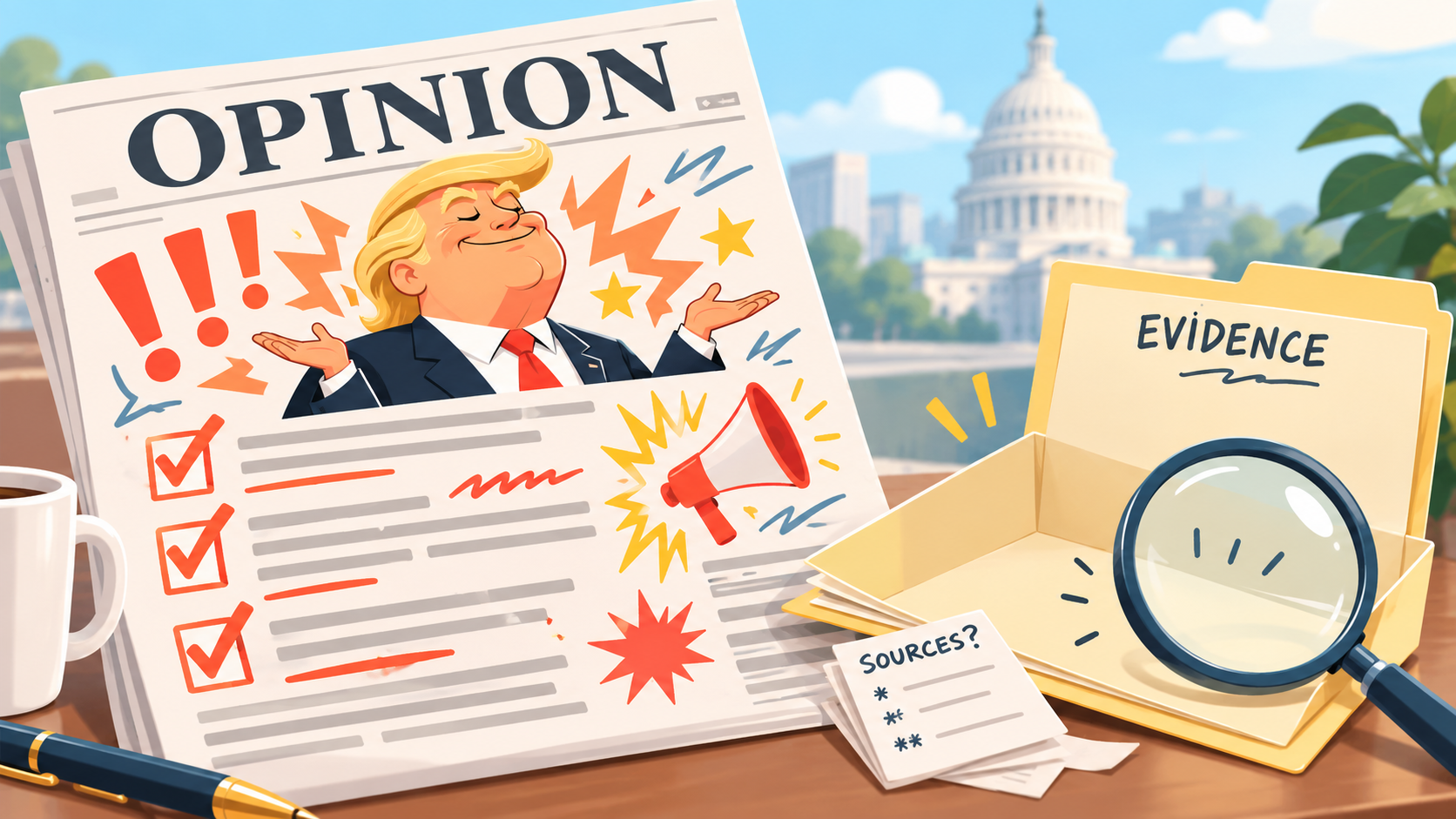
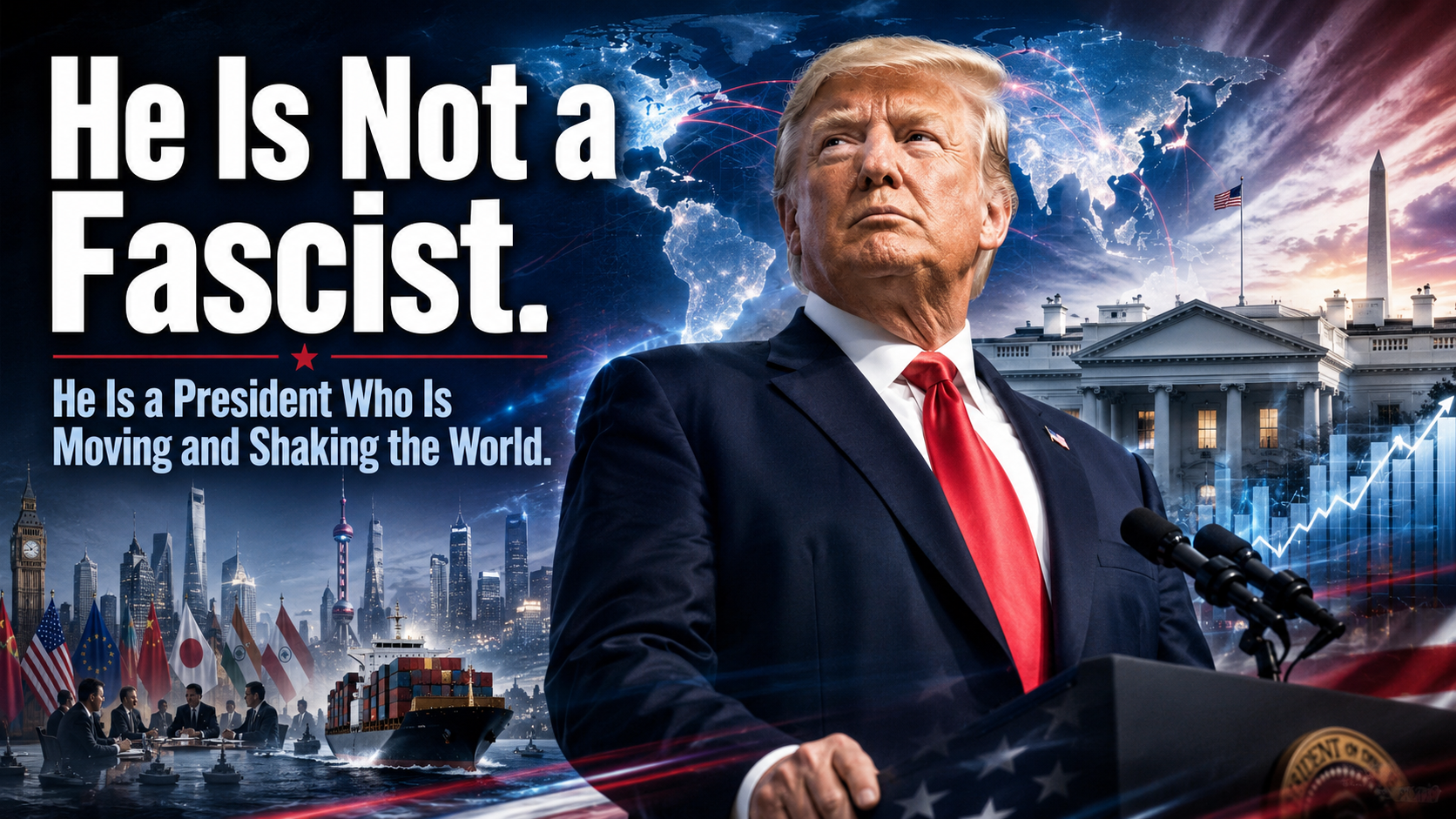
Calling someone a fascist every day for ten years and watching the democracy continue to function, elections continue to occur and the other side win two of them is not evidence of fascism. It is evidence of a broken analytical framework. The people who have spent a decade describing Donald Trump as an existential threat to the republic now have to reckon with a republic that is still standing, still holding elections, still producing political opposition and still operating under the same constitutional structure it had when the accusations started. The courts are still issuing rulings. Congress is still legislating. The press is still publishing. None of that is what fascism produces. What fascism produces is the elimination of those things. They have not been eliminated. They are intact. The people making the accusation need to explain why their evidence-free prediction has failed for a decade before they make it again for the eleventh year in a row.
What Fascism Actually Is
The word has a specific meaning and that meaning matters. Fascism is a system of government characterized by dictatorial power, forcible suppression of opposition, rigid economic and social control and the elimination of independent political competition. Mussolini's Italy. Hitler's Germany. Franco's Spain. In each case opposition parties were abolished, independent courts were subordinated to state authority, the press was controlled or eliminated and elections were either cancelled or reduced to ratification exercises for the regime already in power. These are the defining features. Not aggressive rhetoric. Not aggressive policy. Not a president who fights with the press and pursues an agenda his opponents dislike. The defining feature is the elimination of the mechanisms that allow the other side to compete and win.
Donald Trump has been president for a total of six years across two terms. In that time his opposition has held Congress, won the presidency once, won Senate and House majorities, elected dozens of attorneys general and governors who have pursued legal actions against him personally, run four simultaneous criminal indictments against him in separate jurisdictions and produced a media environment that has been relentlessly hostile to him every single day he has held office. None of that is consistent with fascism. All of it is consistent with a deeply contested democratic republic in which one side has not gotten everything it wants. Those are different things and the people conflating them either do not know what fascism is or are choosing to use the word as a club rather than a description.
The left's own argument refutes itself. If Trump were a fascist, the press he rails against would not be operating. The prosecutors who indicted him four times would not have had the independence to do so. The 2020 election he allegedly tried to steal would not have produced a Biden presidency that governed for four years. The 2024 election would not have been held at all. A fascist does not lose an election and then run again and win. A fascist does not permit the courts that block his orders to continue operating. The republic that was supposed to end is still here. The accusation has been tested by events. It failed.
The Border: Done What Nobody Else Did
The Biden administration produced the highest illegal border crossing numbers in recorded history. Four years of record crossings, overwhelmed border communities, strained public services and a federal posture that treated enforcement as cruelty. Trump closed the border. Not symbolically. The numbers dropped to the lowest levels in decades within months of his return to office. Customs and Border Protection reported the sharpest decline in illegal crossings in the agency's history in the months following the January 2025 policy changes. The wall construction resumed. Remain-in-Mexico protocols returned. Catch-and-release ended. The message changed from "come and we will process you" to "come and you will be turned around."
Critics called it cruel. The communities that had been absorbing the consequences of four years of open-border management called it overdue. Working-class neighborhoods where wages had been undercut by illegal labor competition called it relief. Border-state residents who had watched their communities become transit corridors for cartel operations called it sanity. The humanitarian framing the left prefers requires ignoring the humanitarian cost of four years of unrestricted crossing on the communities that bore it. Trump did not ignore them. He governed for them. That is not fascism. That is representation.
Criminal Aliens: The Deportations the Media Called an Atrocity
The deportation of illegal aliens with criminal records was presented in much of the media as one of the most shocking developments of the second term. It should not have been shocking to anyone. Deporting people who entered the country illegally and then committed additional crimes against American citizens is not a civil rights issue. It is law enforcement doing its job. The people expressing outrage on behalf of deported criminals owe an explanation to the American citizens those criminals victimized. They have not provided one because there is no satisfying one. A country that cannot remove people who entered illegally and then committed violent crimes against its own citizens has lost the basic function of sovereignty. Trump restored it. The media described it as fascism.
China and Russia: Strength Where the Establishment Chose Deference
The foreign policy establishment's approach to China for thirty years was engagement on the theory that trade and integration would liberalize the regime and produce a responsible global partner. The result was the largest transfer of manufacturing capacity out of an American industrial base in history, the systematic theft of American intellectual property at a scale the FBI described as the greatest transfer of wealth in human history, a Chinese military that grew from a regional force to a near-peer competitor using technology and capital that flowed through the engagement relationship and a regime that is more authoritarian today than it was when engagement began. Trump looked at that record and said the framework was wrong. He imposed tariffs, restricted technology transfer, challenged the trade relationship and put American economic leverage on the table rather than trading it away for the promise of future cooperation that never materialized.
On Russia, Trump's approach has been more transactional and more controversial than his China posture. His critics argue he has been too deferential to Putin and too willing to accept Russian framing on Ukraine. Those are fair criticisms to make and debate. What is not accurate is the claim that his approach has been uniformly accommodating. The Trump administration maintained and expanded sanctions on Russian entities, provided lethal assistance to Ukraine in his first term that the Obama administration had refused and has continued to support Ukrainian negotiating position while pushing for a ceasefire framework. The Russia criticism is legitimate as policy debate. It does not support the fascism narrative and it does not belong in the same sentence with it.
Iran: The Accountability Nobody Else Would Deliver
This is the accomplishment that deserves the most serious recognition and has received the least from the people whose job is to evaluate presidential performance honestly. Iran has been at war with the United States since 1979. It seized the embassy. It funded the Marine barracks bombing. It created Hezbollah. It killed American soldiers in Iraq through proxy militias and IED networks. It pursued a nuclear weapon for forty years while every American president from Carter to Biden responded with diplomacy, sanctions, negotiations, more diplomacy and the occasional strongly worded letter. Barack Obama paid $150 billion in sanctions relief for a temporary slowdown in enrichment that left the ballistic missile program untouched and funded the very proxy network killing Americans through its beneficiaries.
Trump bombed the nuclear facilities. In June 2025, Operation Midnight Hammer struck Fordow, Natanz and Isfahan. The IAEA confirmed enormous damage. For the first time in forty-six years of Iranian aggression, Iran paid a direct military price on its own soil for its behavior. The foreign policy establishment called it reckless. The families of the 241 Marines killed in Beirut in 1983 might call it forty years late. History will not remember the people who explained why it could not be done. It will remember the president who did it.
Nine presidents watched Iran build toward a nuclear weapon while killing Americans through proxies. They all understood the threat. None of them made Iran pay a price serious enough to change the behavior. That is not restraint. That is forty-six years of institutional failure wearing the costume of diplomatic sophistication.
Yes, He Has Overstepped. So Has Every President.
Trump has pushed executive authority aggressively. Some of his executive orders have been blocked by courts. Some of his deportation operations have been challenged on due process grounds. His tariff strategy has operated at the outer boundary of statutory authority under the International Emergency Economic Powers Act. His involvement in personnel decisions at independent agencies has been challenged as exceeding executive authority. These are legitimate constitutional debates and they matter. A republic that takes separation of powers seriously should have those debates and courts should decide them.
But the standard has to be consistent. Obama governed by executive order when Congress would not act and his supporters called it bold leadership. Biden used emergency authority for student loan cancellation that the Supreme Court struck down unanimously. Franklin Roosevelt packed the court, interned Japanese Americans and ran the economy under emergency powers that made Trump's tariff strategy look modest. Every president who has governed aggressively has pushed against constitutional limits in some direction. The question is not whether Trump has exceeded his authority in specific instances. Courts have answered some of those questions and will answer more. The question is whether aggressive use of executive power makes someone a fascist. It does not. It makes them an aggressive executive. The republic has survived many of those.
The Record Against the Label
Set the fascism accusation aside and look at the record. Illegal border crossings at historic lows. Criminal aliens with violent records removed. The Iran nuclear program damaged for the first time in its history. China facing the first serious trade pressure from an American administration willing to absorb short-term economic pain to change the terms of the relationship. Recruiting in the military at its strongest in fifteen years. Energy production expanded. NATO allies pressured to meet their own defense commitments rather than free-riding on American guarantees they have exploited for decades. The Abraham Accords normalizing relationships between Israel and Arab states that the foreign policy establishment said could not be achieved. Soleimani, the architect of Iranian proxy warfare that killed hundreds of Americans, eliminated.
That is a record. It is not a record without controversy, without costs or without legitimate grounds for disagreement. But it is a record of a president who came in with an agenda, staffed his administration to execute it and delivered more of it than his first term produced. A president who does what he said he would do is not what fascism looks like. It is what an election mandate looks like.
My Bottom Line
The fascism label has been used so freely for so long that it has lost the force it needs to do the work it was designed for. When every aggressive presidential action becomes fascism, the word cannot identify actual fascism when it appears. That is the cost of a decade of analytical recklessness by people who preferred a dramatic accusation to an honest evaluation. Trump is not a fascist. He is a disruptive, aggressive, norm-challenging president who has accomplished more of his stated agenda than his opponents will acknowledge and less than his supporters claim. He has overstepped in specific instances and courts have said so. He has also closed the border, pressured China, stood up to Russia, held Iran accountable for the first time in half a century and restored the principle that American power will be used to impose costs on regimes that kill Americans.
You can disagree with every one of those accomplishments. You can argue the methods were wrong, the costs too high or the long-term consequences unresolved. Those are legitimate debates. What is not legitimate is calling it fascism while the courts are still running, the press is still publishing, the elections are still happening and the other side is still winning some of them.
A fascist does not lose an election, leave office, run again and win through a process his opponents administered. A fascist does not permit four simultaneous criminal indictments from prosecutors he did not appoint. What Trump is, is a president who makes people who dislike him very angry. That is not the same thing. It never was.
Why This Matters
Words mean things. Fascism means something specific and terrible. When it is used as a synonym for "president whose policies I oppose," it loses the capacity to identify the real thing. The people most harmed by the inflation of this accusation are not Trump supporters. They are the people who will need the word to work when actual fascism appears. A political culture that has cried wolf on fascism for ten years will not be believed when the wolf arrives. That is the cost of using serious words for unserious purposes, and the American left has been paying it down for a decade without noticing the balance getting smaller.
References
- U.S. Customs and Border Protection. (2025). Southwest border enforcement statistics. cbp.gov.
- Department of Defense. (2025). FY2025 military recruiting report: Best numbers in 15 years. defense.gov.
- IAEA. (2025). Director General report on Iran nuclear sites damage assessment. iaea.org.
- FBI. (2020). China: The risk to America's economy and innovation. fbi.gov.
- Congressional Budget Office. (various). Federal revenue estimates for trade legislation. cbo.gov.
- Reuters. (2020, January 3). U.S. kills top Iranian general Qassem Soleimani in Baghdad air strike.
- Supreme Court of the United States. (2023). Biden v. Nebraska, 600 U.S. 477, student loan cancellation struck down.
- Umberto Eco. (1995). Ur-Fascism. New York Review of Books. [Defining characteristics of fascism.]
Disclaimer: The views expressed in this post are the personal opinions of the author and are offered for educational, commentary and public discourse purposes only. They do not represent the positions of any institution, employer, organization or affiliated entity. Nothing in this post constitutes legal, financial, medical or professional advice of any kind. References to public figures, legislation and current events are based on publicly available sources cited above. Commentary on political subjects reflects the author's independent analysis and is protected expression of opinion. Readers are encouraged to consult primary sources and form their own conclusions.