Halloween used to be simple. Kids dressed up, adults handed out candy, and everybody enjoyed a little make-believe. Some costumes were scary, some were funny, some were ridiculous, and others were inspired by history, movies or cultures from around the world. Nobody needed a sociology degree to decide what to wear.
Apparently, those days are numbered.
Recently, I came across a social media post featuring a Native American in traditional clothing. The message was that his cultural dress was not a Halloween costume and that wearing something similar amounted to cultural theft.
Cultural theft?
Give me a break.
I understand that some clothing carries religious or ceremonial significance. I understand that deliberately mocking another culture is offensive. But we've reached a point where simply dressing up as someone from another time, place or culture is enough to generate accusations of racism, appropriation and disrespect.
And I think much of this outrage is absolute nonsense.
Halloween Is About Imagination, Not Identity Politics
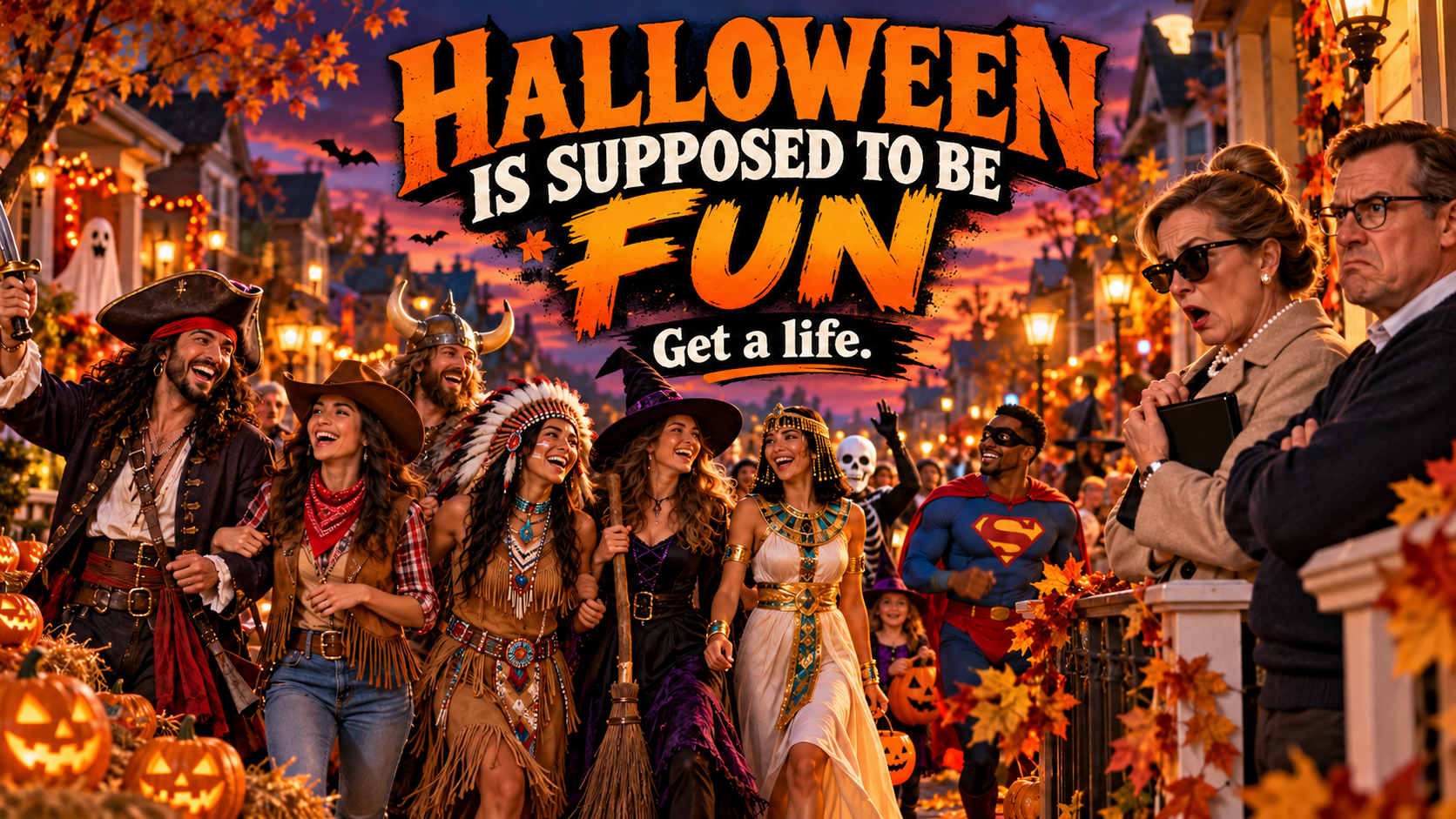
Every October, Americans dress up as pirates, Vikings, cowboys, Roman soldiers, Egyptian pharaohs, medieval knights, Japanese samurai and a thousand other figures drawn from history. We dress up as kings, queens, presidents, witches, superheroes and fictional villains.
Are we stealing Scandinavian culture when we wear Viking helmets? Are we committing cultural theft when we dress as Roman senators? Does a child dressed as Cleopatra owe Egypt an apology?
Of course not.
The entire premise of dressing up is pretending to be something you're not. A costume doesn't automatically convey hatred, ridicule or disrespect. Sometimes it conveys admiration. Sometimes curiosity. Sometimes it's simply an outfit that someone thought looked interesting. And sometimes it's just funny.
Imagine that.
Cultural Appreciation Is Not Cultural Theft
One of the more remarkable contradictions in modern discussions about diversity is the insistence that we celebrate different cultures while simultaneously being told that certain cultural expressions are off-limits to outsiders.
Which is it? Are we supposed to appreciate cultural diversity, or admire it only from a socially approved distance?
Americans eat Mexican food, practice Japanese martial arts, listen to Jamaican reggae, wear Italian fashion and decorate their homes with artistic influences from around the world. Nobody seriously believes that every cultural exchange amounts to stealing somebody else's identity.
Human civilization has developed through cultural exchange for thousands of years. Clothing, language, music, cuisine, architecture and even religious practices have traveled across borders, changed hands and evolved. Cultures are not museum exhibits sealed behind glass. They are living, changing collections of ideas, customs and traditions, and no culture has developed in complete isolation.
Respect Is About Behavior, Not Simply Clothing
Now, there is an important distinction worth making.
If someone deliberately wears a costume to humiliate Native Americans, caricature their appearance or portray them as inferior, criticize that behavior. I would. But that is not the same as assuming anyone wearing Native American-inspired clothing is engaging in cultural theft.
Intent matters. Context matters. Behavior matters.
And yes, ceremonial clothing and sacred objects can carry meanings that ordinary costumes do not. A traditional headdress, for example, may represent earned honors and responsibilities within a particular Native American community. That deserves consideration. But consideration is not the same as granting anyone an unlimited veto over what somebody else wears.
A reasonable person can acknowledge the significance of cultural traditions without concluding that every costume inspired by those traditions is an insult. We used to understand these distinctions. Today, too many people seem more interested in finding something offensive than determining whether an offense actually occurred.
Who Owns a Culture?
Here's a question that rarely gets a satisfactory answer. Who actually owns a culture? Does one individual get to decide how an entire ethnic, national or historical tradition may be represented?
Native Americans are not one homogeneous group. They belong to hundreds of distinct tribal nations with different languages, histories, ceremonies and customs. They also have different opinions. So when someone announces that a particular costume is offensive to Native Americans, who appointed that person spokesperson for everyone?
The same question applies to any other culture. I don't speak for every American, nor would I presume to tell the rest of the world that they cannot dress as cowboys, wear American military-inspired costumes or imitate something associated with this country. Frankly, I'd probably get a kick out of it.
There is a difference between respecting a person's heritage and accepting that one person's objections establish a universal prohibition.
The Problem With Turning Everything Into an Offense
My larger objection isn't really about Halloween. It's about our growing tendency to turn ordinary human behavior into ideological battlegrounds.
A costume becomes cultural appropriation. A joke becomes an act of aggression. An innocent question becomes a microaggression. And suddenly, instead of discussing whether someone actually intended harm, we're debating whether someone somewhere might conceivably feel offended.
That's a miserable way to live.
It also trivializes genuine discrimination. Racism exists. Religious bigotry exists. People are sometimes deliberately demeaned because of their ancestry or cultural identity, and those issues deserve serious attention. But when we treat a child dressed as a historical figure as though he committed an act of oppression, we dilute the meaning of those accusations.
Not every uncomfortable feeling is evidence of wrongdoing. Not every cultural reference is exploitation. And not every person wearing unfamiliar clothing has malicious intentions.
Halloween Doesn't Need a Cultural Permission Slip
Halloween is one of those rare occasions when people of different ages, backgrounds and beliefs participate in the same silly tradition. Children knock on doors. Neighbors meet neighbors. Adults decorate their yards with skeletons, ghosts and inflatable monsters. People spend money on costumes they might wear for four hours. For one evening, ordinary life becomes a little less ordinary.
Why turn that into another source of division?
If someone chooses to dress as a Viking, let them. If someone wants to be Cleopatra, a cowboy or a Roman emperor, fine. If a costume deliberately degrades a group of people, call it out for what it is. And if a particular garment has sacred significance, explaining that significance will probably accomplish more than shouting accusations of cultural theft.
We can exercise judgment without making everyone afraid to participate in a holiday. That shouldn't be a controversial proposition.
My Bottom Line
I have no problem with respecting cultural traditions. I have no problem with someone explaining why a particular ceremonial garment matters to their community. What I reject is the assumption that cultural inspiration automatically equals cultural exploitation.
There's a world of difference between ridicule and admiration, between mockery and make-believe and between genuine disrespect and someone simply enjoying Halloween. We don't need cultural gatekeepers policing every costume, searching for ideological violations and declaring themselves offended on behalf of millions of people.
Sometimes a costume is just a costume. Halloween is supposed to be fun.
Get a life. Let people enjoy it.
Why This Matters
This isn't just about Halloween costumes. It's about whether we can still distinguish between actual harm and perceived offense.
A society that treats every cultural difference as something to protect from outsiders risks discouraging the very cultural interaction it claims to celebrate. Respect should encourage understanding, not automatic segregation of traditions and ideas. We should teach people why cultural practices matter, recognize genuine acts of disrespect and allow room for curiosity, creativity, humor and innocent imitation.
Otherwise, diversity becomes something we advertise but are afraid to experience, and that's a pretty ridiculous outcome for a society that claims to value cultural exchange.
Disclaimer: This article represents the author's personal opinion on Halloween costumes, cultural appreciation and the distinction between genuine disrespect and perceived cultural appropriation. It does not suggest that all Native American traditions or ceremonial garments are interchangeable, or that individual Native Americans hold identical views on their representation. The views expressed are the personal opinions of the author for commentary and public discourse purposes only and do not represent the positions of any institution, employer, organization or affiliated entity with which the author may be associated in any capacity.