Call it marriage if that makes the adults involved feel more respectable. A marriage certificate does not transform sexual abuse into consent. It gives the abuser government paperwork.
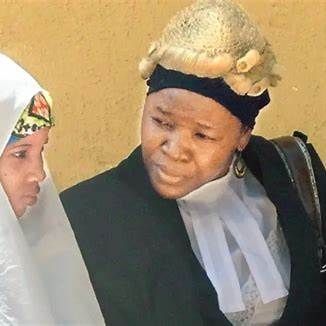
Wasila Tasi'u was about 14 years old when she was married to a 35-year-old man in Kano State, Nigeria. She could not read or write. She and her attorney said she had been forced into the marriage. Shortly afterward, she was accused of placing rat poison in food served to her husband and his guests. Her husband and three other men died. Wasila was arrested, detained for approximately ten months and threatened with the death penalty. Prosecutors eventually withdrew the charges in 2015 and a court ordered her release. She was never convicted. The poisoning was horrific. Four people died. But the case forces us to confront another horror that had already occurred: adults had taken a child and handed her to a 35-year-old man as his wife. What happened next can be debated. Whether a child belonged in that marriage cannot. She did not.
Children Cannot Consent to the Institution Adults Created
Marriage is not a school dance or a teenage romance. It is a legally recognized relationship carrying enormous personal, sexual, financial and social consequences. Adults entering marriage are expected to understand those consequences. They can sign contracts, hire lawyers, control their property, seek employment, leave home and file for divorce. Children frequently cannot do any of those things independently. A child may be legally unable to enter an ordinary commercial contract while being permitted to enter one of the most consequential legal arrangements imaginable. She may be too young to vote, rent an apartment or obtain certain medical care on her own, yet somehow old enough to become the wife of an adult man. That is absurd and the absurdity is not accidental. It serves the adults who arranged it.
Consent requires more than saying yes. It requires maturity, freedom, information and the realistic ability to say no. A girl surrounded by parents, religious leaders and community elders telling her she must marry is not exercising free choice. A girl who depends on those adults for food, shelter, protection and social acceptance does not negotiate from anything approaching an equal position. She is being pressured by the very people responsible for protecting her. The United Nations Population Fund defines child marriage as a human rights violation because it denies children the ability to decide freely whom and when they will marry. UNICEF describes marriage before 18 as a fundamental violation of human rights, identifying poverty, family honor, discriminatory social expectations and inadequate legislation among the forces that sustain the practice. A society cannot place a child under overwhelming adult control and then pretend her compliance represents meaningful consent. Submission is not consent. Fear is not consent. Dependency is not consent. A parent's signature is not the child's consent.
UNICEF reported in 2023 that approximately one in five women ages 20 to 24 had been married before 18, compared with nearly one in four a decade earlier. That improvement matters. It still leaves millions of children exposed. The United Nations Population Fund estimates that approximately 19 percent of girls worldwide are married before 18 and about 4 percent before 15. In the United States, national advocacy organizations report that nearly 300,000 minors were married between 2000 and 2018, with girls forming the majority and adult men frequently being the husbands. Most states still provide some legal path for a person under 18 to marry. The practice is not a foreign phenomenon being imported. It is documented on American soil.
Stop Hiding Sexual Abuse Behind the Word Marriage
We use clearer language when no marriage certificate is involved. When an adult takes a child for sexual exploitation, we call it abuse. When a child is transferred or coerced for the benefit of adults, we may call it trafficking. When an adult has sex with someone legally incapable of consent, many jurisdictions call it statutory rape. Place a wedding ceremony between the adult and the child and suddenly people become hesitant. They tell us to respect tradition. They ask us not to judge another culture. They claim the parents approved. They quote religious writings. None of that changes the age of the child. None of it changes what is happening to her body.
Not every child marriage technically satisfies every element of human trafficking under every country's criminal code. International authorities explain that forced marriage may constitute trafficking when coercion, deception, forced labor, sexual exploitation or similar practices are involved. That legal distinction matters in court. It should not become a moral hiding place. When a family gives a girl to an older man in exchange for money, property, status, debt relief or social advantage, the transaction resembles trafficking whether or not local law uses the word. When the expected result is sexual access, domestic service and childbearing, the exploitation is obvious. When the girl cannot refuse, cannot safely leave and cannot support herself independently, calling her a wife does not make her free. It makes the exploitation easier to conceal.
She is old enough to obey but not old enough to refuse. She is mature enough to marry, bear children and serve a husband, but not mature enough to choose her own future. That is not marriage. That is captivity with a ceremony attached.
Religion Cannot Turn a Child Into an Adult
Some defenders of child marriage appeal to religion. They argue that an ancient holy book, religious leader or historical precedent permits marriage after puberty or at an age modern societies consider childhood. The religion making the claim does not change the analysis. A religious label does not accelerate neurological development. It does not make a 12-year-old emotionally prepared for marriage. It does not make pregnancy safe for a young girl. It does not provide her with economic independence or the ability to resist an adult husband. Religious freedom protects the right to believe, worship and organize a community of faith. It does not include the right to sexually exploit children. No religion should receive an exemption from laws against child abuse. No cleric should be able to erase a child's rights by conducting a ceremony. No parent should be permitted to surrender a daughter's body and future in the name of God.
Some will call this cultural arrogance. The charge does not hold. Human beings do not lose their individual rights because they were born into a particular village, religion or ethnic group. A girl in Nigeria deserves the same ownership of her body as a girl in Colorado. A girl in Afghanistan has the same basic human value as a girl in France. Culture deserves respect only as long as it respects people. A tradition that requires sacrificing children is not entitled to preservation. The state has a duty to protect children even when their families fail them. Especially when their families fail them.
This Is Not Only a Foreign Problem
Americans should not congratulate themselves quickly. Child marriage has occurred legally throughout the United States and remains permissible under exceptions in many states. The supporters of those exceptions usually mention parental approval, pregnancy, judicial permission or emancipated minor status. Those exceptions are not safeguards when the parent is applying the pressure, when the pregnancy may have resulted from abuse or when a judge has a few minutes to assess what is happening inside a family. Pregnancy should never be used to force a child into marriage with the person who impregnated her. That does not protect the girl. It protects the adult man from consequences and locks the girl into continued dependency on the person who abused her. Marriage should never operate as a loophole around age-of-consent laws. An act that would otherwise constitute criminal sexual conduct should not become acceptable because the adult persuaded a parent or judge to approve a wedding.
The rule should be simple. No marriage before 18. No parental exception. No religious exception. No pregnancy exception. No judicial workaround. Eighteen is not a perfect measure of maturity. Some 18-year-olds are unprepared for marriage and some 17-year-olds consider themselves mature. Criminal and civil law require clear boundaries because case-by-case guesses leave vulnerable people exposed. We establish ages for voting, military service and contracts for exactly this reason. Children need a firm legal barrier that adults cannot negotiate away on their behalf.
The Consequences Do Not End at the Wedding
Child marriage is not merely an objectionable ceremony. It changes the direction of a child's life and does so by design. Girls married young are more likely to leave school, become socially isolated and lose economic opportunities. They face increased risks to their physical and reproductive health. Early pregnancy exposes adolescent girls to serious medical dangers while dependency on an older spouse makes escaping abuse more difficult. These outcomes are not accidental side effects. They are part of what makes child marriage useful to the people who defend it. An educated, financially independent adult woman can reject a husband, leave an abusive household and challenge religious or community authority. A poorly educated child with babies, no income and nowhere to go is much easier to control. That is why keeping girls in school matters so much. Education increases a girl's ability to earn money, understand her rights and imagine a future outside the role adults selected for her. Child marriage closes those doors before she has a chance to walk through them. The adults then describe the outcome as tradition.
Wasila's Story Is a Warning, Not a Justification
Wasila Tasi'u's case should not be used to celebrate poisoning or excuse four deaths. It should be used to ask why the adults around her created a situation desperate enough to produce them. A child said she did not want the marriage. The adults proceeded anyway. She was delivered to a man more than twice her age. After the poisoning, the legal system threatened to execute the same child it had failed to protect. Her parents failed her. Her community failed her. The law failed her. The adults recognized the marriage but did not recognize the child's refusal. When the situation became violent, the same system suddenly discovered that Wasila was old enough to be held fully responsible for her decisions. She was treated as a child when adults wanted control over her and as an adult when authorities wanted to punish her. That hypocrisy appears repeatedly in child marriage cases. The girl is supposedly mature enough to marry, have sex and bear children, but not mature enough to choose her own future. She is old enough to obey but not old enough to refuse. That is not marriage. That is captivity.
My Bottom Line
Child marriage should be outlawed worldwide without exception. When an adult marries a child, we should stop allowing the word marriage to sanitize what follows. The relationship gives the adult sexual, domestic, financial and social power over someone who is not equipped to provide meaningful consent. Legally, not every child marriage is classified as trafficking in every jurisdiction and not every act within it is prosecuted as rape. Those technical distinctions do not rescue the practice morally. A child transferred to an adult for sex, labor, pregnancy or family advantage is being exploited. A child who cannot meaningfully refuse sexual activity is not consenting simply because someone placed a ring on her finger. Marriage is supposed to be a voluntary partnership between people capable of choosing it. Without freedom and meaningful consent, it is not marriage. It is control. It is exploitation. In many cases it is trafficking and rape concealed beneath ceremony, religion and government approval. No culture owns a child. No parent owns a child. No husband owns a child. No god requires us to tolerate the sexual exploitation of children.
A marriage license should never function as permission to do to a child what would otherwise be recognized as sexual abuse. Children deserve childhood before marriage. They deserve education before pregnancy. They deserve the right to grow up before adults begin negotiating ownership of their future.
Why This Matters
Child marriage survives because too many adults benefit from ambiguity. They argue about definitions while children lose their education, freedom and bodily autonomy. They defend parental rights while ignoring the child's rights. They demand respect for religion while refusing to respect the person being sacrificed to it. Declarations are not enough. Every country should establish 18 as the minimum marriage age without exceptions. Religious or informal marriages involving children should carry criminal penalties even when not registered with the government. Adults who arrange, facilitate or knowingly perform child marriages should face meaningful consequences. That includes parents, prospective spouses, religious officials and government employees who falsify ages or ignore violations. Victims also need realistic paths to safety: housing, education, legal representation and financial support that do not simply return girls to the families that arranged the marriage. The standard should not be whether a country has signed an international agreement. The standard should be whether children are actually protected.
References
- United Nations Children's Fund. (2023). Is an end to child marriage within reach? unicef.org.
- United Nations Children's Fund. Child marriage. unicef.org.
- United Nations Population Fund. (2025). Child marriage: Frequently asked questions. unfpa.org.
- United Nations Population Fund. Child marriage. unfpa.org.
- United Nations Office on Drugs and Crime. Forced marriage and human trafficking. unodc.org.
- U.S. Department of State. (2024). The intersection of forced marriage and human trafficking. state.gov.
- Tahirih Justice Center. Child marriage policy. tahirih.org. [Documents nearly 300,000 U.S. minors married 2000-2018.]
- The Guardian. (2014-2015). Reporting on Wasila Tasi'u's prosecution and release. theguardian.com.
Disclaimer: The views expressed in this post are the personal opinions of the author and are offered for educational, commentary and public discourse purposes only. They do not represent the positions of any institution, employer, organization or affiliated entity with which the author may be associated in any capacity, whether academic, professional or commercial. Nothing in this post constitutes legal, financial, medical or professional advice of any kind. Legal definitions of child marriage, forced marriage, rape, sexual abuse and human trafficking differ among jurisdictions. All factual claims are drawn from publicly documented sources cited above. Commentary reflects the author's independent analysis and is protected expression of opinion under the First Amendment. Readers are encouraged to consult primary sources and form their own conclusions.