Richard Carrier is a democratic socialist and an outspoken atheist. I lean conservative and have spent years criticizing the progressive movements he generally defends. On paper we should agree on nothing. That does not mean we reach the same conclusions. In most cases we do not. What surprised me was how often we start from the same principle before walking down entirely different roads. Carrier's essay How Far Left Is Too Left? is the reason I noticed.
Where We Agree
Carrier argues that politics should be grounded in evidence rather than ideology. Anyone who reads this blog knows I have made the same argument for years. Immigration, healthcare, higher education, government policy: pick the subject. I have argued that decisions should rest on measurable outcomes instead of slogans or tribal loyalty. Carrier and I may disagree sharply about what the evidence shows. We agree that evidence should matter in the first place, and in a political culture that has largely abandoned that standard, the agreement is worth naming.
Carrier also defends free speech and rejects political intimidation. He criticizes attempts to silence speakers through disruption or coercion, even when the speaker is someone he strongly opposes. That takes intellectual consistency, and consistency is rare enough these days to deserve credit when you find it. I have written many times that a democracy survives only if people can hear opposing views without shouting them down. Carrier and I are standing on the same ground there. We also share a commitment to the democratic process itself. He argues that elections matter, that losing one is not grounds for abandoning democratic institutions and that disagreements get settled through persuasion rather than force. We will interpret plenty of recent political events differently. The underlying principle holds.
Both of us approach the world from a secular perspective. Carrier is well known for his work in atheism and biblical scholarship. I have written openly that I am an atheist as well. Neither of us thinks morality requires religious belief. Both of us lean on reason, evidence and human wellbeing as the foundation for right and wrong. That shared starting point produces very different destinations, but it means the disagreements that follow are about policy and outcomes rather than two people operating from entirely different moral universes.
Where We Part Ways
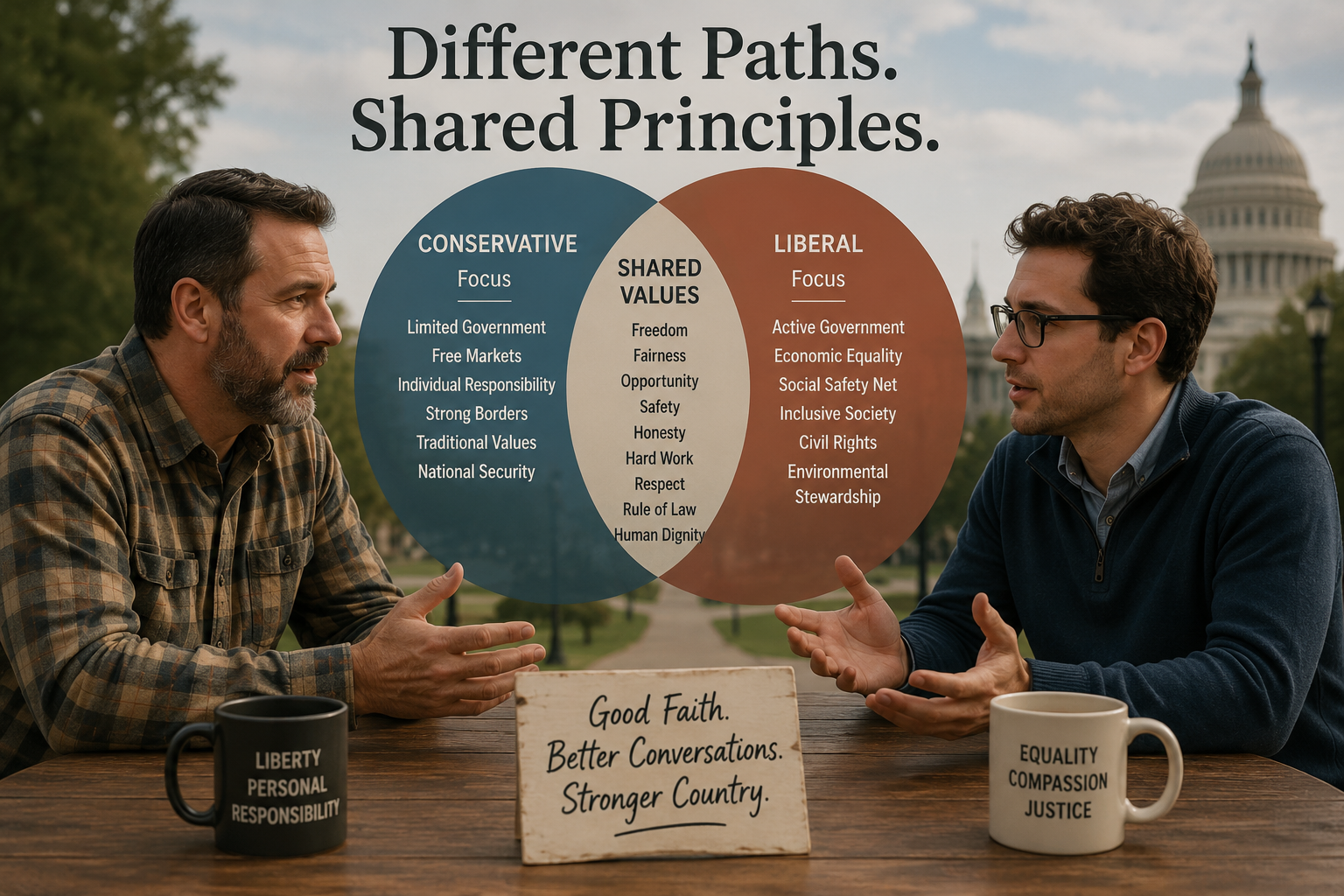
Carrier concludes that the evidence generally supports progressive policy. He wants a much larger government role in healthcare, economic regulation, labor policy and social welfare. I do not. My experience and reading lead me to trust markets, entrepreneurship, local decision-making and limited government over centralized control. We are frequently staring at the same problem and walking away with opposite solutions. Immigration is another clean break. Carrier favors looser immigration policy. I have argued for stronger border security, consistent enforcement of existing law and reforms that prioritize legal immigration alongside restored public confidence in the system. We both care about fairness and human dignity. We disagree sharply on how to get there.
Culture is the widest gap of all. Carrier embraces much of what today's progressive movement stands for. I have criticized identity politics, diversity mandates and the habit of sorting Americans into competing groups by immutable characteristics. My concern is straightforward. That approach undermines equal treatment under the law, which is the whole point of the law. People can disagree with that assessment. The disagreement is about policy and outcomes, not about two people who cannot find common moral ground at all.
We are examining the same problem and walking away with opposite solutions. That is a policy disagreement. It is not evidence that one side is evil and the other righteous, which is the framing that makes every political argument impossible to resolve.
One thing in Carrier's essay earns real credit. He does not excuse bad behavior just because it comes from his own side. He calls out activists on the left when they abandon free speech, resort to intimidation or trade evidence for ideology. Plenty of commentators today only find the courage to criticize the other team. Carrier applies the standard evenly, and that is worth acknowledging plainly.
What This Actually Means
Labels hide more than they reveal.
Reading Carrier's essay reminded me that political labels conceal more than they reveal. We assume conservatives and liberals live in separate moral universes. My experience says otherwise. Most people value liberty, fairness, honesty, accountability and human dignity. We land on different institutions and policies as the best way to protect those values, and that disagreement can run deep. None of this requires giving up your convictions. If anything it sharpens them. When you understand an opponent's actual argument instead of the caricature circulating online, you are forced to defend your own position honestly rather than coasting on tribal reflex.
Carrier and I would disagree about plenty if we sat down over coffee. I suspect we would also agree that evidence matters, democracy matters, free speech matters and that opponents deserve better arguments rather than louder insults. In an era built on tribal politics, that might be a better place to start than most people realize.
Disclaimer: The views expressed in this post are the personal opinions of the author and are offered for educational, commentary and public discourse purposes only. They are not institutional positions and do not constitute professional advice of any kind. References to public figures and published works support analysis and do not constitute factual claims about individuals beyond what is explicitly stated. Political and religious commentary is protected expression of opinion. Readers are encouraged to consult primary sources and form their own conclusions. No resemblance beyond explicit references is intended.