On June 30, 2026, the Supreme Court ruled 6-3 to strike down President Trump's executive order limiting birthright citizenship. Chief Justice John Roberts wrote that the 14th Amendment, as understood through 160 years of precedent, grants citizenship to virtually every person born on American soil regardless of the immigration status of their parents. The ruling is legally real and politically significant. It is also, in my view, historically wrong. The 14th Amendment was written in 1868 for one purpose and one population. It was written for freed slaves who had been legally stripped of citizenship by the Supreme Court's own Dred Scott ruling and had no other country, no foreign allegiance and no homeland to return to. Applying that amendment to foreign nationals who fly into the United States specifically to give birth, collect the citizenship benefit and fly home is not honoring the 14th Amendment. It is exploiting it. The Court refused to say so. But one justice in the majority handed Congress the tool to do something about it anyway, and Congress should pick it up immediately.
What the 14th Amendment Was Actually Written to Do
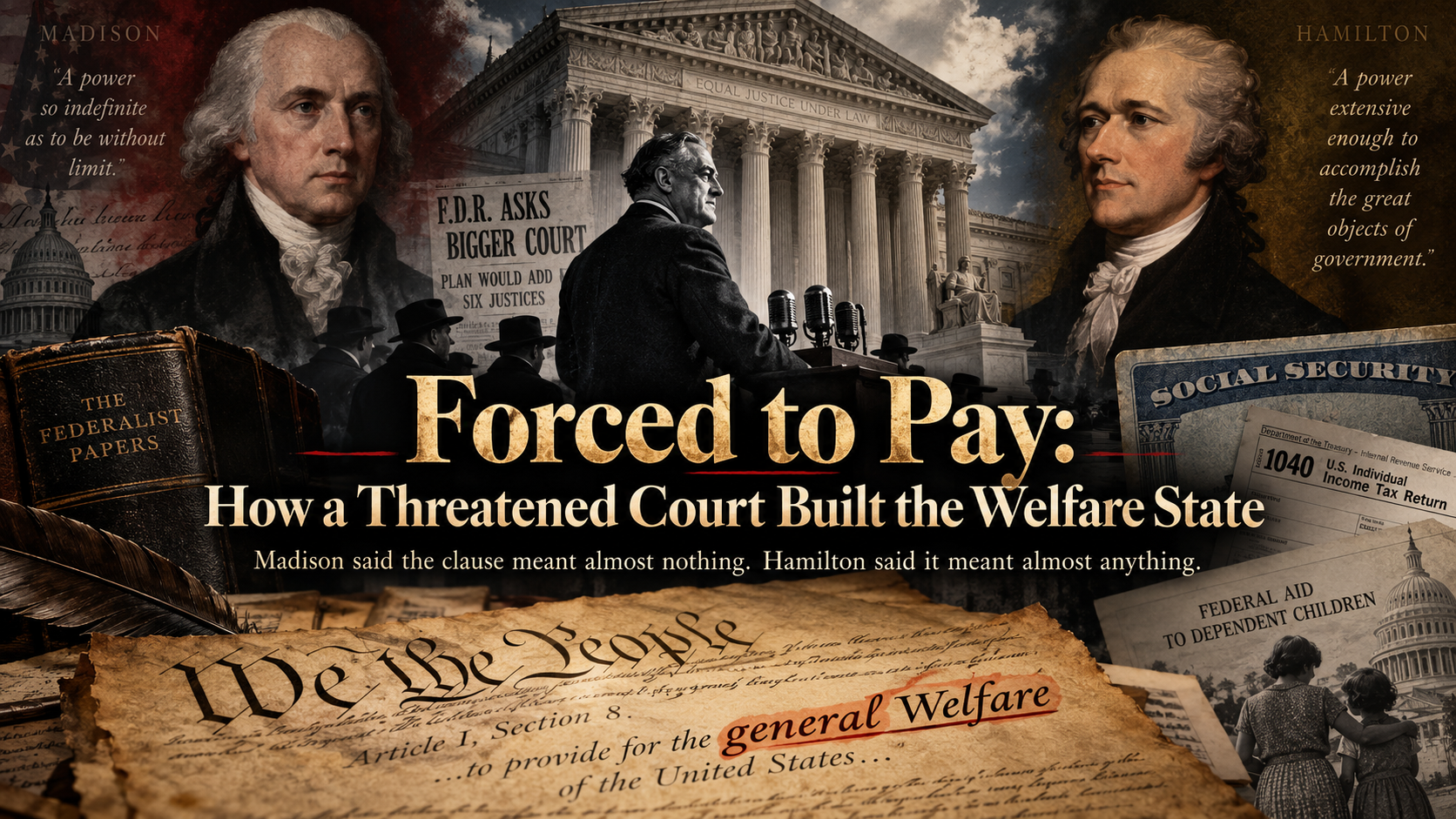
The historical record on this point is not ambiguous, even if the Court chose to read it differently. The 14th Amendment was ratified in 1868 as a direct response to two things: the Dred Scott decision of 1857, which held that Black Americans could never be citizens, and the practical reality of four million freed slaves who needed constitutional protection and had no citizenship status whatsoever. Justice Clarence Thomas made this point in his 91-page dissent. Blacks, he wrote, were entitled to citizenship because they were Americans. They had no other homeland, owed no allegiance to any foreign power and were subject to no other authority. The same could not be said for the children of foreign temporary visitors. The Trump administration's Solicitor General made the same argument during oral arguments, stating that the main object of the Citizenship Clause was to overrule Dred Scott and establish the citizenship of the freed slaves, and that it was never intended to grant citizenship to the children of temporary visitors or illegal aliens because, unlike the newly freed slaves, those visitors lack direct and immediate allegiance to the United States.
The majority chose to read the amendment through subsequent precedent, primarily the 1898 Wong Kim Ark decision, and conclude that the broader interpretation has been settled for over a century. That reading is defensible as a matter of legal interpretation. It is not defensible as a matter of historical intent. The amendment was a response to a specific injustice against a specific population. Turning it into a global citizenship offer that any foreign national can claim by timing a flight correctly is an expansion of the text so far beyond its original purpose that calling it faithful interpretation requires ignoring why the amendment was written in the first place.
Three justices, Thomas, Gorsuch and Alito, would have upheld Trump's executive order. Thomas argued directly that the 14th Amendment was primarily aimed at formerly enslaved Black people who had no other national allegiance and could not be treated as owing primary loyalty to any foreign state. Alito separately warned that the ruling preserves a powerful incentive to enter or remain in the country illegally specifically to secure citizenship for children. The dissent did not prevail. But the historical and policy arguments it made are not going away, and Congress has the authority to act on them in ways that do not require overturning the ruling itself.
Kavanaugh's Concurrence Is the Most Important Paragraph in the Decision
Justice Brett Kavanaugh did not join the majority's constitutional reasoning. He concurred only on the narrower ground that Trump's executive order violated existing federal law, not the Constitution itself. That distinction is critical. In his concurrence, Kavanaugh wrote explicitly that Congress could amend that law or otherwise enact new legislation establishing exceptions to birthright citizenship for children born to foreign citizens unlawfully or temporarily in the country. He then added: Congress has not yet done so. That is not a throwaway line. That is a sitting Supreme Court justice in the majority telling Congress directly that the path to limiting birthright citizenship runs through legislation, not executive orders. The constitutional door may be closed for now. The legislative door is open and Kavanaugh just pointed at it.
What Congress Can Do Without Touching the Constitution
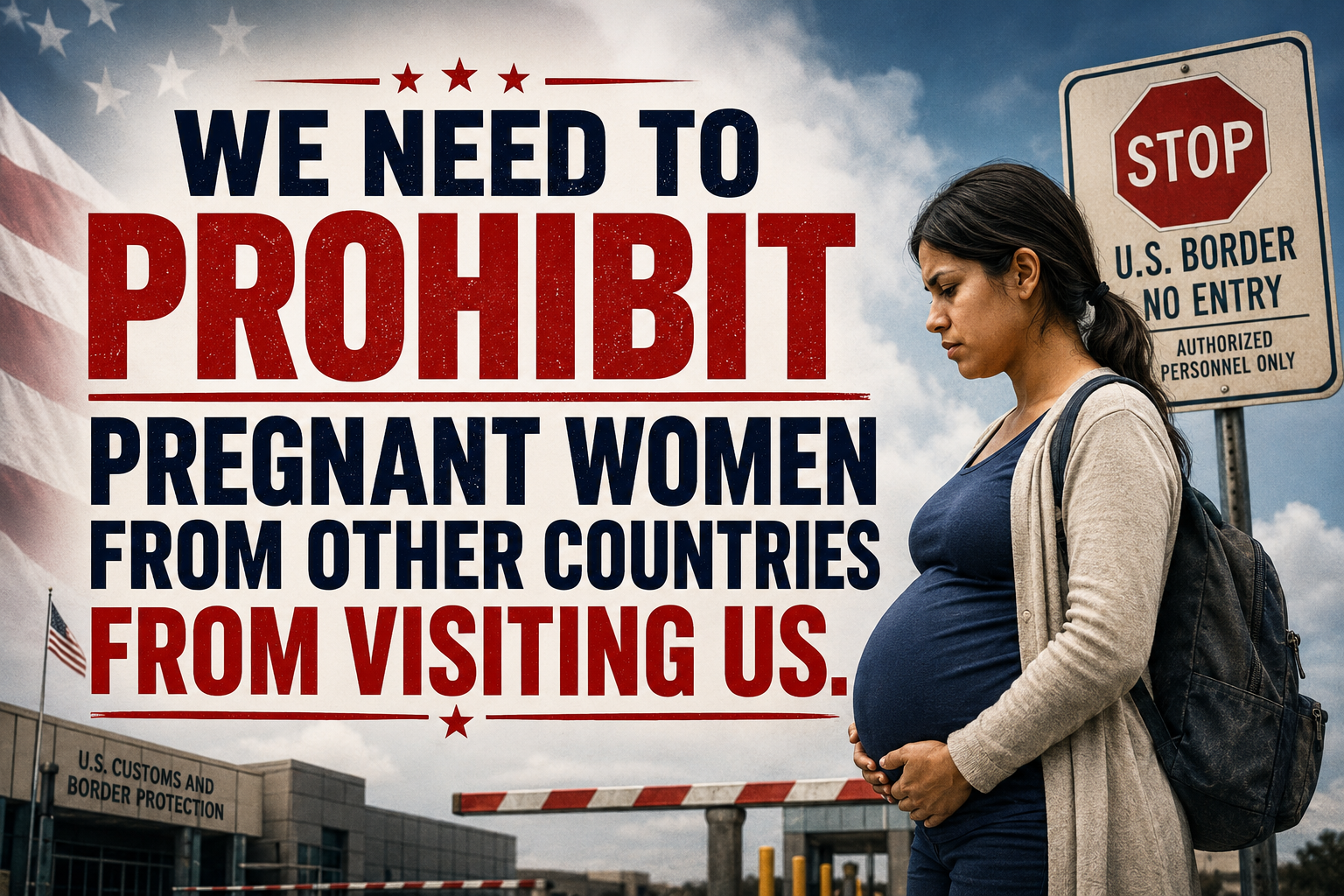
Congress has plenary authority over immigration under Article I. That authority includes the power to regulate who may enter the United States, for what purpose, under what conditions and subject to what restrictions. Nothing in the Constitution and nothing in the Court's June 30 ruling prevents Congress from legislating directly on the question of who may enter the country while pregnant. The specific mechanism is entry restriction. Congress could pass legislation prohibiting foreign nationals who are pregnant from entering the United States on tourist visas, student visas, temporary worker visas or any other non-immigrant category until after the birth of the child in their country of origin or residence. The child born abroad to foreign nationals does not become a United States citizen by virtue of that birth alone. The 14th Amendment's citizenship guarantee attaches to birth on American soil. If the birth does not occur on American soil, the guarantee does not apply. The Supreme Court's ruling changes nothing about that calculation. Congress can close the entry door before the birth occurs and the ruling becomes entirely irrelevant to the outcome.
The Supreme Court ruled on what the 14th Amendment says about children born on American soil. It said nothing about Congress's power to regulate who arrives on American soil while pregnant. Those are different questions and only one of them was decided on June 30.
The Birth Tourism Problem Is Documented and Real
This is not a theoretical concern about a hypothetical abuse. Birth tourism is a documented, organized industry. In January 2020, even before Trump's second term, the State Department adopted a policy making it harder for pregnant foreign women to obtain tourist visas when the purpose appeared to be giving birth on American soil to secure United States citizenship for the child. That policy acknowledged openly that the practice was occurring at scale and that the visa process could and should account for that purpose. Birth tourism operations in California and New York have been the subject of federal law enforcement investigations and prosecutions under fraud and visa abuse statutes. The population engaging in birth tourism is not in the main the same population that drives the broader immigration debate. Many birth tourists are affluent foreign nationals who pay cash for hospital stays, return home immediately after delivery and have no intention of relocating to the United States themselves. They are purchasing citizenship for their child as a future option, a hedge against political instability, access to American universities and eventual residency pathways. No other developed nation with a jus soli tradition applies it as broadly as the United States currently does, with no conditions and no examination of purpose.
The Legislative Framework That Would Work
The legislation Congress should pass is straightforward. Any foreign national traveling to the United States on a non-immigrant visa who is pregnant at the time of application or at the time of entry would be inadmissible until after the child has been born in the mother's country of origin or country of residence. Exceptions could be built in for genuine medical emergencies requiring treatment unavailable in the home country, for women who become pregnant during a lawful long-term stay already in progress and for women in active asylum or refugee proceedings. The core restriction targets one specific and documented conduct: intentional travel to the United States for the explicit purpose of giving birth on American soil to obtain citizenship for the child. That is a definable, provable purpose that visa officers and consular officials are already trained to identify. The 2020 State Department policy demonstrated it can be done administratively. Congressional legislation would give it statutory force and remove any question about executive authority.
My Bottom Line
The Supreme Court got the historical question wrong. The 14th Amendment was written to protect freed slaves who had no citizenship, no homeland and no legal standing in the country where they had lived their entire lives. Extending it to cover the child of a foreign national who flew to Los Angeles on a tourist visa last Tuesday is an expansion of constitutional text so far beyond its original purpose that calling it faithful interpretation requires ignoring why the amendment was written in the first place. Thomas was right about that in his dissent and the historical record supports him regardless of how the majority voted. But the majority ruled and the ruling stands. The correct response is not to relitigate the constitutional question the Court just decided. The correct response is to read Kavanaugh's concurrence carefully, note that he explicitly told Congress it has the authority to legislate on this question and pass the legislation. The door the Court closed on executive orders is not the same door Congress can walk through. Congress should walk through it today.
The 14th Amendment was written to give citizenship to people who had no other country. It was not written to give citizenship to people who fly here from another country to take advantage of it. Congress has the authority to draw that distinction. One Supreme Court justice just said so in writing.
Why This Matters
Birthright citizenship as currently applied is a policy the American people have never affirmatively chosen through their elected representatives. It was extended by judicial interpretation in 1898 and has been treated as settled ever since without Congress ever deciding that the entire world's population should be able to secure American citizenship for their children by timing a visit. The Supreme Court has now reaffirmed that it will not reopen the constitutional question. But Kavanaugh's concurrence makes clear the legislative question remains entirely open, and in a democracy, important policy decisions should be made by the legislature rather than discovered by courts interpreting 158-year-old text that was written for a specific historical crisis that has nothing to do with birth tourism. This one has been waiting for Congress to step up for 128 years. The June 30 ruling is the clearest invitation Congress has received to finally do so.
References
- Supreme Court of the United States. (2026, June 30). Trump v. Barbara, No. 24-940. Majority opinion by Roberts, C.J.; concurrence by Kavanaugh, J.; dissent by Thomas, J.
- NBC News. (2026, June 30). Supreme Court rejects Trump's attempt to limit birthright citizenship. nbcnews.com.
- NPR. (2026, June 30). Supreme Court upholds birthright citizenship on constitutional grounds. npr.org.
- Congressional Research Service. (2026, April). Trump v. Barbara: Supreme Court considers birthright citizenship. LSB11423. congress.gov.
- U.S. Department of State. (2020, January). Public notice: Visa regulations regarding birth tourism. state.gov.
- Dred Scott v. Sandford, 60 U.S. 393 (1857).
- United States v. Wong Kim Ark, 169 U.S. 649 (1898).
- Fourteenth Amendment to the United States Constitution. (1868). Section 1, Citizenship Clause.
Disclaimer: The views expressed in this post are the personal opinions of the author and are offered for educational, commentary and public discourse purposes only. They do not represent the positions of any institution, employer, organization or affiliated entity. Nothing in this post constitutes legal, financial, medical or professional advice of any kind. References to Supreme Court decisions, legislative history and constitutional interpretation are based on publicly available sources cited above. Commentary on legal and political subjects reflects the author's independent analysis and is protected expression of opinion. Readers are encouraged to consult primary sources and form their own conclusions.