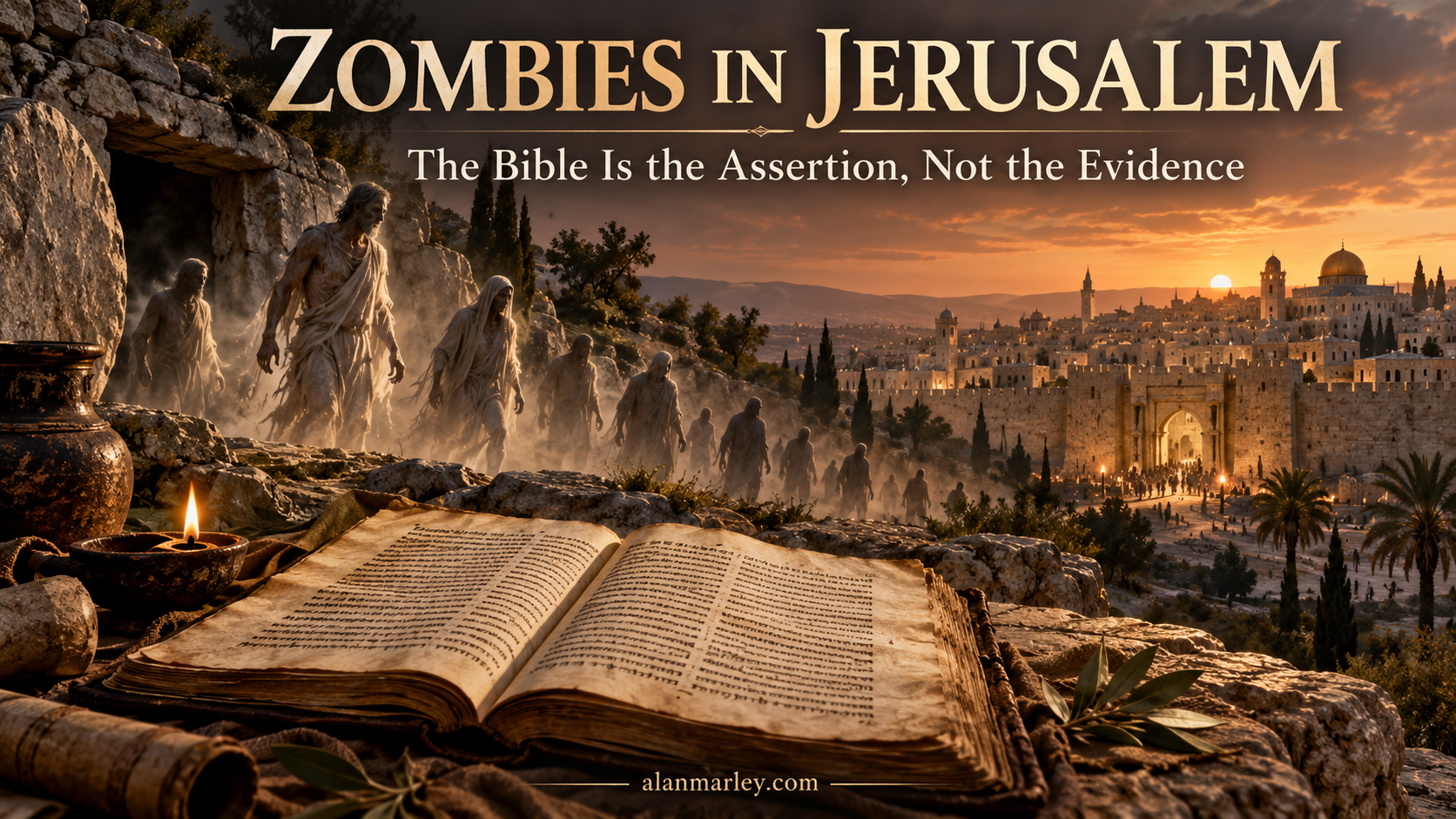
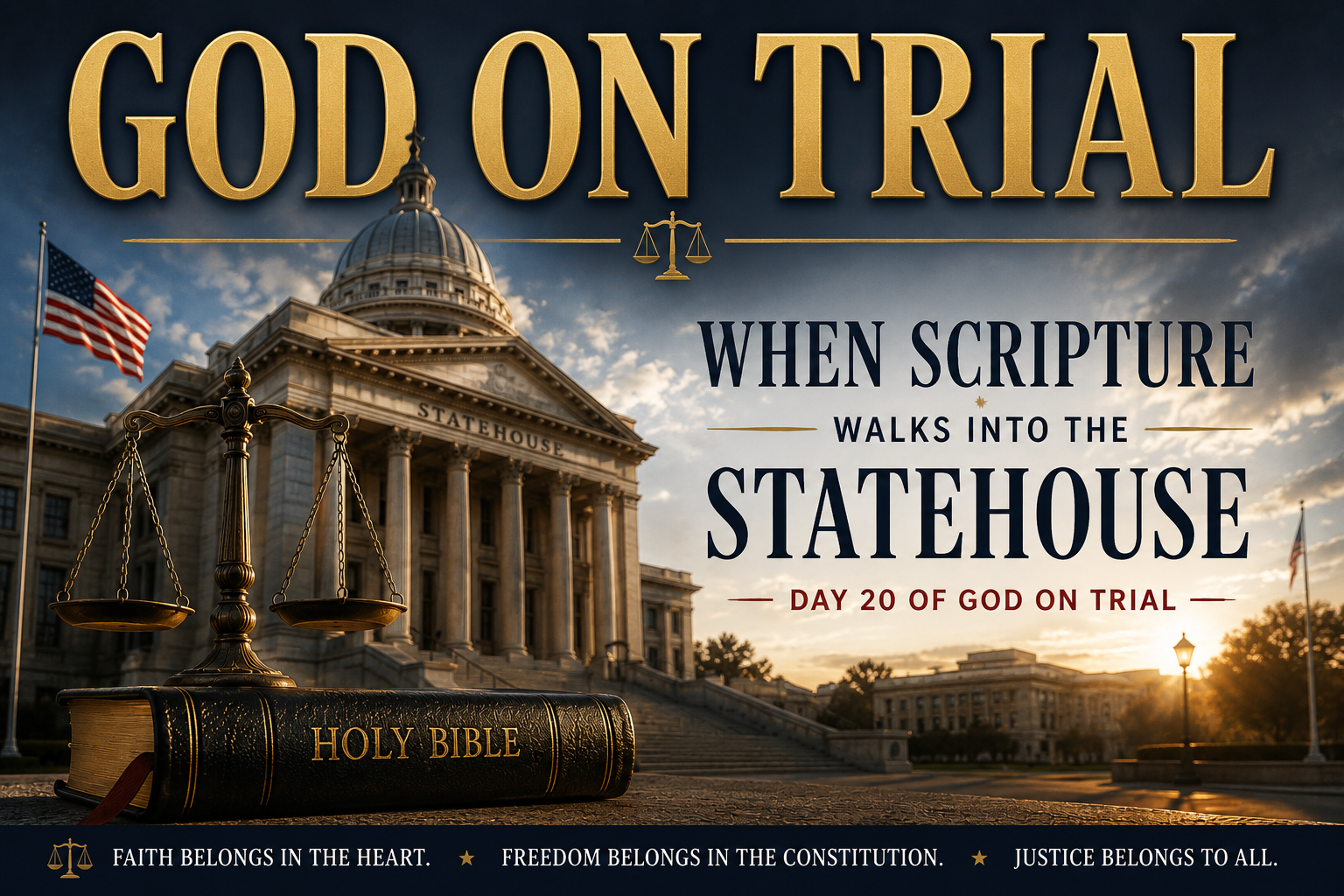
The authorship questions raised across this series are not academic trivia disconnected from real consequences. They are the foundation of the most important political argument a secular republic can make. Every time a legislature cites scripture to justify a civil restriction, it is borrowing the authority of a text whose origins are far less settled than the confidence of the citation suggests. The California Family Council opens its 2025 legislative scorecard with Proverbs 29:2 as the stated basis for evaluating whether elected officials are governing in ways that honor God's design for society. A coordinated Christian nationalist network called Project Blitz has produced model legislation so widely adopted that analysts found its language embedded in 28 separate state bills mandating Ten Commandments displays in public schools. The Southern Baptist Convention's Ethics and Religious Liberty Commission publicly endorses specific federal legislation it describes as rooted in Scripture. This is not fringe activity. This is organized, funded, coordinated and accelerating. And it is being built on a textual foundation that, as this series has shown across nineteen days, cannot support the weight being placed on it.
The Question the Statehouse Never Asks
A graduate seminar in religious studies, biblical history or textual criticism would ask certain questions automatically before assigning authority to any ancient document. Who actually wrote this. When. Why. For whom. Under what political or institutional pressures. With what later editing. Through which manuscript traditions. In which translation. For which theological purpose. These questions are not hostile to scripture. They are the basic tools of honest scholarship applied to any text, religious or secular. They are asked as a matter of course at every accredited university that teaches biblical studies. They are asked in seminary. They are asked in serious theological training. They are never asked in the statehouse that cites the result of those questions as the basis for a law binding on millions of citizens who never agreed to accept the text's authority.
That gap between what scholarship knows about these texts and what legislative chambers treat them as is not an innocent oversight. It is the gap through which coercion enters. When a lawmaker stands at a podium and says the Bible says marriage is this or the Bible says life begins here, that lawmaker is treating as settled and authoritative a text whose authorship is disputed, whose composition spans centuries of editing and conflicting traditions, whose canon was decided by political councils operating under imperial pressure, whose translation history includes enormous interpretive choices made by human beings at specific historical moments with specific theological agendas, and whose meaning is contested among the thousands of competing Christian denominations that have produced more than 45,000 distinct Protestant traditions in the centuries since the Reformation. The phrase the Bible says does not actually settle anything. It announces that a decision has already been made about which interpretation, which translation, which tradition and which theological framework is correct. That decision is then imposed on everyone else as law.
Project Blitz, a Christian nationalist "bill mill" steered by historian David Barton and operated through the WallBuilders organization, has produced model legislation that has been adopted with nearly identical language in 28 or more state bills mandating Ten Commandments displays in public school classrooms. Speaker of the House Mike Johnson has publicly named Barton as a profound influence. The Southern Baptist Convention's public policy arm actively lobbies Congress with legislation it describes as rooted in Scripture. The California Family Council publishes annual legislative scorecards opening with direct scripture citations. These are not private religious activities protected by the First Amendment. These are organized campaigns to embed specific theological positions into binding civil law, built on texts whose origins, authorship and transmission history the legislators invoking them have almost certainly never seriously examined.
The Specific Texts and What Scholarship Knows About Them
The Ten Commandments, which Project Blitz has spent years mandating for public school display, appear twice in the Hebrew Bible in versions that do not precisely match each other. Exodus 20 and Deuteronomy 5 present different versions of the same commandments, with textual scholars noting differences in wording, emphasis and the reasoning given for the Sabbath commandment in particular. The Exodus version grounds the Sabbath in God's rest after creation. The Deuteronomy version grounds it in the Exodus from Egypt. These are not the same theological claim and they reflect different compositional traditions. Critical scholars have long identified the Deuteronomistic history, the editorial layer responsible for much of Deuteronomy and the books that follow it, as a distinct compositional tradition operating centuries after the events it describes, shaped by the theological concerns of its own era rather than simply recording the past.
The New Testament passages most frequently cited in legislative debates about marriage, sexual ethics and gender reflect the same complexity. The texts from which modern Christian sexual ethics are most directly derived are predominantly Pauline or pseudo-Pauline, meaning they come either from the seven letters critical scholars accept as genuinely Paul's or from the six letters written in Paul's name by later authors after his death. As I examined in detail on Day 18, Paul's authority itself rests on a contested private revelation on the road to Damascus that the New Testament's own text describes three contradictory ways. The Pastoral Epistles, 1 Timothy, 2 Timothy and Titus, which contain some of the most politically weaponized statements about women's roles and sexual behavior in the entire New Testament, are precisely the letters that the mainstream critical scholarly consensus regards as pseudonymous, written not by Paul but by unknown later authors claiming his authority decades after his death. The legislators citing these texts as the direct word of an apostle are citing documents that the academy has judged, with good reason, to have been written by someone else entirely.
The phrase "the Bible says" does not settle anything. It announces that a decision has already been made about which interpretation, which translation, which tradition and which theological framework is correct. That decision is then imposed on everyone else as law. The settling happened before the citation. The citation is the conclusion dressed as the premise.
Why the Questions Do Not Destroy Faith
This is the point most likely to be misread, so it is worth stating with precision. Asking who wrote a text, when, under what pressures and with what later editing does not destroy the text's spiritual meaning for people who find meaning in it. Millions of Christians know that the Pastoral Epistles are probably pseudonymous and continue to find genuine spiritual sustenance in reading them. Millions of Jews are familiar with the Documentary Hypothesis, which identifies at least four distinct compositional sources woven together to produce the Torah, and continue to find those texts sacred, generative and morally serious. The questions do not evacuate meaning. They locate it correctly. They put the text in its proper category as a human record of a community's encounter with what it understands as the divine, which is a genuinely valuable and genuinely human thing, rather than as a direct transmission from an inerrant supernatural authority that settles questions of civil law for people who never subscribed to the tradition.
The damage these questions do is not to faith. It is to the specific claim that a particular tradition's reading of a particular set of texts should be binding on the citizens of a pluralistic secular republic. That claim was already weak on its merits. The textual history makes it weaker still. And the constitutional argument, which the founders built directly into the First Amendment's establishment clause, makes it legally impermissible regardless of how confident the citation sounds at the podium.
The Epistemic Double Standard
Here is the test that exposes the problem most cleanly. Imagine a state legislature mandating the display of a Quranic verse in every public school classroom. Imagine a lawmaker citing the Quran in floor debate as the basis for a civil restriction on marriage or reproductive rights. Imagine a Muslim advocacy organization publishing legislative scorecards grading elected officials on whether their votes honor the Quran's design for society. The outrage from the same political movement currently supporting Project Blitz would be immediate, loud and framed in the language of constitutional principle. The establishment clause would be invoked. The separation of church and state would be named as the founding principle at stake. These objections would be correct. They would also be applied with a double standard so obvious that naming it should not be necessary and yet clearly is.
The establishment clause does not protect Christian scripture from legislative citation while permitting Quranic citation. It prohibits both with identical force. A government that cannot mandate a Quranic verse on a schoolroom wall cannot mandate a biblical verse either. A government that cannot restrict civil marriage based on Islamic jurisprudence cannot restrict it based on Pauline epistles either, especially when those epistles were probably not written by Paul and were certainly not written as civil law for a twenty-first-century pluralistic democracy. The principle is consistent or it is not a principle. It is just preference wearing constitutional clothing.
James Madison's Memorial and Remonstrance Against Religious Assessments, written in 1785, explicitly warned that religion and government corrupt each other when mixed. Jefferson's letter to the Danbury Baptists in 1802, which introduced the wall of separation metaphor into American political discourse, was written to reassure Baptists, a minority group facing established-church persecution in Connecticut, that the federal government would protect their conscience from majority religious imposition. The founders did not build the establishment clause out of hostility to religion. They built it out of intimate familiarity with what happens to religious minorities, and to the faith itself, when a dominant religious tradition captures the machinery of the state. Every Christian nationalist who dismisses church-state separation as a modern liberal invention is arguing against the explicitly stated intentions of the people they most frequently invoke.
The Load-Bearing Nature of the Boundary
Across twenty days of this series, I have examined the 14th Amendment's original intent and how the certainty problem undermines every exclusive truth claim, the three contradictory accounts of Paul's Damascus road experience, the anonymous and pseudonymous authorship of large portions of the New Testament, the pseudepigraphy of ancient religious composition and now the direct translation of these texts into civil law as it is actually happening in American statehouses today. Each of those topics illuminates a different face of the same argument. The boundary between what a person is free to believe and what a government is permitted to enforce is load-bearing. Pull it out and the entire structure of pluralistic self-governance begins to collapse, not because religion is bad but because no single religious tradition's reading of any text can or should govern a population that includes sincere believers in every other tradition and sincere non-believers in all of them.
The boundary does not get less important the further into the text you go. It gets more obviously necessary. When you examine the specific texts being cited in specific legislative debates and discover that the Pastoral Epistles probably were not written by Paul, that the Ten Commandments appear in two different versions with different theological reasoning, that Paul's own authority rests on an event described three contradictory ways in a book he did not write, and that the translation choices producing the specific English words being quoted were made by committees of human beings operating within specific theological traditions centuries after the original composition, the confidence of the citation starts to look less like scholarship and more like performance. It is the appearance of settled authority borrowed from texts whose own origins are deeply unsettled.
My Bottom Line
A republic that takes its own founding principles seriously has to be willing to ask the texts cited in its statehouses the same questions a graduate seminar would ask without hesitation. Not to destroy faith. Not to drive religion from public life. Not to prevent believers from voting their conscience or speaking their convictions. All of those things are protected and should be. But to restore the proper boundary between private conviction and public coercion. A citizen who reads the Pastoral Epistles and structures her own life around their teachings is exercising her constitutionally protected freedom. A legislature that turns those same texts into binding civil restrictions on citizens who never accepted their authority is doing something fundamentally different. The difference is the entire argument. Authorship, transmission, translation, interpretation, canon formation and textual contradiction are not dry academic subjects. They are the evidentiary foundation of the most important legal and civic principle this republic has: you may believe anything you choose, and the government may enforce only what it can justify on grounds that do not require you to share anyone else's faith as a precondition.
The statehouse cites the text with confidence. The graduate seminar asks who wrote it, when, why, under what pressures and through how many editorial layers. A republic worth living in should demand at least as much rigor from its legislators as a university demands from its first-year students.
Why This Series Continues
Day 20 is not a conclusion. It is a consolidation. The specific topics ahead, from the Exodus narrative and what archaeology actually found in the Sinai to the virgin birth and what medicine understands about parthenogenesis to the resurrection accounts and how they contradict each other across the four Gospels to the Book of Revelation and the documented political crisis that produced it as coded resistance literature under Roman persecution, all follow the same structure. Myth versus what we actually know. Claimed certainty versus documented complexity. And always, always, the constitutional argument: a pluralistic secular republic cannot be governed by any tradition's reading of any of this, not because the texts lack value, but because their value is spiritual, literary, philosophical and cultural rather than legislative. The boundary between those categories is everything. It has to be defended in every generation, and this generation has more work to do on that defense than it has yet acknowledged.
References
- California Family Council. (2026, January). 2025 Legislative scorecards: Defend life, family, and liberty. californiafamily.org. [Opens with Proverbs 29:2 as basis for evaluation.]
- The 74 / Arkansas Advocate. (2025, July). 28 bills, Ten Commandments and 1 source: A Christian right "bill mill." the74million.org.
- Ethics and Religious Liberty Commission, Southern Baptist Convention. (2026). Bill endorsements 2025-2026: Legislation rooted in Scripture. erlc.com.
- Madison, J. (1785). Memorial and Remonstrance Against Religious Assessments.
- Jefferson, T. (1802). Letter to the Danbury Baptist Association.
- Ehrman, B. (2011). Forged: Writing in the name of God. HarperOne.
- Friedman, R. E. (1987). Who wrote the Bible? Summit Books.
- Landsborough, D. (1987). St Paul and temporal lobe epilepsy. Journal of Neurology, Neurosurgery, and Psychiatry, 50 (6), 659-664.
- First Amendment to the United States Constitution. (1791). Establishment Clause.
Disclaimer: The views expressed in this post are the personal opinions of the author and are offered for educational, commentary and public discourse purposes only. They do not represent the positions of any institution, employer, organization or affiliated entity. Nothing in this post constitutes legal, financial, medical or professional advice of any kind. This post engages critically with specific theological doctrines, religious organizations, political movements and historical texts and does not make claims about the sincerity of any individual believer's personal faith. References to organizations, legislation, scholarship and constitutional history are based on publicly available sources cited above. Commentary on religious, political and constitutional subjects reflects the author's independent analysis and is protected expression of opinion. Readers are encouraged to consult primary sources and form their own conclusions.