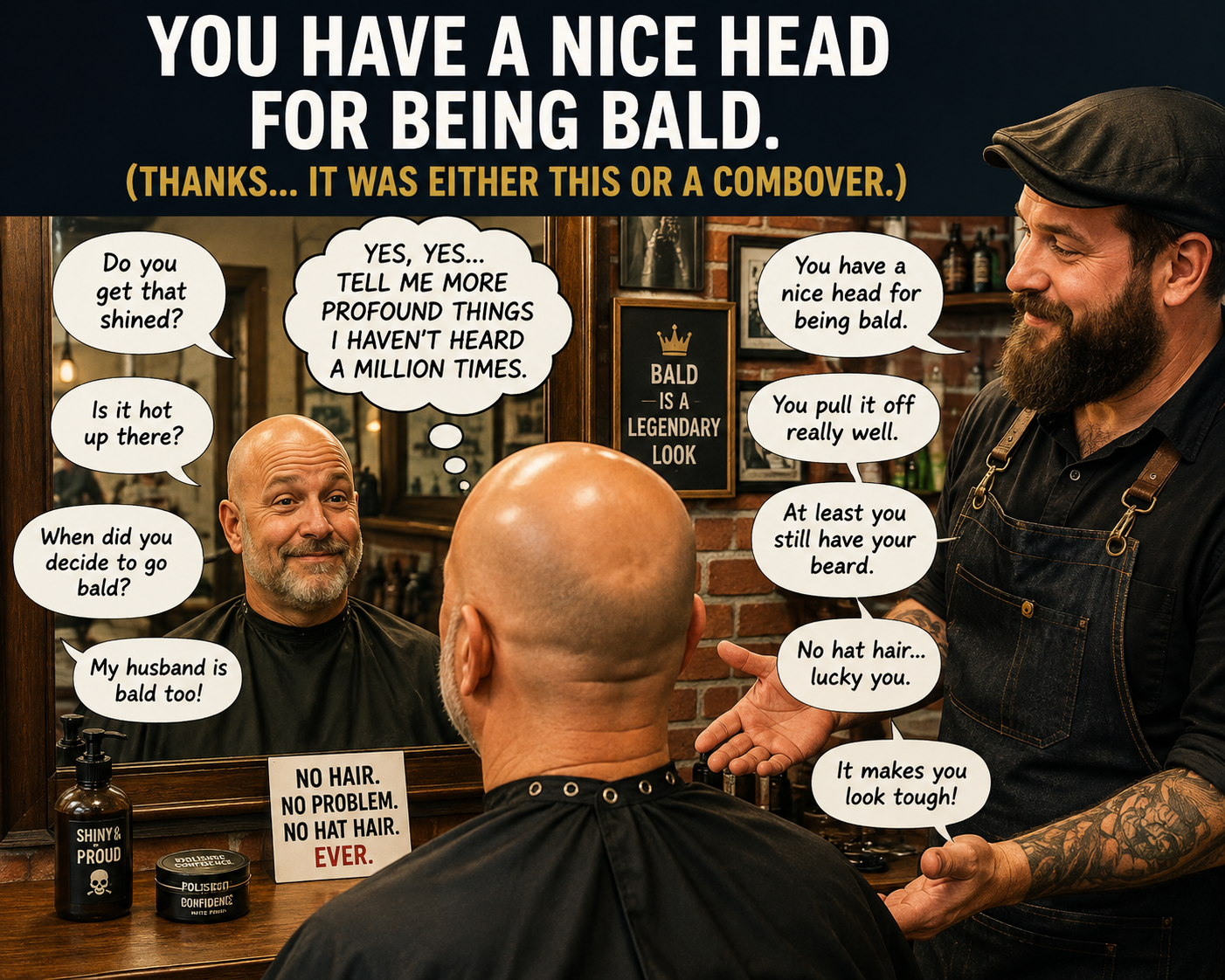
Laughing at Yourself Is a Superpower (And It’s Getting Rare)
How humility, humor, and perspective keep you sane

Introduction
There are two kinds of people in the world:
- People who can laugh at themselves.
- People who make everyone else walk on eggshells.
I’m not talking about being a clown. I’m talking about the ability to take a hit to the ego without turning it into a federal case. To admit you were wrong without collapsing into defensiveness. To hear a joke about yourself and not treat it like a personal attack.
That skill used to be common. Now it’s practically a personality trait you have to train.
And the truth is simple: if you can’t laugh at yourself, life will laugh at you anyway. The only question is whether you join in, or you spend your days offended, fragile, and exhausted.
Why we struggle with it now
A lot of people don’t just have opinions anymore. They have identities.
And identities are touchy. They don’t like correction. They don’t like criticism. They don’t like being teased. If you poke the identity, the person reacts like you punched their soul.
Add social media to the mix—where everyone performs, everyone postures, and everyone pretends they never miss—and you get a culture where being wrong feels “unsafe.”
But being wrong is human. Being awkward is human. Saying something stupid is human. Misreading a room is human. Forgetting what day it is, tripping on a step, sending a text to the wrong person, calling someone “buddy” when you meant “boss”—human.
Laughing at yourself isn’t weakness. It’s realism.
The difference between laughing and self-hate
Let’s get one thing clear: laughing at yourself is not the same as trashing yourself.
Self-hate says: “I’m an idiot.”
Healthy humor says: “Well…that was a moment.”
Self-hate is a permanent label.
Healthy humor is a temporary shrug.
One makes you smaller. The other makes you lighter.
The goal isn’t to dunk on yourself for sport. The goal is to keep your ego from running the whole show.
What laughing at yourself actually signals to others
When you can laugh at yourself, people subconsciously pick up a few things:
- You’re confident enough not to perform perfection.
- You’re safe to be around because you don’t punish honesty.
- You’re not easily manipulated by flattery or intimidation.
- You can take feedback without turning it into drama.
- You probably have some perspective.
In other words, it signals maturity.
And maturity is rare enough now that it stands out like a bright light in a dark room.
The hidden benefit: it makes you harder to control
People who can’t laugh at themselves are easy to control.
All you have to do is threaten their image.
- “How dare you.”
- “That’s offensive.”
- “You’re disrespecting me.”
- “You’re attacking who I am.”
It’s emotional blackmail dressed up as virtue.
But if you can chuckle at your own imperfections, you become difficult to manipulate. You’re not terrified of looking imperfect. You’re not addicted to winning every exchange. You don’t need to “save face” every five minutes.
You can just live.
The moment you should laugh (and the moment you shouldn’t)
This matters: timing and context.
Laugh at yourself when:
- You made a harmless mistake.
- You had an awkward moment.
- You misjudged something and learned from it.
- You’re owning your part in something without making excuses.
- You want to lower tension and keep things moving.
Don’t laugh it off when:
- You actually hurt someone and need to take responsibility.
- The mistake is serious and needs a fix, not a punchline.
- You’re using humor to dodge accountability.
- You’re in a moment where people need sincerity, not deflection.
The rule is simple: humor is great, but it shouldn’t be a hiding place.
How to build the skill (without turning into a sitcom)
Here are some practical ways to get better at it.
1) Start collecting your “bloopers” on purpose
Most people replay their embarrassing moments like a trauma montage.
Try something different: treat them like stories you’ll tell later.
You’re not denying reality—you’re reframing it. You’re saying, “Yes, I messed up. And I’m still alive.”
That mindset is oddly freeing.
2) Make yourself the “safe target” in the room
If you’re leading a team, running a business, teaching a class, or raising a family, this is gold.
A leader who can say, “That one’s on me,” instantly reduces the fear level in the room. People stop hiding problems. They stop covering mistakes. They get honest faster.
And honest beats polite every day of the week.
3) Use the “10-year test”
Ask: “Will this matter in 10 years?”
If the answer is no, you can probably laugh.
If the answer is yes, you can still laugh—just later, once you’ve handled it.
4) Learn to narrate your own humanity
Some people walk around acting like a press secretary for their ego.
Drop the PR voice. Try something like:
- “That sounded smarter in my head.”
- “I confidently took the wrong turn.”
- “I just witnessed myself do that.”
- “I’m going to pretend that didn’t happen, but we all saw it.”
- It breaks the tension. It disarms the room. It keeps you from spiraling.
5) Don’t confuse humor with permission to be sloppy
Laughing at yourself doesn’t mean you stop improving.
It just means you improve without needing to pretend you’re flawless in the meantime.
You can own a mistake and still take your craft seriously.
That’s the sweet spot.
Why it’s attractive (in friendship, marriage, and business)
People like being around someone who’s not high-maintenance emotionally.
If every conversation is a minefield, folks eventually stop coming around. Not because they hate you—because they’re tired.
But when you can laugh at yourself, you create room for other people to be human too. They don’t have to be perfect around you.
That’s trust. That’s connection. That’s the good stuff.
And yes—it even helps in conflict. When you can admit your part with a little humility, it lowers the temperature fast.
It’s hard to keep a fight going when someone says, “Alright…you’re right. I was being stubborn.”
That sentence has saved more relationships than any motivational quote ever will.
The bigger picture: humor is perspective
At the end of the day, laughing at yourself is a form of perspective. It’s an internal reminder that you’re not the center of the universe.
It keeps you grounded.
It keeps you teachable.
And it protects you from becoming that person— the one everyone avoids because everything turns into a lecture, a grievance, or a courtroom argument.
Life is heavy enough. Don’t make it heavier by worshipping your own image.
Why This Matters
If you can laugh at yourself, you get three practical wins:
- You become more resilient. Mistakes stop feeling like identity threats.
- You become easier to work with and live with. People relax around you.
- You become more effective. Feedback lands, learning happens, and you move forward faster.
In a world full of brittle egos and constant outrage, the ability to say “Yep, that was me” and grin is a competitive advantage—and a sanity saver.
References
None. This post is original commentary based on observation and lived experience.
Disclaimer:
The views expressed in this post are opinions of the author for educational and commentary purposes only. They are not statements of fact about any individual or organization, and should not be construed as legal, medical, or financial advice. References to public figures and institutions are based on publicly available sources cited in the article. Any resemblance beyond these references is coincidental.