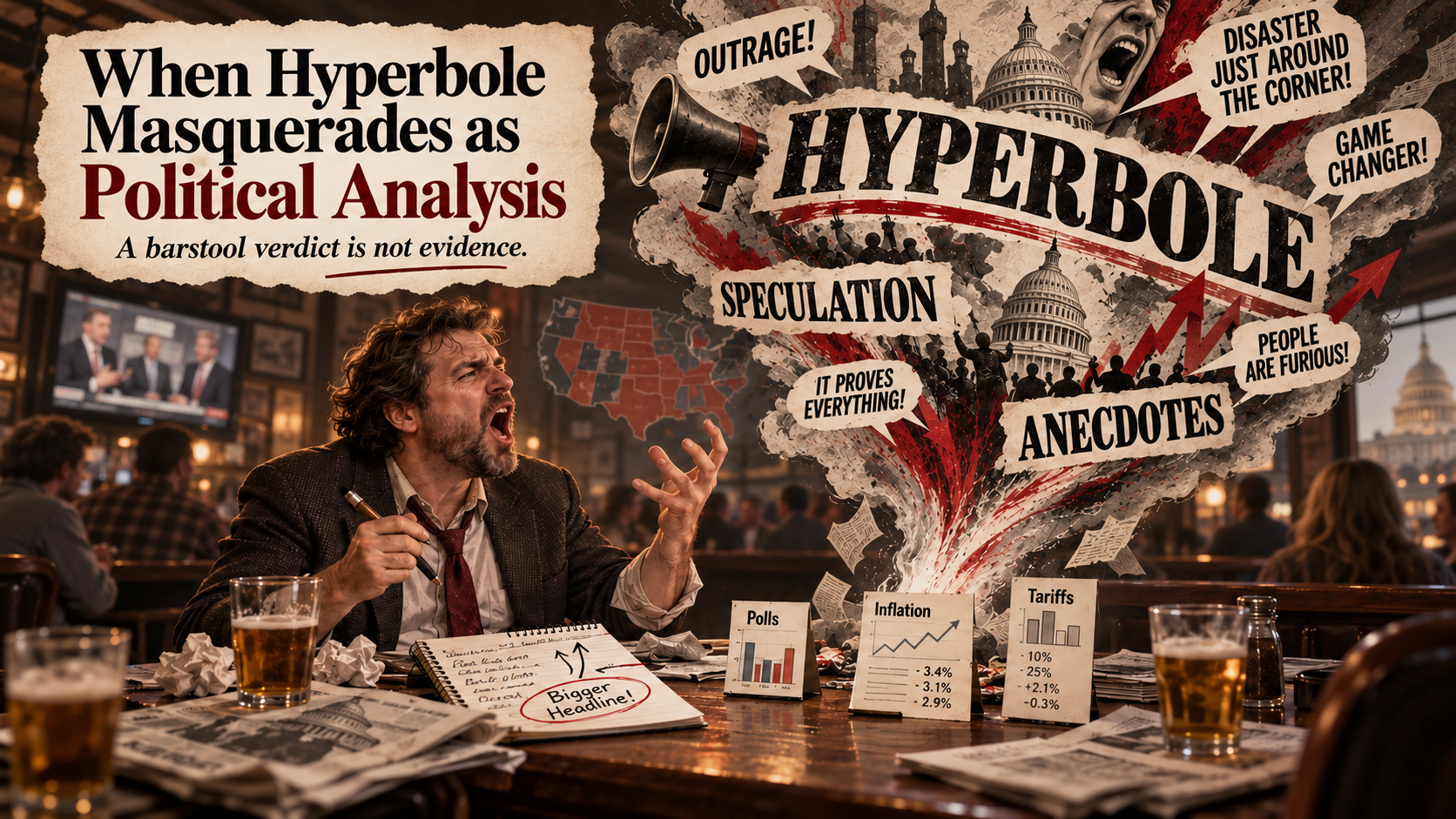
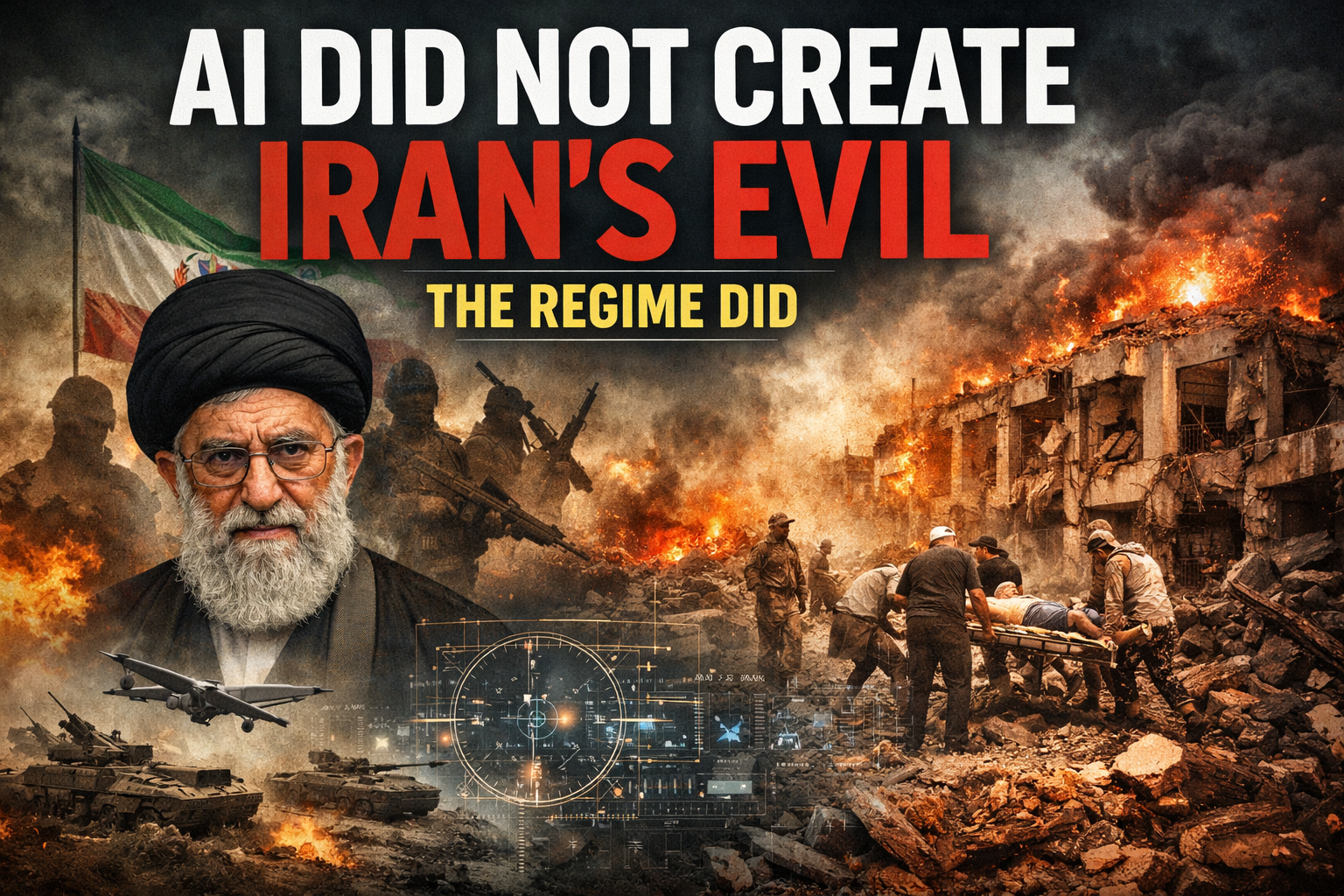
There is a particular kind of intellectual dishonesty that dresses itself up as moral seriousness. It picks a real concern, amplifies it past the evidence and uses it to redirect attention away from something harder to look at. The current argument about AI and the conflict with Iran is a clean example of exactly that move.
The argument goes like this: AI-assisted targeting is the real scandal. Modern military technology is the main reason this war is morally suspect. If we could just get the software out of the kill chain, the ethical problem would be substantially resolved.
That framing is backwards. And the people advancing it know it is backwards, which is what makes it worth calling out directly.
Iran's regime did.
If AI is being used in military targeting, it deserves scrutiny. Civilian deaths deserve scrutiny too. The U.N. has raised serious concerns about civilians caught in the conflict and about possible violations of international law. None of that is in dispute. The question is whether the AI conversation is being used to illuminate the problem or to obscure a more fundamental one.
The Sleight of Hand
The viral version of this argument wants readers staring so hard at the software that they stop looking at the regime. It is a neat trick. It converts a decades-long record of state-sponsored terrorism into a backdrop for a technology ethics seminar, and it lets the Islamic Republic exit the frame as something approaching a passive subject of Western aggression rather than an active architect of regional violence.
For decades, the Islamic Republic has funded terror proxies, destabilized neighboring states, armed militant groups and brutalized its own citizens. The U.S. State Department continues to designate Iran as a state sponsor of terrorism and describes it as the world's leading state sponsor of terrorism. The State Department's own terrorism reporting documents continued Iranian support for terrorist and militant groups across the region.
That is the real story. The AI conversation is a distraction from it.
Yes, there are credible reports that AI tools have been used in intelligence assessment and targeting workflows in the conflict. Those reports deserve serious examination. But even if every concern about AI-assisted targeting were proven true, it would not change the larger reality that Iran's regime has spent years deliberately exporting violence. The technology did not manufacture that history. The regime built it, choice by choice, over decades.
Iran Is Not a Passive Victim
The most intellectually corrosive feature of the AI-first framing is what it does to Iran's agency. When commentators talk as though Iran is merely the setting for somebody else's military overreach, they strip the regime of responsibility for its own choices. And they do it by design, because stripping the regime of agency is the only way to strip it of blame.
Iran's rulers made choices. They chose to arm Hezbollah. They chose to fund Hamas. They chose to back the Houthi campaign in Yemen. They chose to deploy the Islamic Revolutionary Guard Corps as an instrument of regional destabilization. They chose to use deniable proxies so the violence could be exported without a return address. That is not a matter of interpretation. It is a matter of documented public record, confirmed repeatedly by U.S. government findings and international reporting.
Treating Iran as a backdrop rather than an actor is not nuance. It is the erasure of a 40-year record. A regime that has made deliberate strategic choices to project violence across the region does not become a passive subject of events because the country it is in conflict with uses advanced technology. The choices and the consequences belong to the people who made them.
The Regime Also Terrorizes Its Own People
The people most conspicuously absent from the AI-first narrative are Iranians themselves. The same commentators who want to moralize at length about targeting algorithms go noticeably quiet about what the Islamic Republic does to the citizens it governs.
The U.N. fact-finding mission on Iran has documented that Iranian civilians are caught not only in the current armed hostilities but also in a pattern of internal repression that has reached what the mission describes as unprecedented levels, with findings that may amount to crimes against humanity. Iran's government is not simply accused of projecting violence outward. It is accused of crushing dissent at home, targeting journalists and activists, disappearing critics and ruling through systematic fear and coercion.
When someone frames the central moral danger in this conflict as an American software stack, they are not clarifying the ethical picture. They are deliberately shrinking it. The Iranian people deserve better than to have their oppressors transformed into implied victims in a narrative built around Western technology ethics.
Civilian Deaths and Context Are Not Mutually Exclusive
Serious people can hold two things at once. Civilian casualties matter. Alleged unlawful strikes should be investigated. The U.N. has been explicit that all parties to the conflict must respect the laws of war and protect civilian life. Questions about AI-assisted targeting should be answered with transparency and accountability. None of that is a concession. All of it is correct.
"Iran's regime did not become dangerous because of AI. It was dangerous long before anyone plugged a language model into a classified system. AI may be a tool in this war. Iran's regime is one of the reasons there is a war to begin with."
The distinction between those two things matters and too many commentators are deliberately collapsing it. Scrutinizing the technology is not the same as understanding the conflict. A chatbot in a military workflow did not arm Hezbollah. It did not fund the proxies. It did not design the decades-long strategy of deniable regional violence. The regime did those things and the moral accounting has to start there, not with the targeting software.
My Bottom Line
Scrutinize the technology. Scrutinize the strikes. Scrutinize every allegation of civilian harm with the seriousness it deserves. That is not optional and it is not the argument here.
The argument is simpler. The anti-AI narrative gets the moral hierarchy wrong. It elevates a legitimate secondary concern into the primary frame while quietly demoting the regime that has spent decades exporting terror, arming proxies, murdering innocents and repressing the people it governs. The U.S. government's official position is that Iran is not just a state sponsor of terrorism but the leading state sponsor of terrorism in the world. That designation did not emerge from a targeting algorithm.
If we let every discussion about Iran become a debate about Western tools, we stop asking the harder question: what kind of regime produces this situation in the first place? We start mistaking instruments for causes. We start blaming the software more than the state that built a regional strategy around fear, proxy violence and death.
That is not moral clarity. That is moral avoidance with better vocabulary.
References
- Office of the United Nations High Commissioner for Human Rights. Statement by the Independent International Fact-Finding Mission on the Islamic Republic of Iran, March 4, 2026.
- Office of the United Nations High Commissioner for Human Rights. Iranian Civilians Caught Between Ongoing Armed Hostilities and Repression, March 11, 2026.
- U.S. Department of State. State Sponsors of Terrorism.
- U.S. Department of State. Country Reports on Terrorism 2023, 2024.
- U.S. Department of State. Terrorist Designations of Four Iran-Aligned Militia Groups, September 17, 2025.
Disclaimer: The views expressed in this post are the personal opinions of the author and are offered for educational, commentary and public discourse purposes only. They do not represent the positions of any institution, employer, organization or affiliated entity. Nothing in this post constitutes legal, financial, medical or professional advice of any kind. References to public figures, institutions, historical events and current affairs are based on publicly available sources and are intended to support analysis and argument, not to state facts about any individual's character, intent or conduct beyond what the cited sources support. Commentary on religious, political and cultural subjects reflects the author's independent analysis and is protected expression of opinion. Readers are encouraged to consult primary sources and form their own conclusions. Any resemblance to specific individuals or situations beyond those explicitly referenced is coincidental.