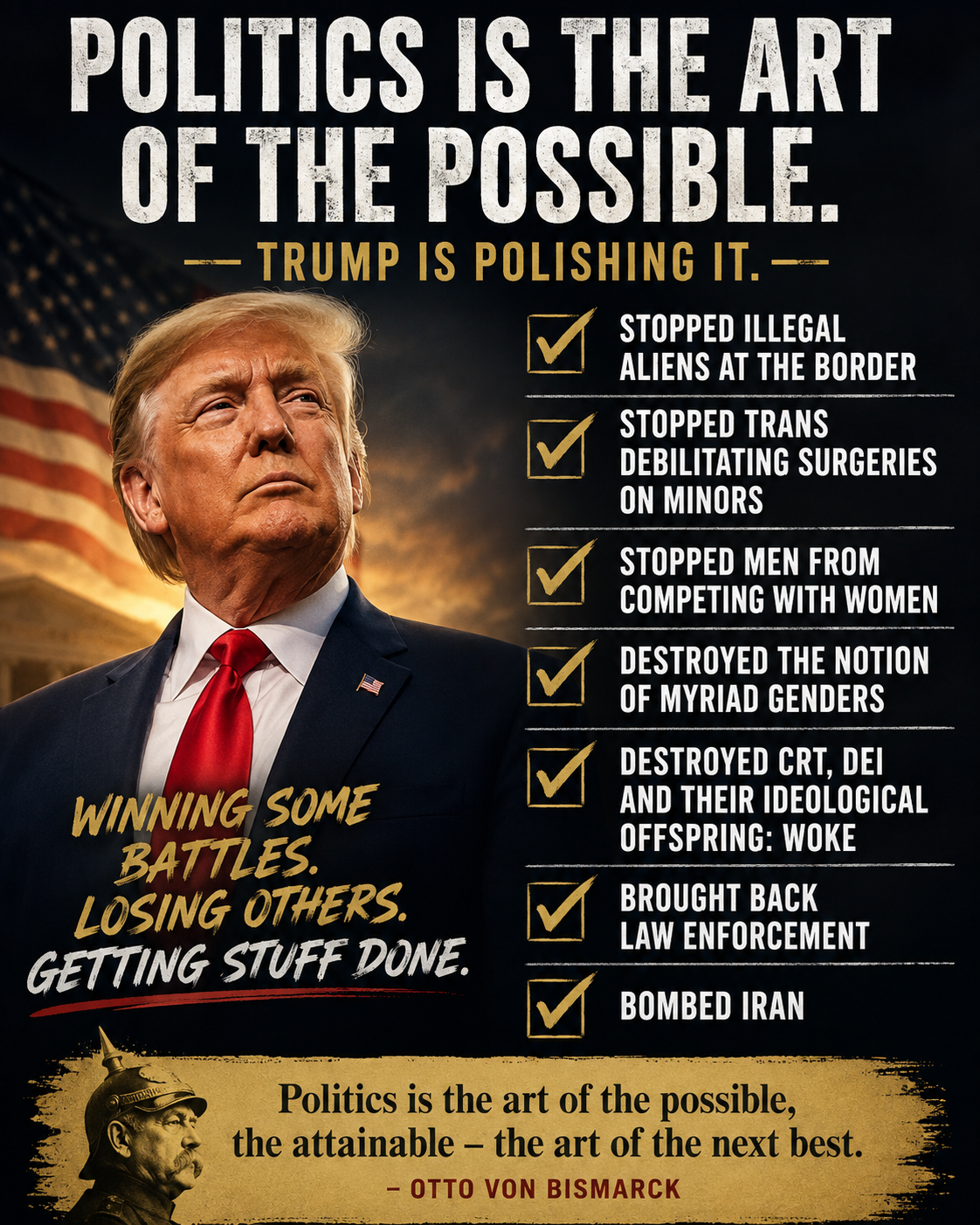
When the Narrative Becomes the News: How Media Coverage Turned Crisis Into a Business Model
This is a subtitle for your new post

Introduction
For years now—accelerating sharply during Donald Trump’s presidency—many Americans have watched the news with a growing sense that something is off. Not just biased. Not just ideological. But structurally warped.
Turn on cable news. Open a major digital outlet. Scroll aggregation sites like Drudge. The message is relentless: the country is failing, institutions are collapsing, trust is evaporating, markets are panicking, and law enforcement—especially immigration enforcement—is not merely misguided but morally illegitimate. The United States, according to the dominant media narrative, is always one headline away from catastrophe.
This is not a defense of Trump as a man, a personality, or even all of his policies. It is a critique of how the news has been framed, what is emphasized, what is minimized, and how language is weaponized to shape perception rather than inform it. The issue is not whether criticism is allowed—it is whether journalism has quietly replaced reporting with advocacy while still calling itself objective.
When that happens, trust doesn’t erode gradually. It collapses.
From Reporting to Framing: How the Shift Happened
Journalism did not wake up one morning and decide to abandon neutrality. The shift was incremental, driven by incentives more than ideology.
The 24-hour news cycle created a permanent demand for urgency. Social media platforms rewarded outrage and immediacy. Advertising revenue followed engagement, not accuracy. Over time, the business model of news evolved away from slow verification and toward continuous narrative reinforcement.
Donald Trump entered this ecosystem as a uniquely combustible figure. He spoke bluntly, often recklessly, and violated political norms that journalists had treated as sacred. Instead of responding with heightened discipline and restraint, much of the press responded emotionally—and then institutionally recalibrated around opposition.
The result was not just negative coverage. It was totalizing coverage, where nearly every event—economic, social, or political—was interpreted through a single moral lens.
Once that lens was fixed, facts became secondary to framing.
Economic Reporting: Panic as a Default Setting
One of the clearest examples of narrative distortion appeared in economic coverage.
During Trump’s term, the U.S. economy experienced periods of strong job growth, rising wages (particularly among lower-income earners), and record-setting stock market performance prior to COVID-19. These facts were reported—but rarely foregrounded. Instead, coverage emphasized volatility, uncertainty, and fragility.
Headlines routinely framed routine market fluctuations as signs of looming disaster. Trade negotiations were portrayed as existential threats rather than strategic disputes. Even positive indicators were often caveated to the point of dismissal.
This is where aggregation sites like Drudge resonated with readers. When headlines like “Trust Evaporates” or “Wall Street in Panic” appear repeatedly, they reflect not just market sentiment but media exhaustion—a sense that every development is being filtered through a predetermined conclusion.
Markets respond to information. But they also respond to confidence. When the media consistently communicates instability, it becomes part of the instability.
This is not journalism’s job.
Civil Unrest and the Language of Evasion
The coverage of riots and protests during the Trump years exposed a deeper problem: selective moral clarity.
In city after city, violence, arson, and property destruction occurred under the umbrella of political protest.
Businesses were burned. Neighborhoods were damaged. People were injured. Yet much of the media adopted euphemistic language that strained credibility.
“Mostly peaceful protests.”
“Isolated incidents.”
“Unrest sparked by frustration.”
These phrases were not false in isolation. Some protests were peaceful. Some violence was limited in scope. But the systematic downplaying of criminal behavior—particularly when it aligned with progressive political causes—sent a clear signal to viewers: enforcement and accountability were optional, depending on ideology.
Contrast this with coverage of January 6, which was described as violent, unlawful, and unacceptable. Which to some it appeared that way, to others it did not measure up to the destructive violence the country watched during 2020. The asymmetry mattered. When similar standards are not applied across events, audiences notice.
People are not demanding perfection from journalists. They are demanding consistency.
ICE as a Moral Villain: When Reporting Becomes Delegitimization
Perhaps no institution illustrates the collapse of media neutrality more clearly than Immigration and Customs Enforcement (ICE).
ICE is a federal agency tasked with enforcing immigration laws passed by Congress. One can oppose those laws. One can argue for reform. One can criticize enforcement practices. All of that is legitimate.
What crossed the line was the routine portrayal of ICE agents as inherently criminal or terroristic—not in opinion columns clearly labeled as such, but in news coverage and broadcast commentary that blurred moral condemnation with factual reporting.
Calling a law enforcement agency “terrorists” is not analysis. It is rhetoric.
This framing had consequences. It encouraged public hostility toward agents performing legally mandated duties. It undermined the rule of law by implying that enforcement itself—not abuse or misconduct, but enforcement per se—is illegitimate.
When the media adopts activist language, it forfeits the credibility required to hold institutions accountable.
The Trump Effect: Bias Amplified by Personality
Trump’s personality made objective coverage harder—but that does not excuse abandoning standards.
His constant engagement with media, his confrontational tone, and his willingness to bypass traditional filters created a feedback loop. Journalists responded not only to his policies but to his demeanor, often treating personal offense as political harm.
Over time, this produced a form of narrative escalation. Every statement became a “crisis.” Every disagreement a “threat to democracy.” The language inflated faster than the facts could sustain.
This escalation created a paradox: by overstating danger, the media diluted its own warnings. When everything is labeled unprecedented, nothing feels grounded.
The public eventually tunes out—or worse, assumes the opposite of what it’s told.
Audience Capture and the Death of the Middle
Another structural problem is audience capture.
Media outlets no longer compete primarily for broad trust. They compete for loyal audiences. Once an outlet identifies its demographic, content evolves to reinforce that audience’s beliefs rather than challenge them.
This dynamic is not unique to liberal media. Conservative outlets are guilty of it too. But mainstream legacy media—once the shared reference point for the nation—has drifted sharply left in tone and framing, leaving a vacuum in the middle.
When half the country feels talked down to, misrepresented, or morally judged by the news, trust cannot survive.
Corrections, Retractions, and the Illusion of Accountability
Trust also depends on visible accountability.
Errors happen. Journalism is imperfect. But the response to error matters more than the error itself.
In recent years, corrections have often been quiet, delayed, or buried—especially when original stories advanced a politically useful narrative. Sensational claims receive wall-to-wall coverage; retractions receive footnotes.
This asymmetry reinforces the belief that truth is subordinate to impact.
Once audiences internalize that belief, every headline is read with suspicion.
The Psychological Toll of Perpetual Crisis
Beyond politics, there is a human cost to constant crisis framing.
Endless exposure to narratives of collapse, chaos, and moral emergency produces anxiety, fatigue, and cynicism. People disengage—not because they stop caring, but because they no longer trust the messenger.
A healthy society requires a press that informs without inflaming, contextualizes without minimizing, and criticizes without caricature.
The media has forgotten that role.
What a Credible Press Would Look Like Again
Restoring trust is not complicated—but it requires humility.
A credible press would:
- Separate reporting from opinion clearly and consistently.
- Apply the same moral standards across ideological lines.
- Avoid loaded language in straight news coverage.
- Acknowledge uncertainty rather than filling gaps with speculation.
- Treat audiences as adults capable of forming judgments when given facts.
Until that happens, alternative media will continue to grow—not because it is always better, but because it fills a trust vacuum.
Why This Matters
A society without a trusted press is a society without a shared reality. When people no longer agree on basic facts—not interpretations, but facts—governance becomes impossible.
This isn’t about defending Trump. It’s about defending truth as something separate from narrative utility.
If the media wants trust back, it has to earn it—not by doubling down on moral certainty, but by returning to disciplined skepticism, even when the subject is unpopular.
References
Pew Research Center. (2023). Public trust in government and media declines.
https://www.pewresearch.org
Pew Research Center. (2024). Americans’ views of the news media.
https://www.pewresearch.org
McManus, J. H. (1994). Market-driven journalism: Let the citizen beware? Sage Publications.
Stroud, N. J. (2011). Niche news: The politics of news choice. Oxford University Press.
U.S. Bureau of Labor Statistics. (2019). Employment situation summaries.
https://www.bls.gov
Federal Reserve Bank of St. Louis. (2019). Economic indicators and market data.
https://fred.stlouisfed.org
Disclaimer:
The views expressed in this post are opinions of the author for educational and commentary purposes only. They are not statements of fact about any individual or organization, and should not be construed as legal, medical, or financial advice. References to public figures and institutions are based on publicly available sources cited in the article. Any resemblance beyond these references is coincidental.