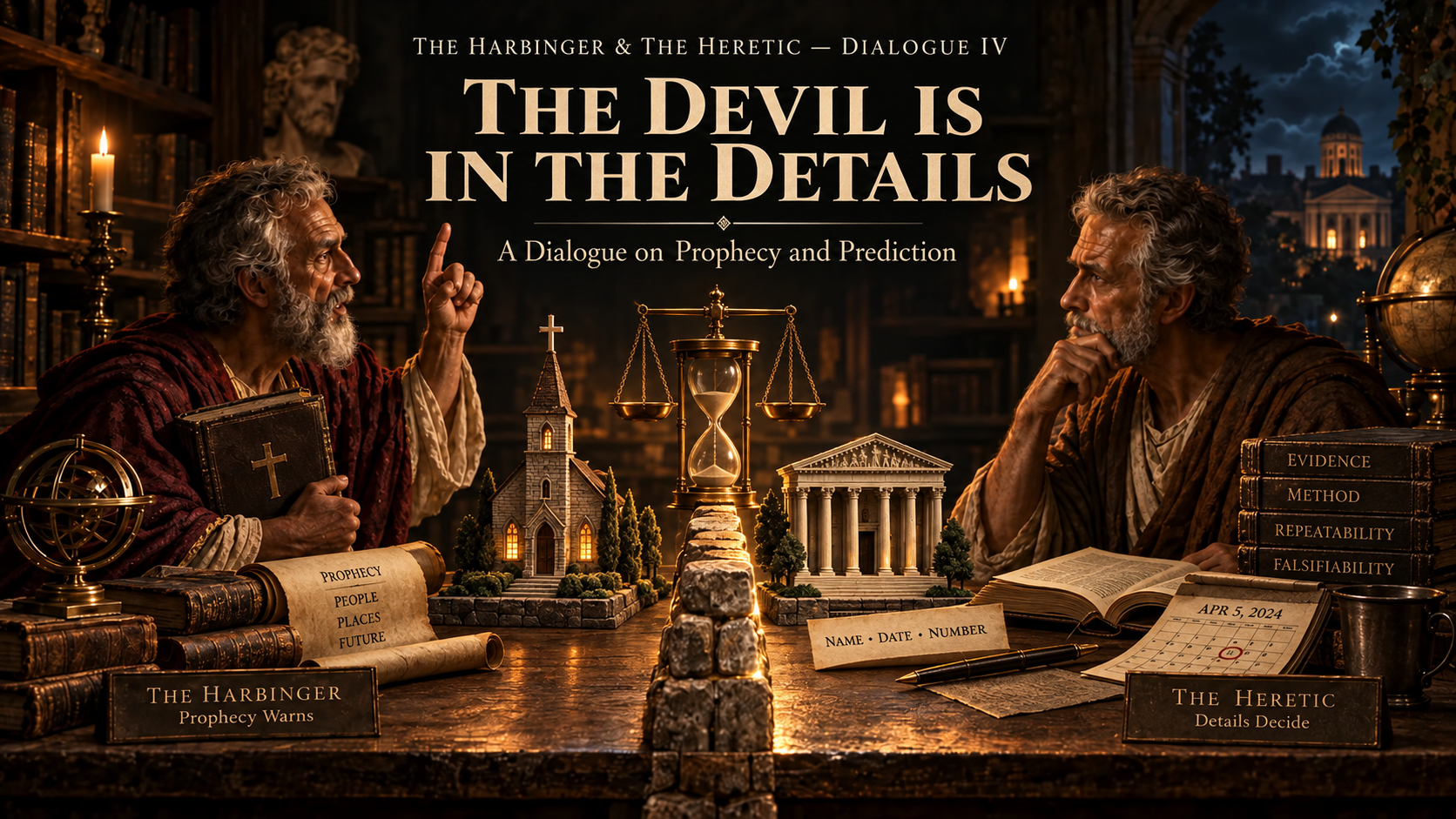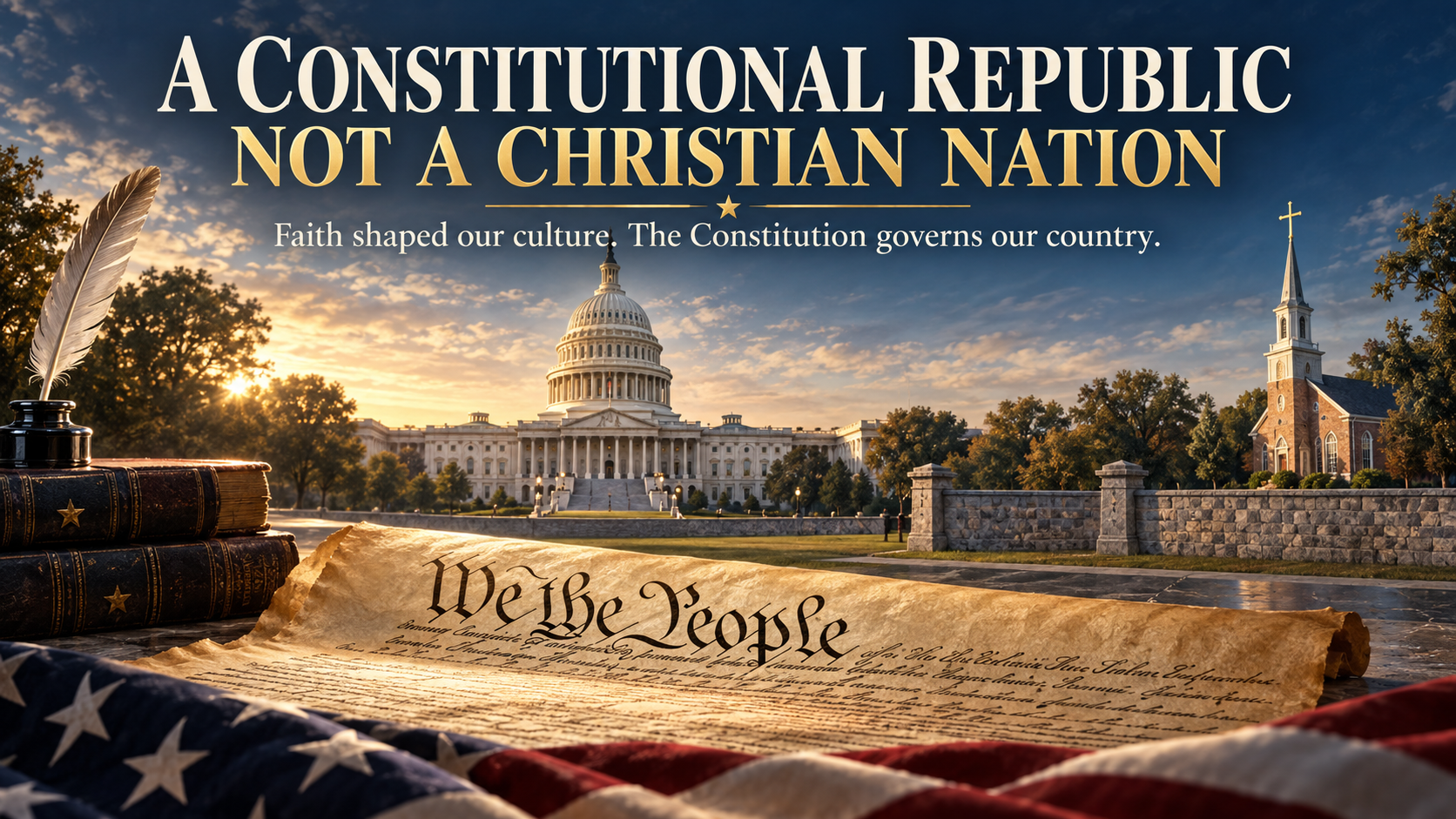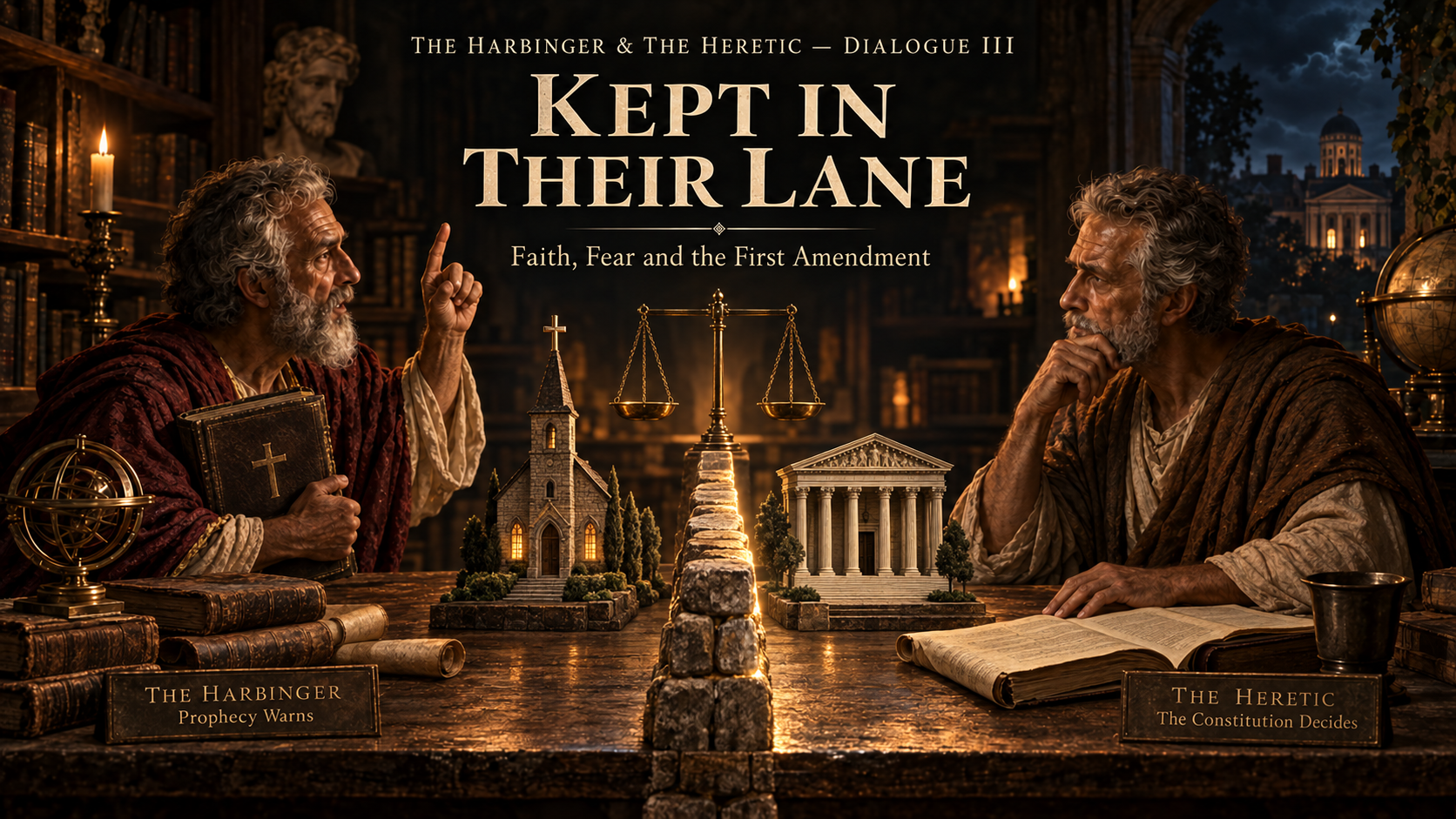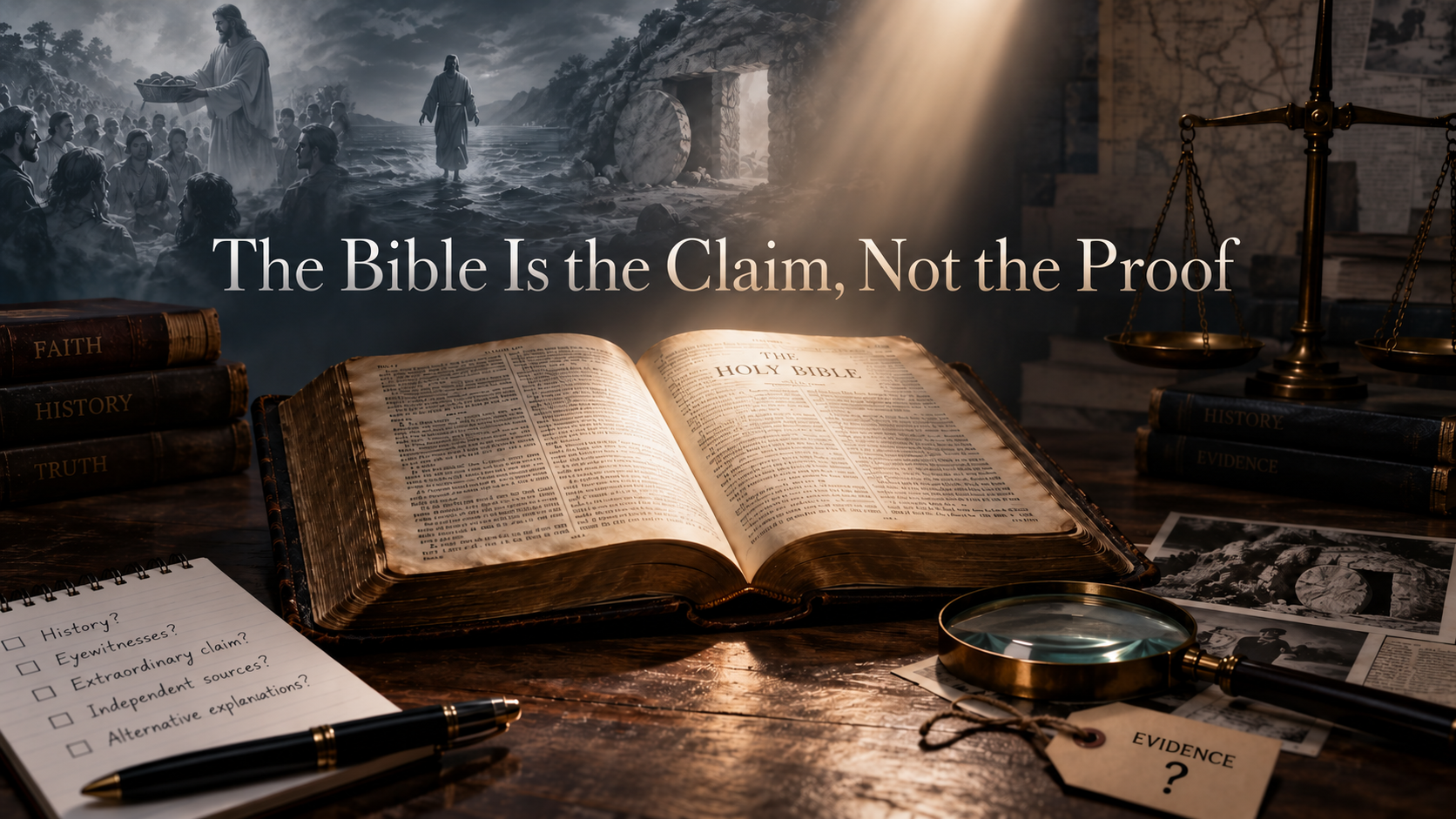

The problem is not faith. The problem begins when faith acquires the authority of the state.
Richard Carrier published a post on July 31, 2026 reviewing three handbooks of ancient science and technology. Carrier holds a PhD in ancient history from Columbia University and specializes in the intellectual history of Greece and Rome, with particular expertise in ancient philosophy, science and technology. His post is not primarily a critique of Christianity. It is a book review. But buried inside the discussion is an observation that deserves considerably more attention than a book review typically receives: that Greek and Roman thinkers were already debating reason, observation, evidence and natural causation before Christianity became an imperial religion, and that some of those traditions weakened when religious authority gained the power to decide which explanations were acceptable. That observation raises a question I have been writing about in this series for months. What happens when a religious institution gains enough political power to determine which answers are permitted? History has a documented answer. It is not reassuring.
The Ancients Were Asking the Right Questions
Ancient Greek and Roman science was primitive by any modern standard. Their theories of matter, medicine, astronomy and life contained errors that took centuries to correct. They lacked microscopes, modern chemistry, genetics, electricity, advanced mathematics and the tools to test most of their ideas rigorously. None of that is surprising. They were working with the instruments available to them and they were often wrong about the conclusions those instruments supported.
What matters is the method, not the answers. Some ancient thinkers were already asking questions that sound remarkably modern: What does the evidence show? Can the claim be observed? Does nature operate through understandable causes? Is an explanation grounded in physical processes more useful than invoking divine intention? Carrier documents that ancient discussions of science and craftsmanship explicitly engaged with reason, experience, evidence and observation, and that early arguments between rationalists and empiricists, and between naturalism and purpose-driven explanations, were already happening in the ancient world. Their answers were frequently wrong. Their willingness to investigate was not. Science advances precisely because its conclusions can be challenged, tested and replaced. Ancient astronomy gave way to better astronomy. Ancient medicine gave way to germ theory, anesthesia and modern surgery. No answer was protected simply because respected people had believed it for generations. That is the difference between an investigation and a revelation.
Carrier is not claiming that Christianity single-handedly destroyed ancient science. History is rarely that clean. The Stanford Encyclopedia of Philosophy notes that the idea of science and religion as permanently at war is now a minority position among historians. Religious institutions have at different times opposed scientific findings, supported scientific work and attempted to reconcile the two. What Carrier does argue is that mechanical and naturalistic explanations of nature were more common in antiquity than most people realize, and that these frameworks were increasingly marginalized when a single religious institution gained the political authority to define acceptable explanation. The distinction between science and religion as ideas versus religion as a governing power is exactly the distinction that matters for the church-state argument.
The Problem Is Not the Bible on Your Nightstand
I am an atheist. I have written about that plainly in this series and I have no interest in pretending otherwise. But I do not want the government telling Christians they cannot own a Bible, attend church, pray, preach or raise their children in their faith. That is religious liberty and it deserves fierce defense. The First Amendment's free exercise clause protects exactly that, and it is not negotiable from my side of the argument any more than from anyone else's.
What religious liberty does not mean is that one religious group gets to convert its beliefs into government-approved facts. It does not mean the state must alter biology, astronomy, medicine or history to avoid offending someone's interpretation of scripture. The Congressional Research Service's Constitution Annotated describes the establishment clause and the free exercise clause as working together to preserve governmental neutrality toward religion. That neutrality protects atheists, but it also protects Christians. A government powerful enough to impose Christianity today would be powerful enough to impose Islam, Catholicism, Mormonism or atheism tomorrow. Even Christians cannot agree on baptism, salvation, communion, biblical interpretation or what parts of scripture should be read literally. Which version should the government enforce? The answer must be none of them. The Bible should remain free in the church, the home and the public square. It should not become the government's scientific answer key.
A government powerful enough to impose Christianity today is powerful enough to impose Islam, Mormonism or atheism tomorrow. The wall does not protect secularism from religion. It protects religion from government. Even Christians should want it standing.
Genesis Does Not Get a Veto Over Biology
The danger becomes concrete when religious believers attempt to control what public schools may teach. In Epperson v. Arkansas (1968), the Supreme Court struck down an Arkansas law prohibiting the teaching of human evolution in state-supported schools. The Court found that the law existed because a particular religious group believed evolution conflicted with the Genesis account of human origins, and held that government must remain neutral between religions and between religion and nonreligion. In Edwards v. Aguillard (1987), the Court struck down a Louisiana law requiring that creation science be taught whenever evolution was taught, concluding the law was designed to promote a particular religious belief and undermine a scientific theory that some religious groups found objectionable. Neither decision outlawed Christianity. Neither prohibited students from reading the Bible or prevented schools from teaching about religion, religious history or the influence of scripture on Western culture. Both prevented government from manipulating science education to protect a religious doctrine.
The National Academies has documented that biological evolution is supported by overwhelming evidence across multiple scientific fields, and has also acknowledged that many religious people accept evolution and that science and religion need not be treated as permanent enemies. That is the correct balance. Science does not need to declare that no god could possibly exist. It cannot use an invisible supernatural agent as a scientific explanation because that explanation cannot be independently tested or falsified. The science classroom has a specific and limited responsibility: to teach explanations that can be examined through evidence, observation and continued investigation. That responsibility does not require hostility to faith. It requires honesty about method.
A Sacred Claim Is Not Public Evidence
Religious beliefs may influence how a legislator votes. It would be unrealistic to pretend people can completely separate their moral convictions from their political decisions, and it would be wrong to ask them to. The point is narrower than that. When government passes a law affecting everyone, that law should be defensible without requiring citizens to accept a particular revelation. "I believe God commands it" may be sincere. It is not public evidence. Which god? Which command? Which translation? Which denomination? Which interpretation?
A Baptist, a Catholic, a Muslim, a Hindu, an atheist and an agnostic can examine the same medical study, financial report, crime statistic or engineering calculation. They may dispute the methods or the interpretation, but the evidence is at least available for inspection by everyone. A divine command is different. The person making the claim has placed the conclusion beyond ordinary examination. Those who do not share the revelation are simply expected to submit to the political power of those who do. That is not religious freedom. It is religious privilege, and the distinction between the two is the entire argument. Thomas Jefferson's Virginia Statute for Religious Freedom was designed to prevent citizens from being compelled to support religious worship and to ensure that religious belief or disbelief did not affect their civil rights. Jefferson was not arguing that religion should disappear. He was arguing that religion should survive through persuasion rather than government force. That remains the correct standard.
Jefferson's Virginia Statute for Religious Freedom, enacted in 1786 and cited by Jefferson as one of his three proudest achievements alongside the Declaration of Independence and founding the University of Virginia, established that no person should be compelled to frequent, support or maintain any religious worship, and that civil rights should not be diminished or enlarged on account of religious opinions. Madison considered it the model for the First Amendment. The founders were not inventing hostility to religion. They were codifying a principle that religion and coercive government authority are incompatible partners, that each corrupts the other when fused and that both are better served by genuine separation.
Christianity Did Not Invent Human Curiosity
Carrier's post challenges, at least implicitly, the idea that serious reasoning began with the Bible or that Christianity arrived in a world of ignorant pagans waiting to be enlightened. Greeks and Romans studied astronomy, mathematics, medicine, mechanics, optics and natural causation long before Christianity controlled the Roman state. They developed remarkable technologies without electricity, fossil-fuel engines, modern steel or precision manufacturing. They built the Antikythera mechanism, a hand-powered orrery capable of predicting astronomical positions and eclipses, roughly a century before the common era. They constructed aqueducts still partially standing two thousand years later. They were not modern scientists. They were not mindless primitives either.
The lesson here is not that every Christian is an enemy of reason. The historical relationship between Christianity and science is considerably more complicated than that, and Carrier himself has written that Christianity was not responsible for modern science in the sense of actively creating it. Religious people preserved books, founded universities, conducted experiments and contributed to scientific discoveries across many centuries. Other religious authorities censored ideas, condemned findings and punished those who challenged accepted theology. Both things happened. The lesson is not that religion always opposes inquiry. The lesson is that no church should ever have enough governmental power to decide where inquiry must stop. A religious scientist can follow evidence wherever it leads. A religious government has a far stronger temptation to make evidence follow doctrine.
Separation Protects Both Sides
People sometimes describe separation of church and state as hostility toward Christianity. It is not. Separation protects science from religious censorship but it equally protects religion from political control. When government adopts a religion, politicians eventually determine which religious teachings receive official recognition. Clergy become political operators. Faith becomes connected to access, money and power. Religious belief becomes less voluntary because conformity starts offering social and governmental advantages that non-conformity does not. That corrupts both institutions. History has demonstrated this repeatedly, in state churches that became instruments of political control, in theocracies that produced neither flourishing science nor flourishing faith and in secular states that suppressed religion and produced neither.
Science should remain open to challenge. Religion should remain a matter of conscience. Government should not pretend to possess divine authority, and it should not lend its coercive power to any institution that does. Carrier's discussion of ancient science offers a specific warning about what can happen when one religious institution becomes powerful enough to narrow the range of acceptable explanation. It does not prove that every decline in ancient learning was caused by Christianity, and he does not claim that. It does remind us that intellectual freedom becomes vulnerable when theology and political authority merge, and that the mechanisms of that vulnerability are not unique to any particular era.
My Bottom Line
Carrier's post is a book review, not a full history of Christianity and science. It is not proof that the Bible is false or that religion is the enemy of human progress. What it documents, drawing on serious academic scholarship, is that human beings were examining nature through reason, observation and evidence before Christianity gained imperial power, and that some of those traditions weakened when religious authority gained political control over which ideas were considered respectable or permissible. That historical observation carries a present-tense implication that is difficult to ignore. The pressure in American politics right now to introduce religious doctrine into public school curricula, to inscribe scriptural language into civil law and to treat Christian identity as a qualification for full civic participation is not a neutral cultural development. It is a push toward the same merger of religious and governmental authority that the founders specifically designed the Constitution to prevent, and that history suggests produces worse outcomes for both religion and civil society than genuine separation does.
Believers should be free to believe the Bible is divinely inspired. They should be free to worship, preach and organize their lives around it. They should not be free to use government to make everyone else live as though their interpretation has been scientifically or historically proven. No pastor, priest, rabbi, imam or atheist should receive a government veto over evidence. Keep religion free. Keep government neutral. Keep science open. The wall between church and state is not an attack on faith. It is what keeps religious disagreement from becoming government coercion, and what keeps government from deciding which version of God gets to be correct.
The ancients were already asking whether nature could be explained through natural causes before any church had the power to say no. The question did not threaten faith. The power to suppress the question did. That is the lesson. It has not expired.
Why This Matters
A society that allows sacred authority to overrule evidence eventually loses the ability to correct itself. That may begin with evolution in a biology textbook. It can spread into medicine, public health, education, law and any other domain where religious certainty collides with inconvenient facts. The strength of science is not that scientists are always right. They are not, and the history of science is partly a history of correcting its own prior errors. Its strength is that no conclusion is protected merely because it is old, popular or sacred. The strength of religious liberty is not that every belief is true. It is that no citizen must surrender freedom simply because the majority follows a different faith. The wall between church and state is not a product of hostility to religion. It is a product of hard-won historical understanding about what happens when that wall comes down. Carrier's book review is a reminder that the understanding runs deep and that the history behind it runs long.
References
- Carrier, R. (2026, July 31). Top three handbooks of ancient science and technology. richardcarrier.info.
- De Cruz, H. Religion and science. Stanford Encyclopedia of Philosophy. plato.stanford.edu. [Documents that permanent-war thesis between science and religion is minority position among historians.]
- Congressional Research Service. Relationship between the establishment and free exercise clauses. Constitution Annotated. constitution.congress.gov.
- National Academies of Sciences and Institute of Medicine. (2008). Science, evolution and creationism. National Academies Press. [Documents overwhelming evidence for biological evolution; acknowledges compatibility with religious belief.]
- Epperson v. Arkansas, 393 U.S. 97 (1968). [Struck down Arkansas anti-evolution law as religious establishment.]
- Edwards v. Aguillard, 482 U.S. 578 (1987). [Struck down Louisiana creation science law as promoting religious doctrine.]
- Jefferson, T. (1786). Virginia Statute for Religious Freedom. Library of Congress. loc.gov.
- Carrier, R. (2010). Christianity was not responsible for modern science. In The Christian Delusion (pp. 396-420). Prometheus Books.
Disclaimer: The views expressed in this post are the personal opinions of the author and are offered for educational, commentary and public discourse purposes only. They do not represent the positions of any institution, employer, organization or affiliated entity with which the author may be associated in any capacity, whether academic, professional or commercial. Nothing in this post constitutes legal, financial, medical or professional advice of any kind. All factual claims are drawn from publicly documented sources cited above. Commentary on constitutional, historical and religious subjects reflects the author's independent analysis and is protected expression of opinion under the First Amendment. Readers are encouraged to consult the cited primary sources and form their own conclusions.