Every citizen who was born here got the same thing at birth. Every citizen who was naturalized got it by making a promise: that the application was true. Lie on it, and you did not earn what you hold.
That is the whole principle. It is not complicated, and it is not cruel. It is the same rule that applies to a mortgage application, a security clearance or a sworn affidavit. You signed it. It had to be true.
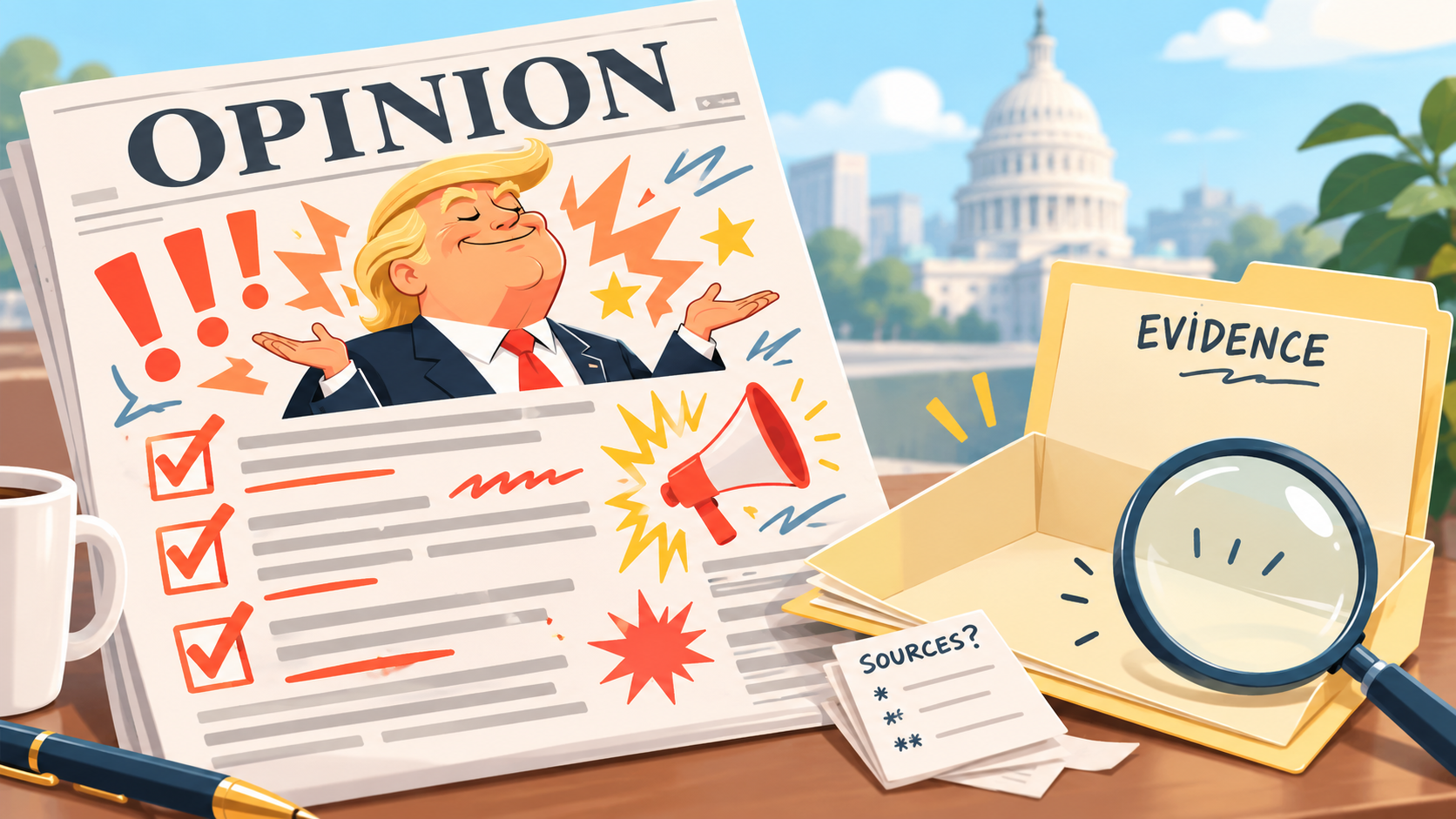
Yet a familiar argument has taken hold in commentary: when a government moves to strip a famous or politically prominent person of citizenship, the motive must be political. Denaturalization, we are told, is a weapon that reactionary leaders reach for against cultural and political elites. The argument treats the target’s name as proof of the motive.
It is not proof. It is a dodge. Here is why.
What the Law Actually Says
Congress wrote the rule long ago. Under federal law, a court shall revoke naturalization that was “illegally procured” or “procured by concealment of a material fact or by willful misrepresentation.” [8]
The word is shall. In Fedorenko v. United States , the Supreme Court held that once the government proves citizenship was illegally obtained, the court has no discretion to let the person keep it out of sympathy or equity. [1]
There is a criminal route as well. Federal law makes it a crime to knowingly procure naturalization contrary to law, with a penalty of up to 25 years, and a conviction leads automatically to denaturalization. [3, 7]
Nothing in either statute mentions fame, party or opinion. It mentions the application.
The Safeguards Are Real
Critics talk as if the government can simply announce that a citizen is no longer one. It cannot.
In the civil route, the Justice Department must file a lawsuit in federal court. A judge decides, not a jury and not a cabinet official. The Supreme Court requires “clear, convincing, and unequivocal evidence,” a standard the Department itself has described as substantially the same as proof beyond a reasonable doubt. [3]
The Court has also narrowed what counts. A false statement must be material, meaning it concerned facts that would have mattered to the immigration officer. In Maslenjak v. United States , the Court held that the government must show the illegal act or lie played a role in obtaining citizenship. [2, 4]
That is a hard test. A minor paperwork slip does not meet it. A sham marriage, a hidden criminal record or a false identity does.
The person served with the suit has 60 days to respond and can fight it with a lawyer, with evidence and on appeal. [5]
If the evidence is clear and the lie was material, the target’s fame changes nothing. If the evidence is not there, a judge will say so.
The Test for Targeting
Here is a fair way to separate enforcement from targeting. Take the same facts and put them in the file of a stranger. A cook in Phoenix. A cab driver in Detroit. Would the case exist?
If the answer is yes, it is enforcement. The law was applied to the facts, and the name on the file is incidental.
That answer is not hypothetical. A 2016 report by the Department of Homeland Security’s Inspector General found at least 858 people who had been deported under one identity and later obtained citizenship under another. Nobody in that group was famous. The question in every one of those files was the same: was the application true? [3]
Likewise, the Justice Department’s June 2025 memo directing the Civil Division to prioritize denaturalization lists categories such as national security threats, human rights violators and people who committed serious crimes before naturalizing. It names no politician, no actor, no director and no party. [3, 6]
A policy aimed at a category of conduct is enforcement. A policy aimed at a category of person is targeting. This is the first kind.
The Elite Exception Nobody Wants to Defend
Read the argument closely and you find an unstated rule: the more prominent the person, the less the law should apply to them.
Say it plainly and it falls apart. Would anyone argue that a famous person who lied on a mortgage application should be exempt because prosecuting them looks political? Would we accept it for tax fraud or perjury? We do not. We say that nobody is above the law, and we mean it most when the person is powerful.
A rule that protects the famous from investigation is not protection against abuse. It is privilege.
And there is a quieter insult buried in the argument. It implies that naturalized citizens who are not famous are fair game, while the prominent are untouchable. Millions of immigrants followed the process, told the truth and waited their turn. They are the ones harmed when fraud goes unanswered, because it cheapens what they earned.
A Pending Case Is Not a Verdict
The most visible American example today is Representative Ilhan Omar. The administration says it is investigating allegations of immigration and marriage fraud involving her, and reporting indicates the Justice Department searched her Washington home and subpoenaed family members for a grand jury. Her office calls the effort politically motivated and says it has no basis in law. [5]
That is the correct posture for everyone: allegations are not findings. Nobody should be stripped of anything on the strength of a press conference. The investigation has to produce evidence, the evidence has to be clear and convincing, and a federal judge has to agree.
But notice what follows from that. If the evidence is not there, the case fails and the safeguards have worked. If the evidence is there, then the only remaining objection is that the person is too prominent to be held to the same standard as everyone else.
The investigation has also drawn an observation from immigration attorneys: grand jury subpoenas and search warrants are unusual in denaturalization matters, which typically rest on records already in the government’s file. [5]
That is a fair point about method, and a judge can weigh it. It is not a point about the principle. A thorough investigation of a serious allegation is not evidence of bad faith. It is what a serious allegation gets.
The Concern Worth Keeping
The critics are not wrong about everything. History shows governments abusing citizenship revocation against dissidents, and scholars have raised real questions about civil procedure when something as weighty as citizenship is at stake. Legal commentators have warned that the Department’s language about pursuing cases “maximally” sits beside a catch-all category that leaves wide discretion. [3]
So watch for the signs of real abuse: cases brought on thin evidence, cases built on trivial errors, cases that vanish when the target stops criticizing the administration. If those appear, say so loudly.
But the answer to a risk of abuse is the same one we use everywhere in law: hold the government to its burden, insist on a neutral judge and publish the evidence. It is not to declare a class of defendants immune.
My Bottom Line
Citizenship by naturalization is a bargain. The applicant promises the truth. The nation gives membership. When the truth was missing, the bargain was never made.
Enforcing that is not an attack on immigrants. It is the thing that gives naturalization its meaning. Every honest applicant has a stake in it.
The fair question is never who the person is. It is what they wrote, whether it was true, and whether the evidence says so. Everything else is theater.
- Fedorenko v. United States , 449 U.S. 490 (1981).
- Kungys v. United States , 485 U.S. 759 (1988).
- Lawfare. What to make of the Justice Department’s denaturalization initiative. lawfaremedia.org
- Maslenjak v. United States , 582 U.S. 335 (2017).
- MPR News. (2026, October 15). Lawyer explains denaturalization as Trump administration pursues investigation of Rep. Ilhan Omar. mprnews.org
- OPB. (2025, June 30). DOJ announces plans to prioritize cases to revoke citizenship. opb.org
- Procurement of citizenship or naturalization unlawfully, 18 U.S.C. § 1425.
- Revocation of naturalization, 8 U.S.C. § 1451(a) and (d).