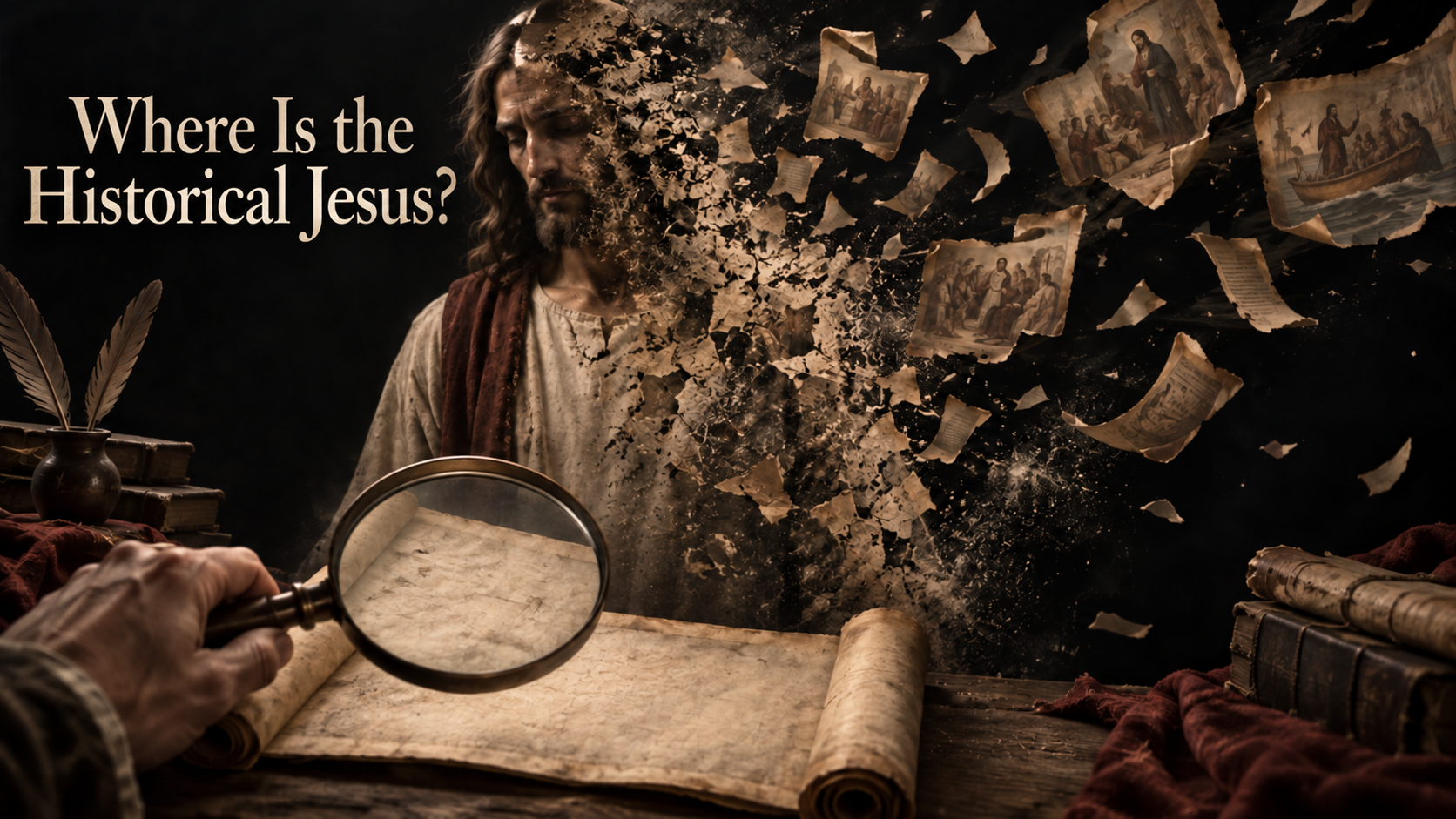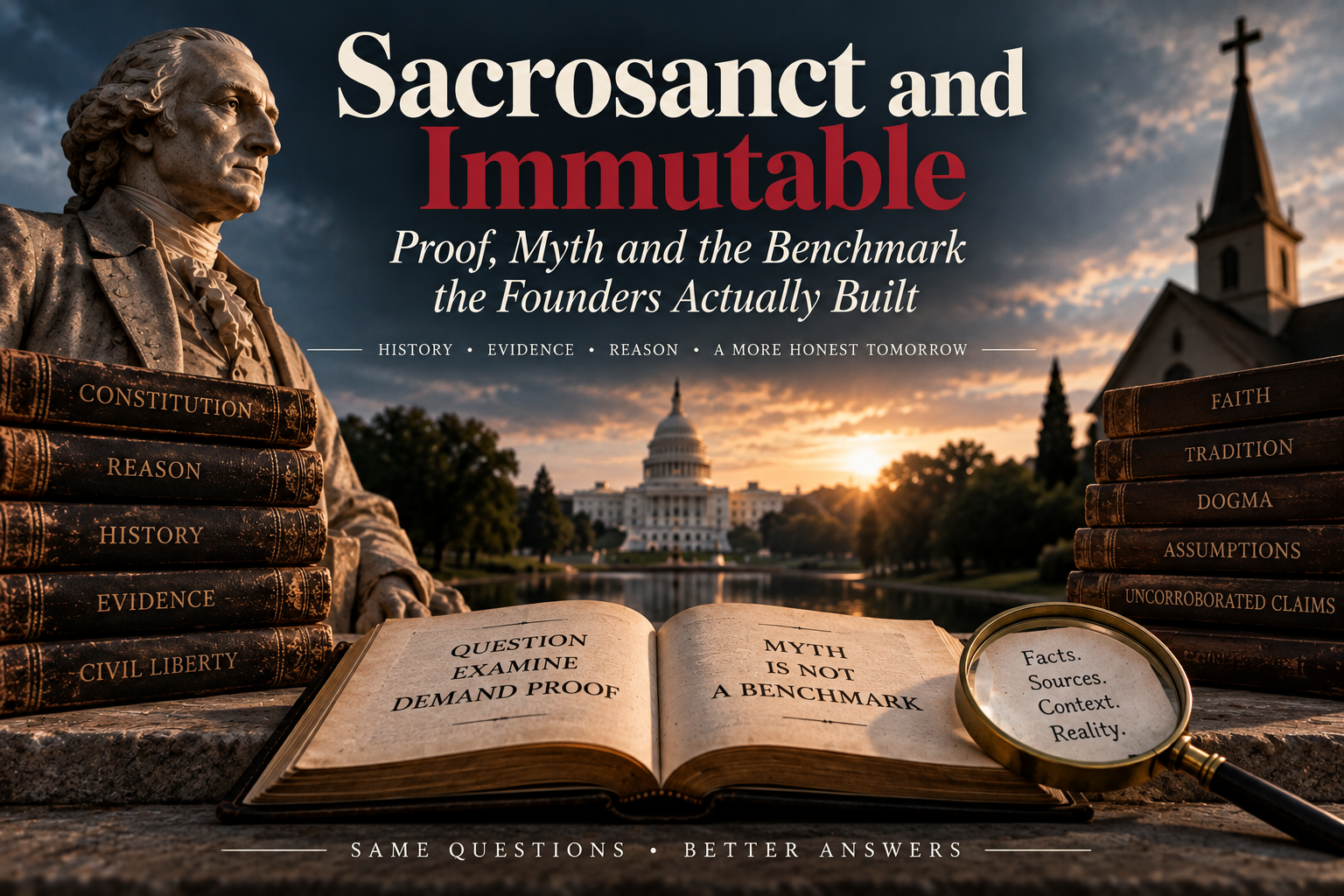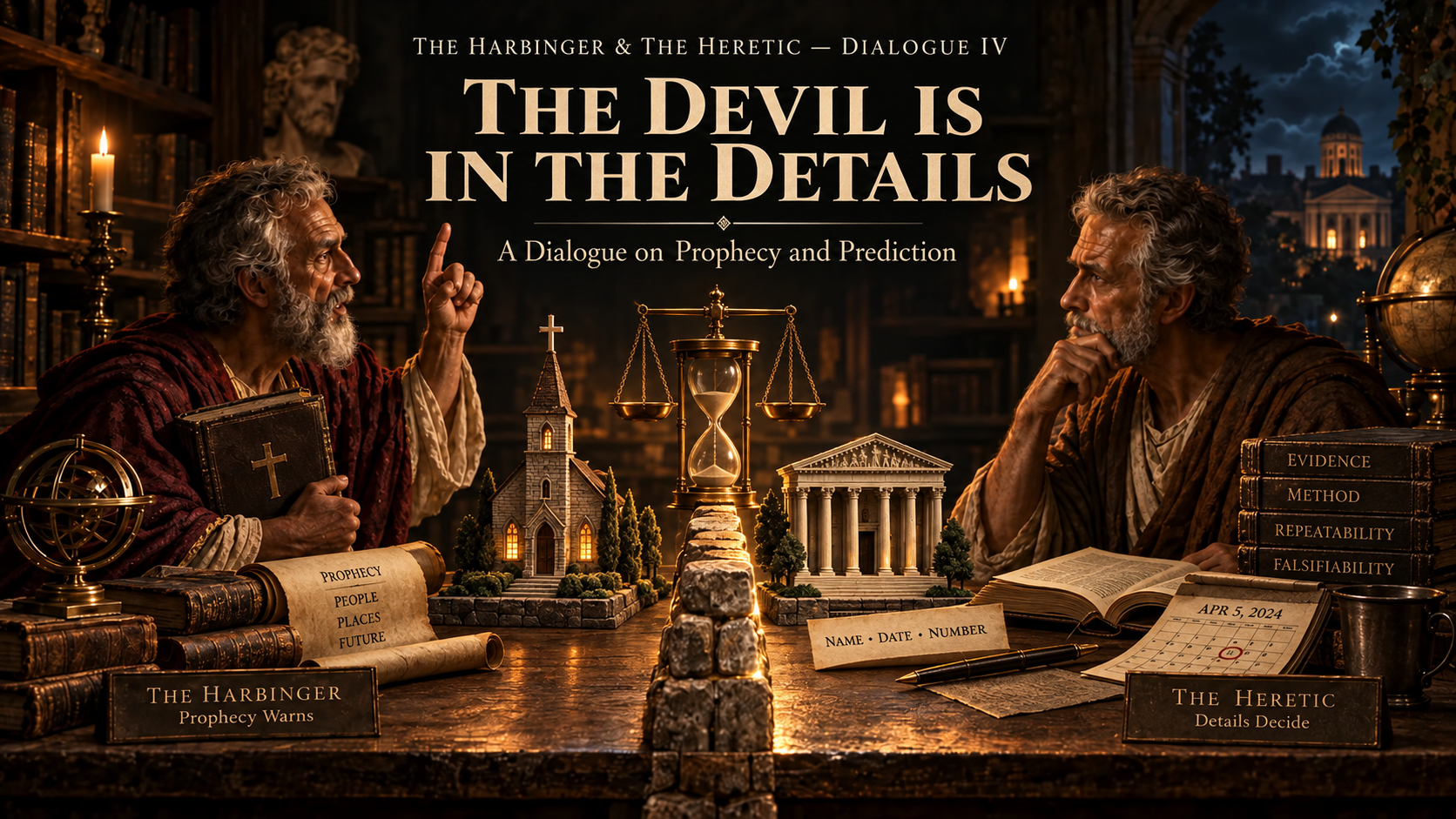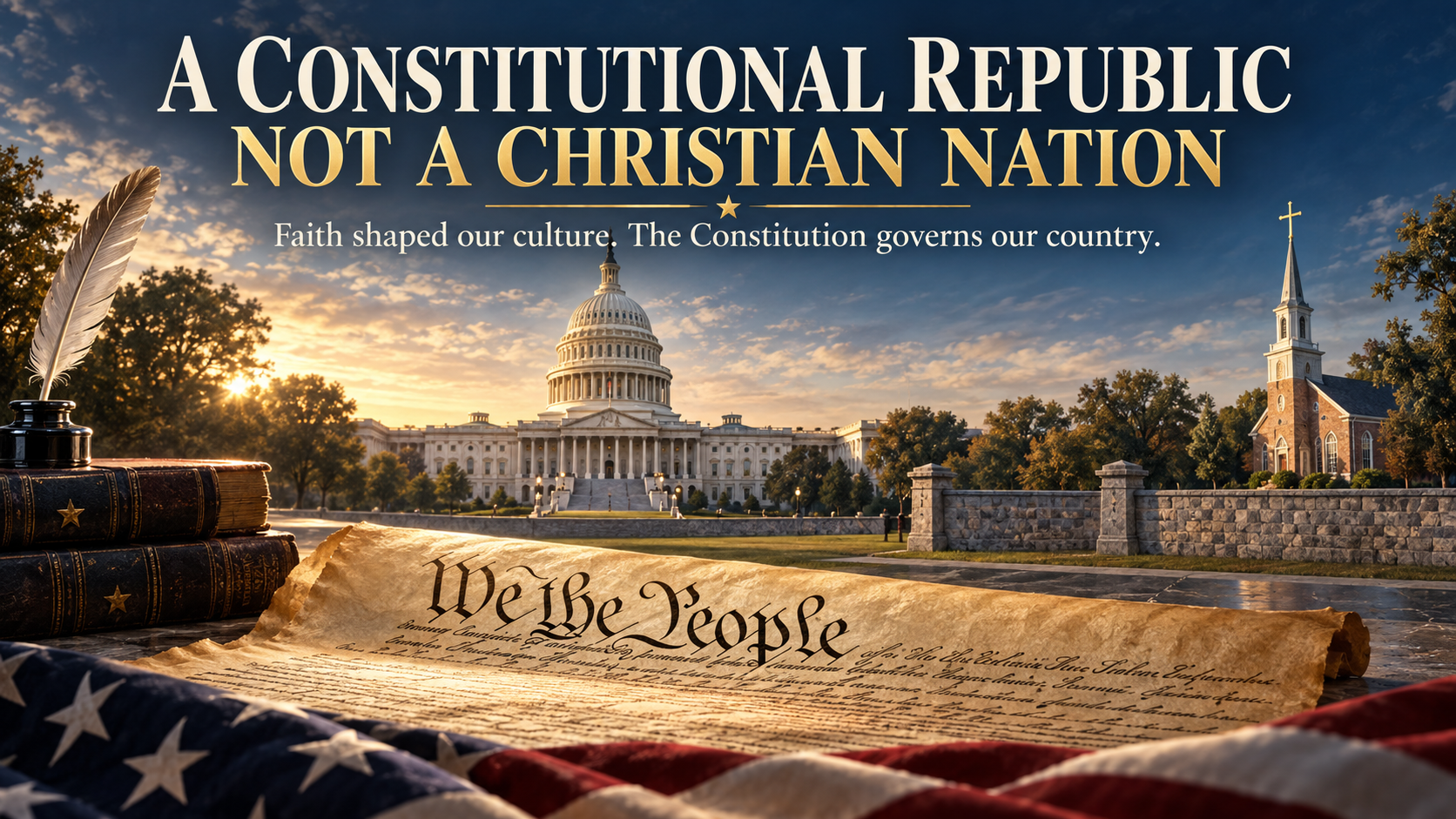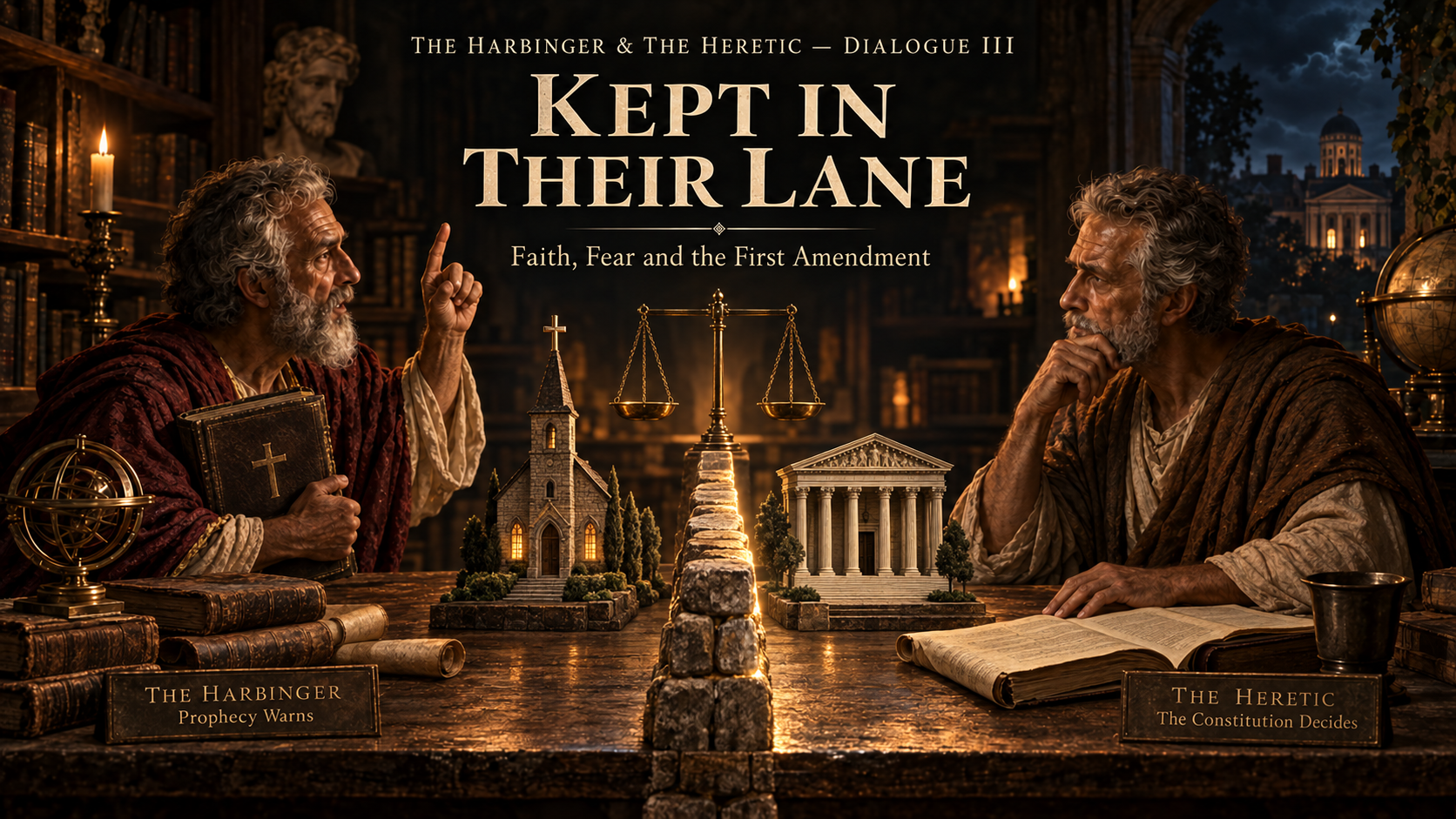
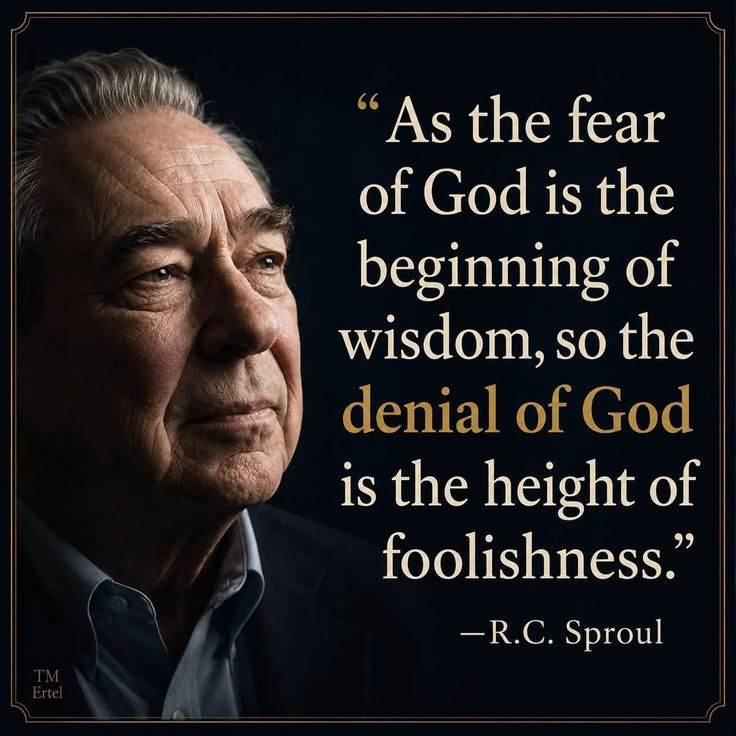
Some sayings sound profound the moment you read them. They are polished, confident and highly shareable. They fit neatly over a solemn portrait and can be posted in seconds. Look closer and none of them provides evidence that a god exists, that the Bible is divinely inspired or that the speaker possesses a supernatural means of understanding it.
"The fear of God is the beginning of wisdom, so the denial of God is the height of foolishness."
"Scripture alone is absolute truth, authoritative truth, undiluted truth, eternal, everlasting truth."
"The Bible cannot be understood simply by study or talent. You must count only on the influence of the Holy Spirit."
They are not arguments. They are defensive devices.
Each one attempts to settle the dispute before the dispute begins. Deny God and you are foolish. Question Scripture and you are rejecting "absolute truth." Reach a different conclusion after careful study and your intellect is not the problem. You simply lack the Holy Spirit.
Such sayings protect a religious claim from examination by discrediting anyone who examines it and reaches the wrong conclusion. They also shield believers from the discomfort and sometimes the scorn that can follow when ancient claims collide with modern knowledge. Rather than confront the collision, the slogan declares that the collision exists only because the critic is ignorant, arrogant, sinful or spiritually blind.
For nearly two thousand years, Christianity has had to cope with an awkward historical problem. Its central texts created expectations that did not unfold in the straightforward manner their earliest audiences could reasonably have expected. As generations passed without the promised culmination, interpretation became more elastic. As geology, astronomy, biology, archaeology and textual criticism accumulated evidence, many traditional readings became increasingly difficult to defend as literal history.
The sayings became sharper because the evidence became harder to ignore.
A Claim That Certifies Itself
Consider the declaration that Scripture is "absolute truth." How does the speaker know this? Usually, the answer eventually returns to Scripture itself. The Bible is true because it is the word of God, and we know it is the word of God because the Bible says, directly or indirectly, that it comes from God.
That is circular reasoning.
Every sacred tradition can play the same game. A Muslim can declare the Quran the final and perfect revelation. A Mormon can testify that the Book of Mormon is true. A Hindu can appeal to the sacred authority of the Vedas. Confidence cannot decide which claim is correct, because incompatible religions can generate equally confident believers.
Calling a book "absolute truth" adds intensity, not evidence. Repeating "truth" several times does not transform an assertion into a demonstration. It merely places the conclusion inside the premise and invites the audience to applaud before asking how the conclusion was reached.
The claim about the Holy Spirit creates an even tighter circle. If only those guided by the Spirit can properly understand Scripture, no contrary reading can count against the doctrine. Agreement proves the Spirit guided you. Disagreement proves the Spirit did not guide you. The claim wins regardless of what happens.
It also fails a practical test inside Christianity itself. Sincere believers who all claim the guidance of the Holy Spirit disagree about baptism, salvation, predestination, free will, communion, hell, women in ministry, homosexuality, divorce, church government, spiritual gifts, biblical inerrancy and the meaning of Revelation. They have formed thousands of denominations, movements and independent churches.
If the Spirit provides a reliable interpretive key, the lock appears to open in thousands of incompatible ways.
That does not prove no god exists. It does show that claiming private spiritual guidance cannot function as publicly verifiable evidence. A method that repeatedly produces contradictory answers needs more than a declaration of divine supervision.
Insult as an Escape Hatch
The saying that denial of God represents "the height of foolishness" uses a familiar tactic. It poisons the well before the skeptic speaks.
The skeptic's evidence need not be considered because the skeptic has already been classified as a fool. His conclusion is not treated as the product of investigation. It is treated as a character defect.
This reverses the burden of proof. The believer makes the supernatural claim, then demands that the doubter disprove it while simultaneously declaring the doubter morally or intellectually unqualified to participate. Yet the person asserting that an invisible supernatural intelligence created the universe, inspired particular books and intervened in history carries the obligation to support that assertion.
This matters because disbelief is not necessarily a refusal to understand. It may be the result of understanding the evidence and finding it insufficient. Many atheists, agnostics and religious skeptics began as believers. Some studied theology, served churches, prayed for guidance and read the Bible more closely than the people condemning their conclusions.
To dismiss all of them as fools is not intellectual confidence. It is intellectual quarantine.
The Problem of the Promised Imminence
The need for defensive reinterpretation began early because the New Testament contains unmistakable language of urgency.
Paul told the Thessalonians that "we who are alive" would be caught up with the resurrected dead at the Lord's coming. In 1 Corinthians, he wrote that "the appointed time has grown short." Mark presents Jesus saying that some standing before him would not taste death before seeing the kingdom of God come with power. In the apocalyptic discourse, Jesus says, "this generation will not pass away until all these things have taken place." Revelation says the time is near and that Jesus is coming soon.
Christians have developed many interpretations of these passages. Some identify the predicted event with the destruction of Jerusalem in 70 CE. Some distinguish the kingdom from the Second Coming. Some redefine "generation." Some argue divine time is unlike human time. Preterists, futurists, historicists and idealists arrange the texts differently.
The existence of interpretations is not surprising. The significant point is why so many are necessary.
The ordinary meaning of "soon," "near," "we who are alive" and "this generation" creates an expectation of imminence. When the expected culmination does not occur, a movement has several choices. It can admit the expectation failed, abandon the belief or reinterpret the language. Christianity overwhelmingly chose reinterpretation.
Scholars call the broader issue the delay of the parousia, the delayed return of Christ. Richard Bauckham noted that eschatological delay raised questions early Christians had to answer, even while disputing simplistic theories that the delay caused one universal crisis. That nuance matters. We need not claim every early Christian panicked on a particular date. The texts themselves show communities learning how to live while the promised end remained absent.
Second Peter offers a theological response. Scoffers will ask where the promised coming is, but with the Lord one day is like a thousand years. The passage directly anticipates ridicule and neutralizes it. The delay is not evidence against the promise. The delay is folded into the promise.
This pattern would recur throughout Christian history. Failed timetables rarely kill apocalyptic belief. Dates are recalculated. Predictions become symbolic. The fulfillment becomes invisible. Human misunderstanding takes the blame while the divine source remains untouched.
Two Thousand Years of Moving the Goalposts
Christian history contains repeated outbreaks of end-times certainty. Different movements have identified emperors, popes, wars, plagues, technologies, political unions and modern nations as signs that the final sequence had begun. Predictions attached to particular years have failed, yet prophetic confidence returns with each new crisis.
This durability is often presented as evidence of truth. It may instead demonstrate the adaptability of belief.
A flexible prophetic system can absorb almost anything. Peace fulfills prophecy because people will say "peace and security." War fulfills prophecy because there will be wars and rumors of wars. Earthquakes, disease, apostasy, religious revival, persecution and indifference can all become signs. If opposite conditions can confirm the same prediction, the prediction has little explanatory value.
This is why broad warnings about future disbelief are especially powerful. A religious text predicts that scoffers will scoff. Centuries later, someone scoffs. The believer calls this fulfilled prophecy.
But virtually any controversial movement can predict future opposition. Political leaders warn that enemies will lie about them. Cult leaders warn that families will try to pull members away. Conspiracy theorists warn that experts will deny the conspiracy. The prediction helps create immunity from correction, because the correction itself is recast as confirmation.
A claim is not prophetic merely because it anticipates a common human response. Saying future people will disagree, become selfish, experience wars or lose faith is not a precise forecast. It is an open-ended observation about recurring human behavior.
The Slow Churn of Evidence
Prophetic delay was only one pressure. The slow accumulation of empirical knowledge created another.
Ancient biblical writers described the world using the concepts available to ancient people. Genesis presents creation in a patterned sequence with light before the sun, a firmament separating waters above from waters below and living kinds appearing by divine command. A traditional biblical chronology placed creation only thousands of years in the past. Modern geology places Earth's age at roughly 4.54 billion years, based on radiometric measurements and multiple converging lines of evidence. The U.S. Geological Survey describes this deep history as consistent with the age of the solar system. Evolution, supported by genetics, fossils, comparative anatomy, biogeography and directly observed change, is the organizing framework of modern biology. The National Academies explains that more than a century of testing and observation has continued to reinforce it.
These discoveries do not disprove every possible concept of God. They do, however, place enormous pressure on literal readings of a recent six-day creation, separately created fixed species and a human pair formed independently of the evolutionary history of life.
The response has often been reinterpretation. "Day" becomes an age. Genesis becomes poetry. Adam becomes archetypal. Creation becomes compatible with evolution. Many thoughtful Christians accept these accommodations, and there is nothing dishonest about acknowledging a sacred text may be theological literature rather than science.
The problem arises when the adjustment is presented as though Christianity had plainly taught it all along. If a passage means six ordinary days when the reader knows nothing of geology but becomes metaphorical after geology demonstrates deep time, evidence is driving the interpretation. Theology is retreating to a position the evidence still permits.
The global flood faces a similar problem. Geology does not reveal a recent worldwide inundation covering all mountains and exterminating terrestrial life outside one vessel. Archaeology has not confirmed the great flood as literal global history. Scholars instead compare Genesis with older Mesopotamian flood traditions and study the story within its ancient literary world. Again, this does not make the text worthless. It changes what can responsibly be claimed about it.
The Exodus, conquest narratives and scale of the united monarchy remain subjects of real scholarly debate. Archaeology can illuminate settings, cities, peoples and political conditions while still failing to verify a narrative exactly as written. Responsible skepticism does not say every biblical person and place is fictional. Jerusalem existed. Rome existed. Pontius Pilate existed. None of that independently verifies seas parting, the dead returning to life or a god speaking from the sky.
Textual Study Creates More Questions, Not Fewer
Critical scholarship also changed how the Bible itself is understood.
The Bible is not a single eyewitness report written at one time. It is a library produced, edited, transmitted, copied and canonized across centuries. Its books represent different genres, communities, theological agendas and historical circumstances. The Gospel texts themselves do not identify their authors in the body of their narratives in the manner of a signed modern testimony. Scholarly discussion continues over when traditional attributions arose and what historical memory they may preserve.
The Gospels also exhibit literary dependence. Matthew and Luke use much of Mark while altering, arranging and supplementing its material. John differs substantially in chronology, style and portrayal. The resurrection accounts vary over who visits the tomb, what they encounter, where appearances occur and what follows.
Believers can propose harmonizations. A possible harmonization, however, is not independent confirmation. It is an attempt to construct one account from documents that do not naturally tell an identical story.
The miracles present an even greater evidentiary problem. The feeding of thousands, walking on water, raising Lazarus and the resurrection of Jesus are extraordinary claims preserved in interested religious texts written decades after the events they describe. Paul's letters are earlier than the narrative Gospels, but Paul does not claim to have accompanied Jesus during his ministry. He describes revelations and appearances of the risen Christ, not ordinary interaction with Jesus before the crucifixion.
There is no contemporary independent record confirming these miracles. Later references to Jesus or early Christians may help establish that Jesus existed and that a movement formed around him. They do not independently verify the supernatural events on which Christian theology depends.
Absence of evidence is not always evidence of absence. Yet absence matters when an event is said to be massive, public and extraordinary. The larger the claim, the more reasonable it is to expect clear, independent and contemporary corroboration.
Why the Sayings Keep Appearing
Why, then, do believers keep producing and circulating statements that condemn doubt instead of answering it?
Slogans reduce cognitive strain first. It is uncomfortable to hold a cherished belief beside evidence that challenges it. A short maxim resolves the tension instantly. Scripture is absolute. The critic is foolish. The Spirit confirms the correct reading. No difficult reconstruction of history is required.
Slogans reinforce group identity second. Sharing one signals loyalty. It tells fellow believers, "I am still inside. I have not been intimidated by the culture." The social function may matter more than the logical content.
Slogans protect against ridicule third. Ancient cosmology, talking animals, a global ark, miracle stories and an indefinitely delayed return are easy targets for mockery. Rather than present evidence capable of persuading an outsider, the slogan turns the mockery around. The unbeliever is not laughing because the claim sounds implausible. He is laughing because prophecy predicted scoffers or because his heart is hardened.
Slogans inoculate believers against contrary information fourth. If scholarship disagrees, scholars are worldly. If archaeology fails to confirm a story, archaeologists are biased. If science contradicts a literal interpretation, scientists are materialists. If former believers explain why they left, they were never truly saved. Every exit is blocked by a label.
And pithy certainty travels better than honest nuance fifth. "We possess absolute truth" fits on an image. "This is a complex anthology whose historical claims must be evaluated individually by genre, date, source and corroboration" does not.
The internet did not invent this habit. It merely industrialized it.
What Honest Inquiry Would Look Like
Honest inquiry begins by refusing to grant Christianity a special exemption from the standards applied to every other religion.
If a Muslim cites the Quran to prove the Quran, Christians recognize the circle. If a Mormon describes an inward spiritual witness, evangelicals ask for external evidence. If a cult leader says outsiders cannot understand because they lack spiritual illumination, most Christians immediately see the manipulation.
The same standard must apply to the Bible.
Who made the claim, and how close was that person to the alleged event? Was the account written contemporaneously or decades later? Are there independent sources, or are later writers using an earlier text? Does archaeology support the specific event or only its general setting?
What evidence could show the claim to be mistaken? Has the interpretation changed after a prediction failed or evidence contradicted the earlier reading? And, perhaps most tellingly, would we accept this quality of evidence for a competing religion?
These are not anti-Christian questions. They are ordinary historical questions.
Faith may choose to go beyond evidence. It should not pretend that going beyond evidence is the same as possessing evidence. A believer is free to say, "I trust this tradition despite the uncertainties." That is more honest than declaring every doubter foolish or claiming supernatural ownership of the only permissible interpretation.
Why This Matters
These slogans would be less concerning if they remained private expressions of comfort. They do not.
Claims of absolute biblical authority influence education, science policy, reproductive law, LGBTQ rights, public health, elections and the civil rights of people who do not share the faith. Once believers seek to impose conclusions on everyone else, "the Bible says so" is no longer sufficient. Citizens in a pluralistic republic deserve public reasons supported by evidence, not theological declarations backed by threats of divine judgment.
The issue is not whether religious people are intelligent. Many are exceptionally intelligent. Intelligence does not make anyone immune to motivated reasoning, social pressure or inherited assumptions. Nor is the issue whether the Bible contains wisdom, beauty or historical value. It plainly does. A text can be culturally profound without being infallible. It can contain moral insight without being dictated by a deity. It can preserve history without making every miracle historical.
The issue is whether a pithy saying has answered the question it pretends to settle.
It has not.
Calling doubt foolish does not prove God. Calling Scripture absolute does not prove inspiration. Invoking the Holy Spirit does not explain why Spirit-led readers contradict one another. Predicting that critics will exist does not transform criticism into fulfilled prophecy. Reinterpreting "soon" for two thousand years does not make "soon" mean what its original audience would naturally have understood.
The accumulated evidence has not disproved every imaginable god. It has done something more specific and more damaging to biblical literalism. It has shown that many confident readings of Scripture do not survive contact with geology, biology, archaeology, history and textual criticism. Other biblical stories remain possible but uncorroborated. Extraordinary supernatural claims remain assertions supported primarily by the tradition making them.
That is precisely why the slogans persist. They are not bridges to understanding. They are walls against it.
When evidence is strong, an argument can afford questions. When a belief must label the questioner foolish, spiritually blind or morally corrupt before he speaks, it is revealing where the weakness lies. Not in the question. In the shield built to avoid answering it.
- Bauckham, Richard J. (1980). "The Delay of the Parousia." Tyndale Bulletin, vol. 31, pp. 3-36. tyndalebulletin.org.
- Bible Odyssey. "Authorship." Society of Biblical Literature. bibleodyssey.org.
- Bible Odyssey. "How Does the New Testament Relate to History?" Society of Biblical Literature. bibleodyssey.org.
- National Academy of Sciences and Institute of Medicine. (2008). Science, Evolution, and Creationism. National Academies Press. nationalacademies.org.
- United States Geological Survey. "Age of the Earth." pubs.usgs.gov.
- The New Testament: Mark 9:1, Mark 13:30, 1 Corinthians 7:29-31, 1 Thessalonians 4:15-17, 2 Peter 3:3-10, Revelation 1:1-3, 22:6-20.