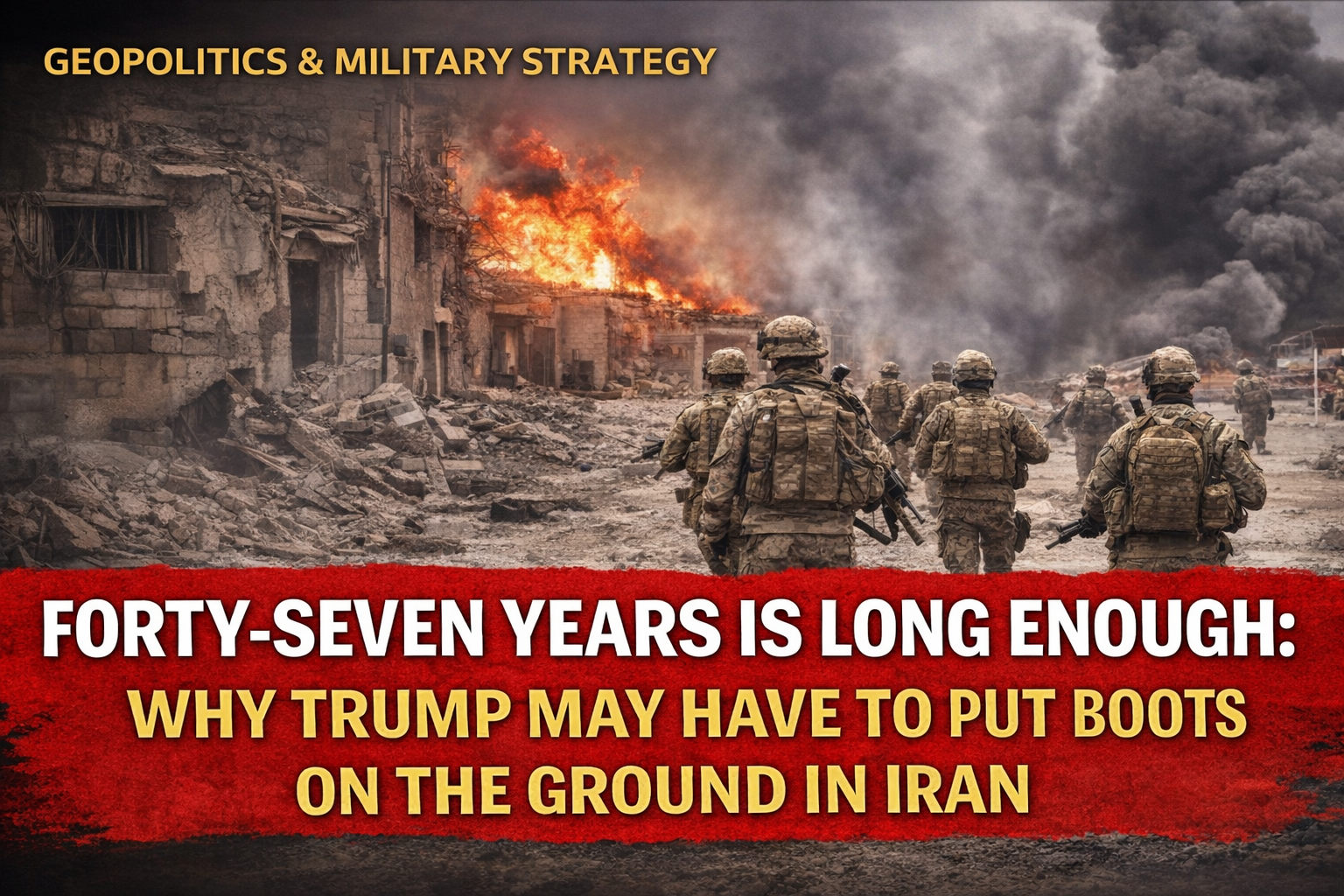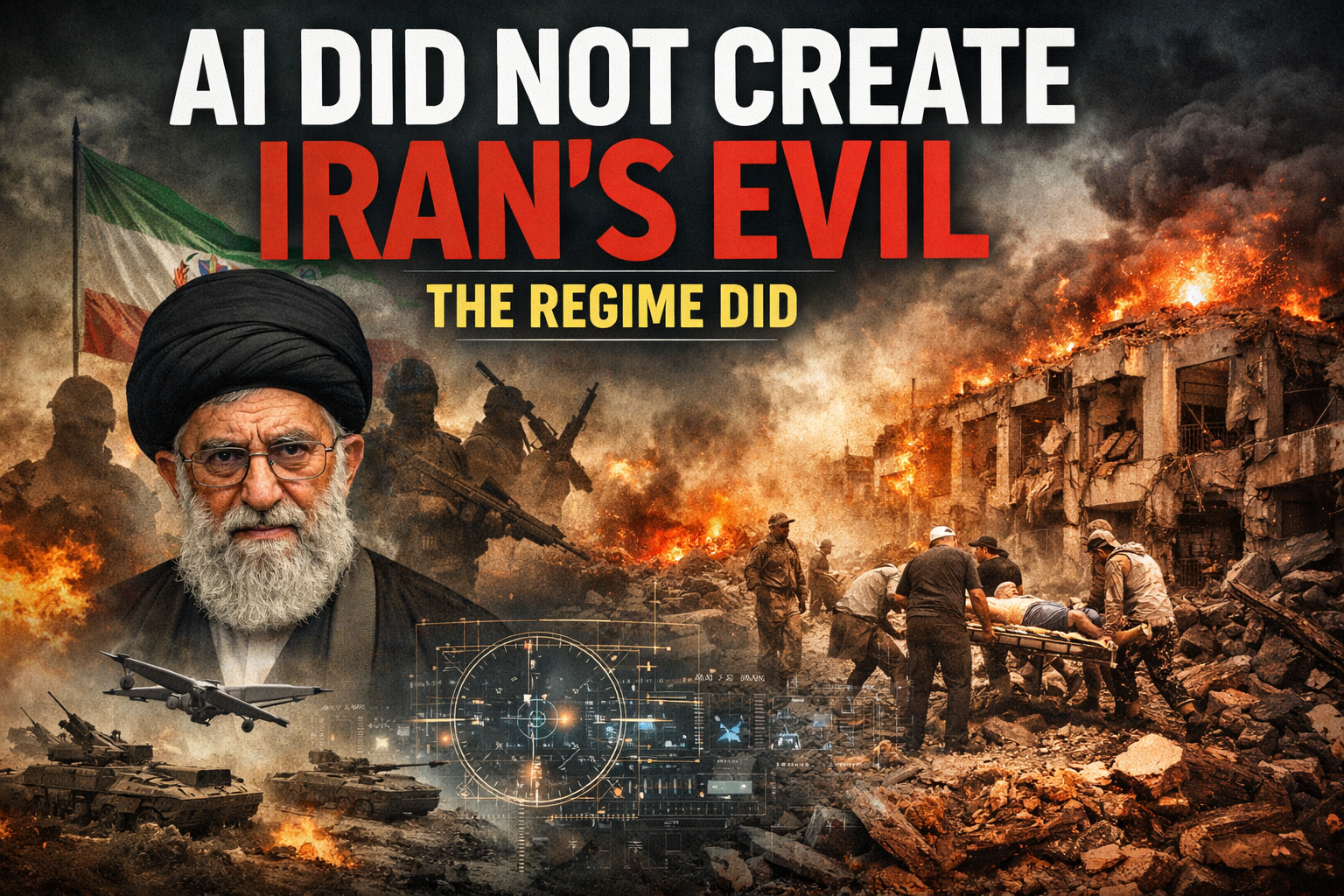
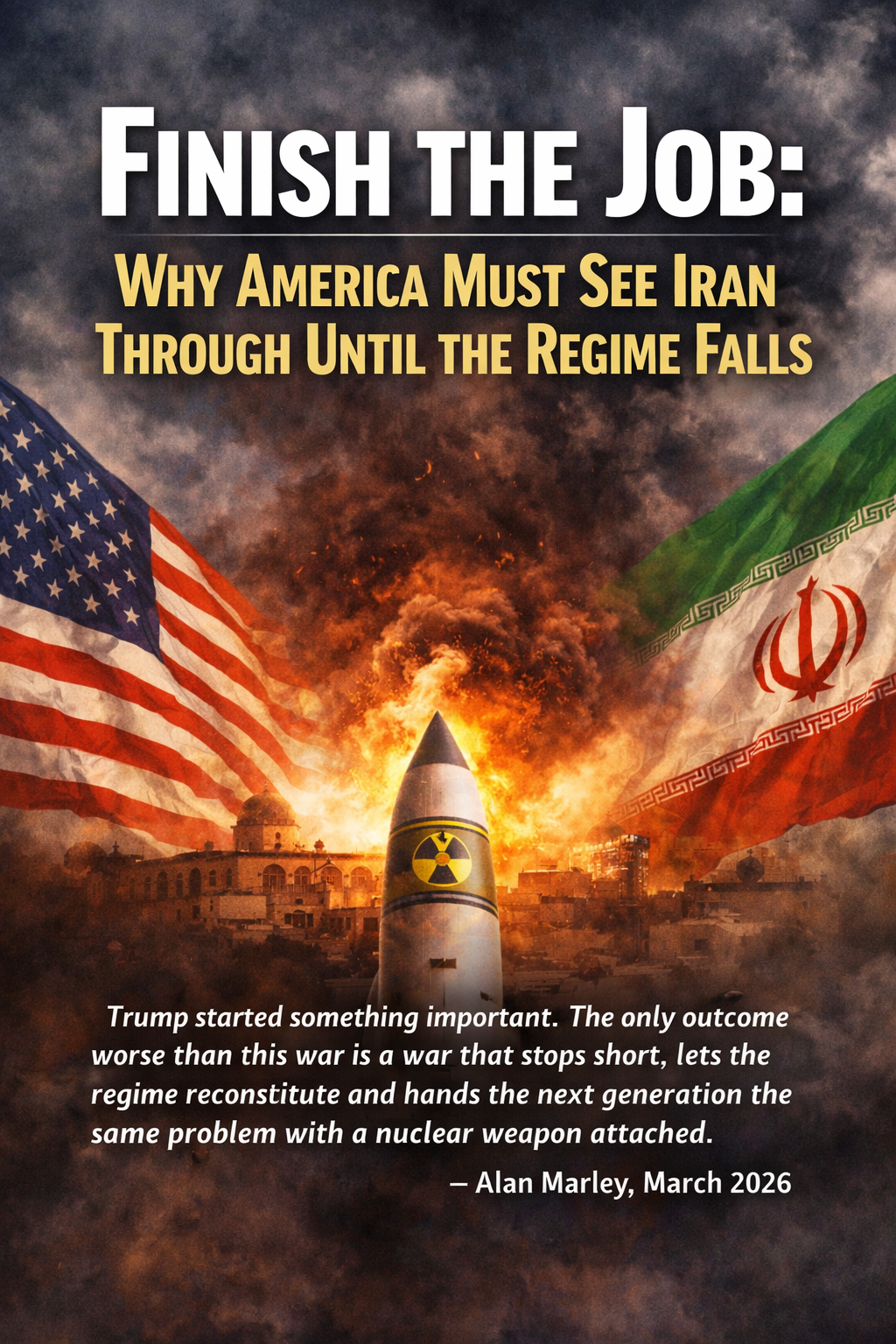
The Islamic Republic of Iran has been murdering people for 47 years. It murdered American hostages' dignity in 1979. It murdered 241 Marines in Beirut in 1983. It murdered dissidents in the streets of Tehran in 2009, 2019 and again in January of this year. It funded the murder of Israelis through Hamas and Hezbollah. It supplied the drones that Russia used to murder Ukrainian civilians. It tortured and executed its own people for not wearing a hijab correctly. For nearly five decades it pointed a finger at America and Israel and called it the Great Satan while hiding behind the skirts of diplomatic process long enough to get closer and closer to a nuclear weapon. Donald Trump looked at that record and decided enough was enough. In my opinion, he was right. And in my opinion, the United States needs to stay in this fight until that regime is gone - not degraded, not pressured, not negotiated back to the table. Gone.
What Trump Got Right
Operation Epic Fury, launched February 28, killed Supreme Leader Ali Khamenei in the opening strikes along with 49 senior regime officials, decimated Iran's navy, degraded its ballistic missile capability by more than 90 percent and put American B-1 bombers over Iranian airspace with near-total air dominance. Iranian ballistic missile launches fell from 350 on day one to roughly 25 by day fourteen. Iran's nuclear facilities at Natanz and Fordow have been hit repeatedly. The regime that spent decades building the architecture of regional terror is on its back foot for the first time in its existence.
That is not an accident. It is the result of a president who was willing to do what every administration before him was not - apply decisive force against a regime that had learned to outlast diplomatic pressure, survive sanctions and reconstitute after every previous limited strike. The June 2025 strikes set back Iran's nuclear program. The February 2026 campaign went further. It targeted the regime's ability to function, not just its hardware. That is the right instinct. Half-measures have a 47-year track record of failure against this particular opponent.
A damaged but surviving Islamic Republic is more dangerous than an undamaged one. It has every incentive to chase a nuclear weapon faster, reconstitute its proxy networks with greater urgency and treat any future diplomacy as a delay tactic. Stopping short is not restraint. It is postponement with interest.
The War Needs to End With the Regime, Not With a Deal
Washington Post intelligence reporting from March 16 is sobering: despite more than two weeks of relentless strikes, U.S. intelligence assessments say the regime likely remains in place for now, weakened but more hard-line, with the IRGC exerting greater control. Mojtaba Khamenei has taken his father's position. The clerical apparatus, the Revolutionary Guard patronage networks and the internal coercion machinery are still functioning. The regime has absorbed the blow and kept running.
That is exactly the scenario that cannot be allowed to stand as the final outcome. A regime that survives this campaign will have learned that the United States will eventually stop, that the costs of endurance are survivable and that the case for a nuclear deterrent has never been stronger. A nuclear-armed Islamic Republic on the other side of this war is a catastrophically worse outcome than any cost of seeing the campaign through. The only acceptable endpoint is a government in Tehran that is not the Islamic Republic. Not a reformed version of it. Not a successor that keeps the IRGC apparatus intact under a different name. The regime itself has to go.
The 1979 hostage crisis. The 1983 Beirut barracks bombing that killed 241 Americans. Decades of funding Hezbollah and Hamas. The supply of Shahed drones to Russia for use against Ukrainian civilians. The January 2026 mass killings of protesters in the streets. The decades-long nuclear program that came within weeks of weapons-grade material before the June 2025 strikes. This is not a government that had understandable grievances and made unfortunate choices. This is a government whose founding ideology requires hostility to America and Israel as a core operating principle. It did not drift in that direction. It was built that way.
Europe Is Hiding and Should Pay for the Privilege
Germany's Friedrich Merz said NATO is a defensive alliance and the Iran operation has nothing to do with it. France's Emmanuel Macron called the strikes legally questionable and warned about global stability. Spain called it a violation of international law. EU Foreign Affairs Commissioner Kaja Kallas, after a meeting of all 27 EU foreign ministers, delivered Trump a direct refusal to join the Strait of Hormuz mission and said: "This is not our war." Luxembourg's deputy prime minister said his country would not succumb to "blackmail" from Washington.
Let me be clear about what Europe is actually doing. It is benefiting from the removal of a regime that supplied drones to Russia for use against Ukraine - a war Europe claims to care deeply about - while refusing to share any of the cost of removing it. It is consuming roughly one-fifth of the world's oil supply through the Strait of Hormuz while declining to lift a finger to help keep that waterway open. It is calling the operation illegal while simultaneously preparing to benefit from whatever stability emerges when the job is done.
Americans are not stupid. They can see when a rule is selectively enforced. Europe has consumed American security guarantees for 80 years. It invoked Article 5 exactly once - after September 11, when Americans were the ones who were attacked. Now, when the United States is doing the hard work of removing the world's most active state sponsor of terror, Germany says it is "not our war" and France asks for clarity on strategic goals. Trump is right to be furious. He is right to make the level of enthusiasm matter. If Europe will not help clear and secure the Strait of Hormuz - a waterway that keeps their economies running - then Europe should pay for the service. Toll the passage. Charge for the naval escort. Make the free-riding visible and expensive. The days of America doing the dangerous work while Europe writes op-eds about international law are over.
Europe says this is not their war. One-fifth of the world's oil supply runs through the strait Iran is trying to close. European industries depend on that passage. European consumers pay for the energy price spike every day this goes on. It is very much their war. They just want someone else to fight it.
Help Iran Get Back on Its Feet - but Do It Right This Time
The legitimate concern about this operation - and it is a legitimate one - is what comes after. Iraq taught the world what happens when you remove a regime without a serious plan for what follows. Afghanistan taught it again. The lesson is not that regime change is always wrong. The lesson is that regime change without serious post-conflict investment and political architecture produces chaos that is sometimes worse than what it replaced.
Iran does not have to be that story. The conditions for a better outcome exist in a way they did not in Iraq or Afghanistan. Iran has an organized opposition with recognized leadership. Reza Pahlavi has publicly stated his readiness to lead a transitional government and commands genuine support among the diaspora and significant elements of the opposition inside Iran. Iran has a large educated middle class that has been demanding secular democratic governance for two decades at mortal risk. It has a diaspora with technical capacity, financial resources and political experience. These are not guarantees. But they are starting conditions that are vastly more favorable than anything America had to work with in Baghdad in 2003.
The United States should commit now to a serious post-conflict framework: financial reconstruction support, coordination with the Iranian opposition on transitional governance, protection of civilian infrastructure, international monitoring of elections and the kind of sustained diplomatic investment that turns military victory into durable political change. That commitment does not require an occupation. It requires a plan, funding and the honesty to admit that finishing the military campaign is only the beginning of the harder work.
Iranians who opposed the Islamic Republic celebrated in the streets when the opening strikes killed Khamenei. Videos from Tehran showed chants of "Death to Mojtaba" from apartment windows when the new supreme leader was named. Significant portions of the Iranian population have been risking their lives to protest this regime for nearly two decades - in 2009, in 2017, in 2019, in 2022 and in January 2026 when the regime killed thousands of demonstrators to suppress the largest protests since the revolution. They did not ask to be saved by American bombs. They asked to be free. If the military campaign creates the conditions for that freedom, the obligation that follows is to help them build something worth having.
My Bottom Line
Donald Trump launched a campaign against the most durable state sponsor of terror in modern history and hit it harder in two weeks than the previous six administrations did in 47 years. The regime that funded Hezbollah, armed Hamas, supplied Russia with drones, chased a nuclear weapon in secret and killed its own people in the streets every time they dared to ask for freedom is on its back foot for the first time since 1979. That is worth defending. That is worth finishing.
Stopping short - taking a deal that leaves the IRGC intact, that leaves the clerical apparatus in place, that gives the regime time to reconstitute - is not restraint. It is the same mistake made repeatedly for nearly five decades. The regime survives, learns from the experience, accelerates its nuclear program and comes back more dangerous. The Iranian people pay for it with another generation under a government that views them as subjects to be controlled rather than citizens to be served.
Europe can call this not their war if they want. Someone should send them an oil price chart and a list of the Iranian-supplied drones that fell on Ukrainian cities. The United States should charge for the service of clearing the strait they depend on and keeping open the waterway their economies require. The free ride has a price now.
Forty-seven years of murder, terrorism, hostage-taking and nuclear ambition. The regime did not stumble into being evil. It was built that way. Finish the job. Then help the Iranian people build something better. They have been waiting long enough.
References
- Wikipedia. 2026 Iran War. Retrieved March 18, 2026.
- Washington Post. U.S. Intelligence Says Iran's Regime Is Consolidating Power. March 16, 2026.
- Al Jazeera. European Leaders Reject Military Involvement in Strait of Hormuz. March 16, 2026.
- Al Jazeera. The US-Israeli Strategy Against Iran Is Working. Here Is Why. March 16, 2026.
- Atlantic Council. Twenty Questions (and Expert Answers) About the Iran War. March 11, 2026.
- Council on Foreign Relations. Europe's Disjointed Response to the War With Iran. March 6, 2026.
- House of Commons Library. US-Israel Strikes on Iran: February/March 2026. March 2026.
- NPR. We Never Asked for a Ceasefire, Says Iran's Foreign Minister. March 15, 2026.
- The National News. Trump Slams NATO Allies for Refusing to Join Iran Strait of Hormuz Mission. March 17, 2026.
- Al Jazeera. Iran War: What Is Happening on Day 16 of US-Israel Attacks? March 15, 2026.
Disclaimer: The views expressed in this post are the personal opinions of the author and are offered for educational, commentary and public discourse purposes only. They do not represent the positions of any institution, employer, organization or affiliated entity. Nothing in this post constitutes legal, financial, medical or professional advice of any kind. References to public figures, institutions, historical events and current affairs are based on publicly available sources and are intended to support analysis and argument, not to state facts about any individual's character, intent or conduct beyond what the cited sources support. Commentary on political and military subjects reflects the author's independent analysis and is protected expression of opinion. Readers are encouraged to consult primary sources and form their own conclusions. Any resemblance to specific individuals or situations beyond those explicitly referenced is coincidental.