Washington loves the language of transparency. It loves ethics reforms, solemn statements and stern press releases about standards, trust and integrity. Every scandal produces the same performance. Lawmakers line up to assure the public that misconduct will not be tolerated, that victims will be respected and that no one is above the rules.
Then the moment arrives when Congress can actually expose its own members.
And suddenly the institution develops a deep respect for caution, confidentiality, process, nuance and delay.
"That is the real story. Not that Congress condemns sexual misconduct. Of course it does. Everybody condemns it in the abstract. The real question is what Congress does when it has a chance to drag the truth into daylight."
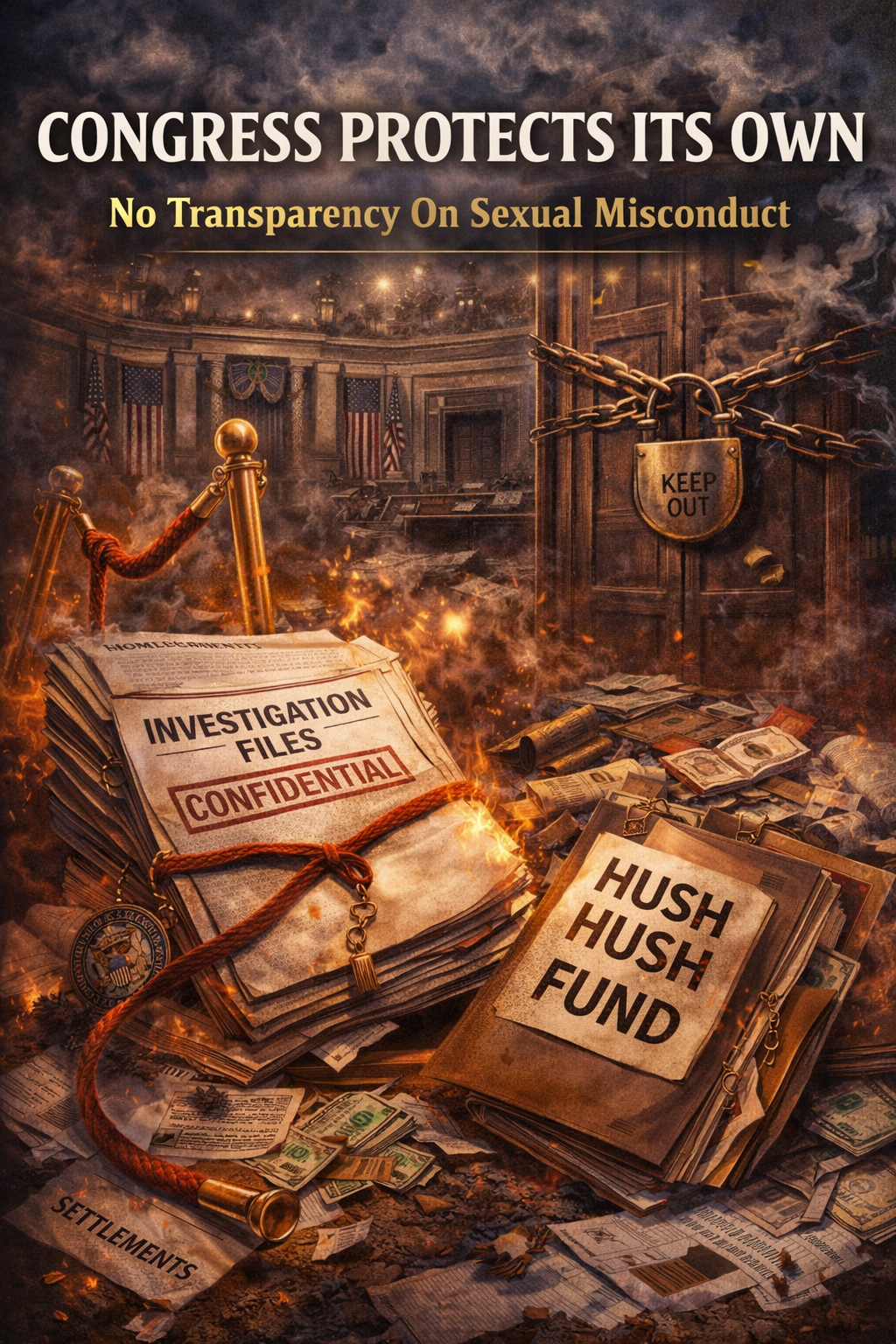
Last week, the House had exactly that chance - and flinched. On March 4, 2026, the House voted 357–65 to refer a resolution to the Ethics Committee instead of forcing public release of committee records tied to investigations of sexual harassment and sexual relationships between members and staff.
That is not exposure. That is burial by procedure.
The Vote Told the Story
The resolution at issue was straightforward in purpose: direct the Ethics Committee to preserve and publicly release records involving its review of House rules violations related to sexual harassment and sexual relationships with staff.
In plain English, Congress was asked whether it wanted the public to see more of what it knows about sexual misconduct in its own ranks.
Roll Call reported that lawmakers "sidestepped" the effort and sent it to the Ethics Committee, where it has little chance of advancing. The same report noted that 182 Democrats joined 175 Republicans to support the move.
That matters because it cuts through the usual partisan theater. This was not one party protecting itself while the other demanded sunlight. This was Congress acting like Congress. When the institution's comfort collides with public transparency, the institution wins.
Congress Says It Wants Accountability - On Its Own Terms
To be fair, the Ethics Committee did not defend the vote by saying misconduct should stay hidden forever. It used the language institutions always use when they do not want scrutiny right now.
In a March 4 statement, the House Ethics Committee said sexual misconduct "should never be shielded from responsibility," but argued that forced disclosure could chill victim cooperation, retraumatize victims and discourage witnesses who fear retaliation. The committee said it wanted to balance transparency with confidentiality and due process.
That argument is not frivolous. Protecting victims and witnesses is a real concern. But it is also the kind of concern Congress has become exceptionally skilled at deploying whenever exposure threatens the institution itself. There is always another process to respect, another committee to consult, another procedural off-ramp available just before real accountability would begin.
At some point, "trust the process" starts to sound like "leave us alone."
The Timing Makes the Vote Look Worse
This did not happen in a vacuum. The push for disclosure came as the House Ethics Committee opened an investigation into Rep. Tony Gonzales over alleged sexual misconduct involving a former staffer. Multiple outlets reported that the inquiry intensified demands for broader disclosure and raised fresh questions about how misconduct allegations are handled when they involve sitting lawmakers.
That context matters because it makes the House vote look less like a neutral procedural decision and more like a familiar institutional reflex: circle the wagons, invoke process and move the controversy somewhere slower, quieter and easier to manage.
Even if the formal justification was witness protection and due process, the public sees something simpler. Congress had a chance to throw open the doors and instead chose the hallway marked "committee review."
Americans have seen that movie before.
The Old Hush-Fund Narrative Changed, but the Secrecy Instinct Didn't
There is an important distinction here. The old public outrage over a congressional "slush fund" was partly about taxpayer money being used to settle workplace claims in secrecy. Congress did change the law in 2018. The Congressional Accountability Act Reform Act requires members to reimburse Treasury for awards and settlements tied to unlawful harassment they committed personally and it requires automatic referral of certain claims involving members and senior staff to the ethics committees.
That reform mattered. It was not nothing.
But reforming the payment structure is not the same thing as exposing the offenders. The law changed the reimbursement rules. It did not erase Congress's instinct to protect itself from public humiliation. In fact, the recent House vote shows that instinct is alive and well. Even after the post-2018 reforms, lawmakers still balk when asked to make the underlying record more public.
"Congress can point to statutory reform and say it cleaned up the old mess. Fine. But if the institution still resists public disclosure when members are accused of sexual misconduct, then the culture of self-protection is still there. It just wears a cleaner suit now."
The Institution's Favorite Trick Is Moral Language Without Moral Risk
This is what drives people crazy about Congress. It always knows the right words. Sexual misconduct has no place in the Capitol. Victims must be respected. Accountability matters. Due process matters. Transparency matters. Workplace dignity matters.
All true.
But the institution is most eloquent when speaking about moral principles that do not cost it anything. The real test comes when transparency threatens reputations, careers, leadership headaches, caucus math and the carefully guarded fiction that Congress is capable of policing itself without outside pressure.
That is when the moral language gets paired with procedural retreat.
The House Ethics Committee's statement captured that split perfectly. It declared that perpetrators should never be shielded, while at the same time urging the House to send the resolution away rather than force disclosure. There are legitimate reasons to protect victims and witnesses - but there is also an obvious institutional incentive: delay disclosure, preserve internal control and avoid a public airing that leadership cannot fully manage.
Washington almost always chooses the route that preserves control.
Why the Public Does Not Trust Congress on This
Congress has earned this distrust. It has spent decades behaving like a body that believes accountability is essential in theory and negotiable in practice. It investigates, reviews, refers and issues statements. It creates just enough process to claim seriousness, but often not enough sunlight to restore trust.
That is why a vote like 357–65 lands so badly. It confirms the public's suspicion that when misconduct touches the political class itself, Congress becomes less interested in exposure than in containment.
And once that suspicion hardens, every future appeal to confidentiality sounds self-serving - even when part of the concern is legitimate.
Congress did that to itself. It taught the country to assume the worst.
This Is Bigger Than One Member or One Scandal
The problem is not one accused lawmaker. The problem is a culture of institutional protection. If Congress truly wants public confidence, it has to stop acting as though disclosure is an exotic last resort. It has to stop treating public knowledge as a threat to be managed. It has to stop behaving like the release of uncomfortable facts is somehow more dangerous than the misconduct itself.
The message voters keep getting: the scandal is bad, but the exposure is worse. A legislature that writes the nation's laws should not need to be dragged kicking and screaming toward sunlight when its own members are accused of sexual misconduct.
Yet that is exactly what the March 4 vote looked like. The House had a chance to expose more of what it knows and instead chose institutional caution. That does not inspire trust. It destroys it.
My Bottom Line
Congress refuses to fully expose the sexual misconduct of its own members for the same reason institutions so often protect insiders: exposure is messy, embarrassing, destabilizing and politically costly.
So Congress does what institutions do. It wraps self-protection in respectable language and calls it responsible governance.
Maybe some of that language is sincere. Protecting victims and witnesses is real. Due process is real. But those truths do not erase the larger truth that the House just chose secrecy - or at least continued concealment - over immediate transparency. The official vote and the committee's own statement make that plain.
"Washington wants the public to believe it can handle its own scandals. The public has seen enough to know better."
Why This Matters
When Congress refuses to fully expose misconduct inside its own ranks, it sends a message far beyond Capitol Hill. It tells the country that accountability is for ordinary people, while insiders get process, buffering and delay.
That corrodes trust in every speech Congress gives about ethics, harassment and public service. If lawmakers want Americans to believe the rules matter, they have to prove the rules matter when the accused wear congressional pins.
Anything less is not accountability. It is image management.
References
- Office of the Clerk, U.S. House of Representatives. Roll Call 83, H. Res. 1100, March 4, 2026.
- House Committee on Ethics. Statement of the Chairman and Ranking Member of the Committee on Ethics, March 4, 2026.
- Roll Call. "House squashes effort to force release of Ethics Committee files," March 4, 2026.
- Public Law 115-397, Congressional Accountability Act of 1995 Reform Act, Dec. 21, 2018.
- Axios. "House Ethics launches inquiry into Tony Gonzales over alleged affair," March 4, 2026.
Disclaimer: The views expressed in this post are opinions of the author for commentary purposes. They are not legal advice. Factual references are drawn from publicly available sources and official documents.