Why a CCP Invasion of Taiwan Aimed at Occupation Is Unlikely (and What Beijing Is More Likely to Do Instead)
Why the most expensive option is also the least rational—and what China is more likely to try instead.
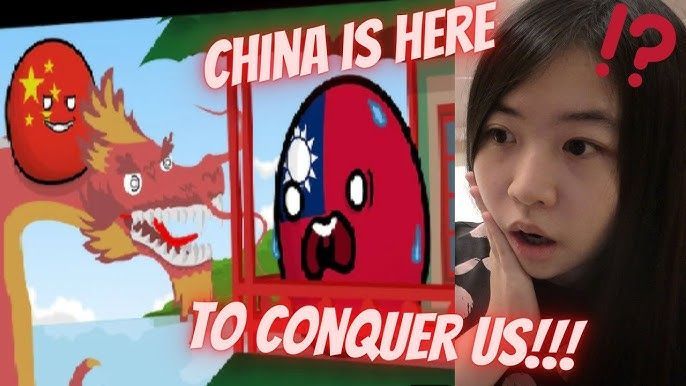
Every few months, the headlines flare: PLA jets, ships, missiles, “reunification,” live-fire zones, and the inevitable question—“Is the invasion next?”
China can absolutely create fear on demand. It has been doing exactly that, including large, coercive exercises meant to simulate encirclement and pressure. But fear is not the same thing as a plan to seize and hold a modern, armed island of 23 million people—especially when “hold” is the hard part.
Here’s the core argument: a full-on attack with an eye on occupation is the most expensive, most uncertain, most regime-risking option Beijing has. It’s not “impossible.” It’s just a terrible bet compared to the alternatives that let the Chinese Communist Party (CCP) apply pressure, test responses, and keep escalation under tighter control.
Occupation is a different goal than “punishment”
A lot of public talk mashes together several very different military options:
- gray-zone coercion (constant air/sea harassment, legal warfare, propaganda, cyber)
- limited strikes (missiles, command-and-control, runways, ports)
- quarantine/blockade (choking trade and energy)
- decapitation/rapid fait accompli (high risk, low margin)
- full amphibious invasion + sustained occupation (highest risk by far)
If the CCP truly wants “occupation,” it’s signing up for the hardest military operation in modern warfare and the hardest political operation afterward: governing a hostile population under extreme international pressure.
Amphibious invasion is the hardest job in warfare
An amphibious assault across the Taiwan Strait isn’t a land border push. It’s a forced crossing against a prepared defender, under surveillance, across water that’s frequently unfriendly to large-scale operations (weather, sea state, timing windows).
Even assessments that take China’s military modernization seriously still emphasize the scale and complexity of moving, supplying, and protecting invasion forces. The U.S. Department of Defense’s annual China military report describes the PLA’s ongoing modernization and focus on Taiwan-related capabilities, but modernization isn’t a magic wand—lift, logistics, joint integration, and combat experience still matter.
Independent wargaming reinforces the same basic point: in many scenarios, an amphibious invasion is defeated or becomes catastrophically costly when Taiwan is prepared and the United States and Japan intervene.
Translation: China can make the strait scary. It’s much harder to reliably get a massive force across, keep it alive, and keep it fed.
“Okay, but what if they land?” That’s where occupation gets ugly.
Let’s assume China beats the odds, pushes forces ashore, and grabs key terrain. Now the real nightmare begins—for Beijing.
Occupation means:
- controlling dense cities, tunnels, and vertical terrain
- dealing with sabotage, insurgency, and civil resistance
- maintaining continuous resupply under attack
- keeping Taiwan’s economy functioning enough to avoid total collapse (while also being sanctioned)
- running a political administration that doesn’t spark endless unrest
This isn’t a colonial outpost. Taiwan is wealthy, modern, connected, and has strong identity and institutions. The “governance” challenge can be as decisive as the initial fighting.
RAND’s work on Taiwan contingencies repeatedly highlights that success isn’t just about weapons; civilian resilience, social cohesion, and the ability to endure coercion all shape outcomes.
Occupation is where “we can break things” turns into “now we own the broken thing.”
Beijing’s biggest problem: the economic self-harm is off the charts
A Taiwan war is not just “another regional conflict.” The Taiwan Strait is one of the world’s most important trade arteries, and Taiwan sits at the center of advanced semiconductor production.
Analyses of disruption scenarios show severe blowback for China itself. CSIS has detailed how trade disruption in the Taiwan Strait would hammer China’s economy, not just Taiwan’s. A Federal Reserve Bank of St. Louis working paper also examines major negative economic effects for the U.S. and global economy under blockade/invasion scenarios.
On top of that, sanctions planning is no longer theoretical. Rhodium Group has mapped sanctioning scenarios and the risks and spillovers in a Taiwan crisis. RAND has also explored “economic deterrence” toolkits and how coalitions might try to shape Beijing’s calculus.
And the international messaging is consistent: major democracies keep reiterating that peace and stability in the Taiwan Strait is a core interest.
If you’re the CCP, you have to ask: why choose the one option that can trigger a global economic shock, unify a sanctions coalition, accelerate capital flight, and jeopardize regime legitimacy—all at once?
The PLA drills are real—but drills are also leverage
China’s recent exercises (including high-profile, high-tempo activity around Taiwan) should be taken seriously as coercion, signaling, and rehearsal for multiple contingency types—especially blockade and precision strike themes.
But that doesn’t automatically equal “they’re about to occupy Taiwan.”
Big drills can be used to:
- intimidate Taiwan’s public
- punish Taiwan politically
- probe U.S./Japan response times
- normalize a higher “pressure baseline”
- practice components of blockade/quarantine
- create bargaining leverage without paying the price of war
This is why the CCP’s preferred toolkit often looks like controlled escalation, not all-in conquest.
What Beijing is more likely to do than occupation
If Beijing wants to squeeze Taiwan without rolling the dice on an invasion, it has attractive options:
1) A blockade or “quarantine” campaign
A blockade can be dialed up or down and framed as “law enforcement” or “customs.” It pressures Taiwan’s economy and politics while keeping Beijing below the threshold of an overt invasion (at least initially).
CSIS wargaming on blockade scenarios shows how destabilizing this can be, and how it could be used as a coercive prelude or substitute for invasion.
2) Gray-zone operations
Constant harassment, disinformation, cyber intrusion, financial pressure, influence operations—these can erode confidence over time without triggering a decisive shooting war.
3) Limited strikes designed to shock, not occupy
Missiles and air strikes aimed at degrading defenses or forcing concessions are still high-risk—but far less complex than a full occupation.
4) “Civilian” maritime mobilization as flexible capacity
There’s increasing analysis of China’s ability to leverage civilian shipping and specialized platforms in a contingency. This may expand options, but it also adds vulnerability and chaos—civilian ships are not magical amphibious forces.
What would have to change for occupation to become more likely
If you’re trying to think clearly (not panic), focus on triggers and indicators.
Occupation becomes more plausible if Beijing believes:
- time is running out (Taiwan “permanently drifting away”)
- deterrence is collapsing (U.S./Japan won’t respond)
- internal CCP legitimacy is at stake (economic or political crisis, need a nationalist rally)
- Taiwan crosses a “red line” Beijing can’t ignore (e.g., a formal move toward independence)
And the indicators would likely be more concrete than “another big drill,” such as:
- large-scale mobilization and call-ups beyond normal patterns
- sustained stockpiling of fuel, ammunition, medical supplies, and critical components
- major civil defense actions on the mainland
- unusual nationwide information controls and domestic security posture
- systematic requisitioning and staging of shipping at scale for weeks/months, not days
In other words: the “occupation” version of this story requires a long, visible logistical shadow.
Bottom line
China will keep threatening Taiwan. It will keep probing, harassing, and trying to convince the world that Taiwan is isolated and inevitable.
But an invasion aimed at occupation is a different beast. It’s not just a military challenge—it’s a regime-level gamble with enormous downside: operational failure, a grinding occupation, sanctions, economic collapse, and a legitimacy crisis.
The CCP prefers strategies that maximize pressure and minimize uncontrollable escalation. That points to coercion, blockade-type scenarios, and gray-zone campaigns as the more likely path—because they’re cheaper, more reversible, and easier to calibrate.
Why This Matters
For regular people and business owners, the practical takeaway is simple:
- Don’t let every drill become “war tomorrow.” Fear is part of the strategy.
- Watch concrete indicators (mobilization, stockpiles, sustained maritime staging), not cable-news vibes.
- If your work or investments touch tech, manufacturing, or global shipping, assume disruption risk exists—and build redundancy where you can.
- Most importantly: understand that “China can cause trouble” is true, while “China can easily occupy Taiwan” is not.
References
- U.S. Department of Defense. (2025). Annual Report to Congress: Military and Security Developments Involving the People’s Republic of China.
- Center for Strategic and International Studies (CSIS). (2023). The First Battle of the Next War: Wargaming a Chinese Invasion of Taiwan.
- CSIS. (2025). Lights Out? Wargaming a Chinese Blockade of Taiwan.
- RAND Corporation. (2025). Economic Deterrence in a China Contingency.
- RAND Corporation. (2025). Is Taiwan Prepared for an Attack by China? (Policy podcast / analysis).
- Rhodium Group. (2023). Sanctioning China in a Taiwan Crisis: Scenarios and Risks.
- U.S.-China Economic and Security Review Commission (USCC). (2025). Chapter on Taiwan (Annual Report section).
- Taiwan Ministry of National Defense. (2025). ROC National Defense Report 2025.
- Federal Reserve Bank of St. Louis. (2025). The economic effects of a potential armed conflict over Taiwan (working paper).
- Reuters / AP / TIME reporting on late-2025 PLA drills around Taiwan.
Disclaimer:
The views expressed in this post are opinions of the author for educational and commentary purposes only. They are not statements of fact about any individual or organization, and should not be construed as legal, medical, or financial advice. References to public figures and institutions are based on publicly available sources cited in the article. Any resemblance beyond these references is coincidental.